

Yoga for Mental Health: Effective Poses and Benefits for Anxiety, Depression, and Stress Relief
Yoga for mental health is a mind-body practice that combines posture (asanas), breathwork (pranayama), and mindfulness to regulate the nervous system and improve emotional well-being. By coordinating breath with movement and cultivating interoceptive awareness, yoga shifts autonomic balance toward parasympathetic dominance, reducing anxiety, improving mood, and lowering physiological stress markers. This guide explains which poses and breathing techniques are most effective for anxiety, depression, and stress, describes practical how-to steps, and summarizes contemporary research supporting mental-health benefits. You will learn targeted poses for acute anxiety relief, sequences that support depressive symptoms, pranayama and meditation recipes for emotional balance, evidence from recent studies on cortisol and brain function, and safe ways for beginners to start. Throughout, keywords like mind-body connection, restorative yoga, Nadi Shodhana, Viparita Karani, and Savasana are used to help you apply reliable practices for emotional regulation and resilience.
What Are the Best Yoga Poses for Anxiety Relief?
Best yoga poses for anxiety relief combine restorative postures, forward folds, and gentle spinal movement to encourage parasympathetic activation and breath regulation. These poses reduce sympathetic arousal by stimulating vagal tone, applying calming proprioceptive pressure, and creating an inward focus that lowers heart rate and subjective anxiety. The following list highlights five accessible poses, each with a concise benefit and simple how-to steps for immediate practice. Practicing these poses with sustained, slow exhalations amplifies their calming effect and prepares the body for pranayama and mindfulness work described later. The top poses below are effective both for acute anxiety episodes and for daily regulation when practiced regularly; these selections prioritize accessibility and physiological mechanisms that reduce fight-or-flight activation and promote safety.
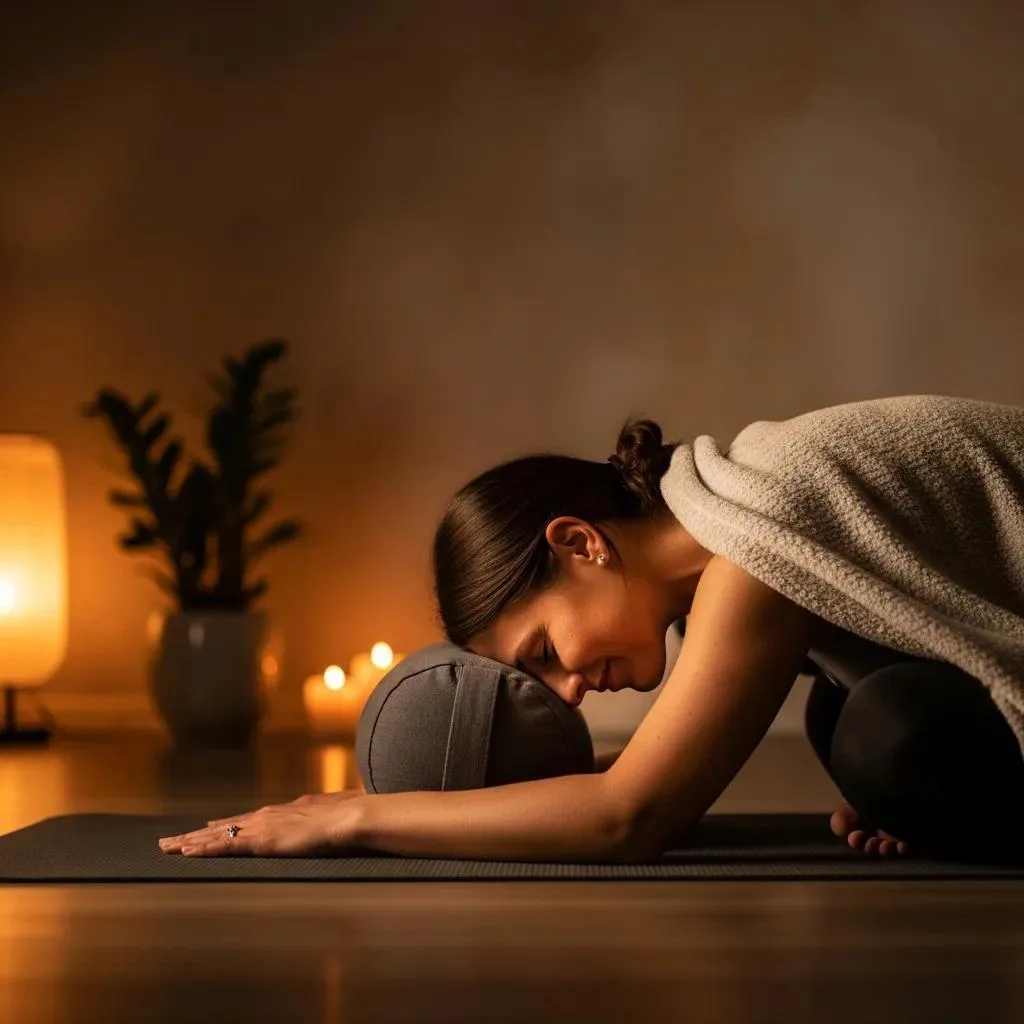
- Balasana (Child’s Pose): A fetal-like forward fold that comforts and reduces arousal through abdominal compression and inward attention.
- Viparita Karani (Legs-Up-the-Wall): A restorative inversion that supports venous return and vagal activation while unloading the lower back.
- Savasana (Corpse Pose): Deep restorative relaxation that enables parasympathetic recovery through stillness and breath focus.
- Cat–Cow Flow: Breath-synced spinal mobilization that restores interoceptive awareness and calms racing thoughts.
- Standing Forward Fold (Uttanasana): Progressive forward fold that soothes the nervous system and offers grounding pressure to the abdomen.
These poses work best when paced with diaphragmatic breathing and held for multiple breath cycles; next we examine Child’s Pose specifically to show stepwise setup and nervous system mechanisms.
How Does Child’s Pose Calm Anxiety and Nervous System?
Child’s Pose (Balasana) calms anxiety by offering a comforting, inward-oriented posture that gently compresses the abdomen, supports slow diaphragmatic breathing, and activates parasympathetic pathways. The forward fold and slight compression around the ribcage encourage longer exhalations and a reduced respiratory rate, both of which signal safety to the nervous system and decrease heart rate. To practice safely, start kneeling with big toes touching, sit back toward the heels, widen the knees as needed, and rest the torso over a bolster or blanket for support while turning the head to one side. Maintain slow, even breaths for 1–5 minutes, allowing breath awareness to anchor attention and reduce rumination; using a bolster under the torso or a pillow beneath the forehead increases comfort for those with tight hips.
Practitioners who need more space for the chest can widen the knees or use a chair to rest the torso; these modifications preserve the calming mechanics while making the pose accessible for many body types.
Why Is Legs-Up-the-Wall Pose Effective for Anxiety Reduction?
Viparita Karani (Legs-Up-the-Wall) reduces anxiety by combining a mild inversion with supported relaxation, promoting venous return, reducing sympathetic drive, and enhancing parasympathetic recovery. Elevating the legs diminishes peripheral pooling, which can lower cardiac workload and lead to subjective sensations of ease; coupled with gentle diaphragmatic breathing, this position enhances vagal tone and reduces physiological markers of stress. To practice, sit sideways to a wall, swing legs up while sliding your sacrum close to the wall, and rest the lower back on a folded blanket or bolster for added comfort; arms can rest palms-up beside the torso. Hold for 5–20 minutes while breathing slowly; avoid forceful neck extension and discontinue if you experience dizziness or eye pressure.
For accessibility, place a bolster beneath the sacrum for a supported restorative variation; contraindications include certain uncontrolled eye conditions such as glaucoma or recent surgeries, so consult a healthcare provider when in doubt.
Which Yoga Poses Help Manage Depression Symptoms?
Yoga poses that support depressive symptoms emphasize chest opening, gentle backbends, grounding forward folds, and balance postures to increase energy, improve posture, and stimulate mood-related neurochemistry. These movements encourage muscular activation and deep breathing that can boost endorphins, improve circulation, and break inertia commonly associated with low mood. Below is a concise list of poses that combine energizing and grounding effects; practicing them with mindful breath and progressive activation supports both physiological arousal and emotional uplift.
- Setu Bandha (Bridge Pose): Opens the chest and stimulates the anterior body to increase alertness and positive affect.
- Paschimottanasana (Seated Forward Bend): Grounds the nervous system through inward focus and sustained exhalations.
- Vrksasana (Tree Pose): Enhances balance and proprioception while encouraging present-moment attention and confidence.
- Matsyasana (Fish Pose) or Supported Fish: Gentle chest-opening that counteracts collapsed posture linked to low mood.
These poses can be sequenced to alternate activation and rest, helping to regulate energy without overstimulating fragile systems; next we look closely at Bridge Pose, its mechanics, and restorative variations.
How Does Bridge Pose Enhance Mood and Emotional Balance?
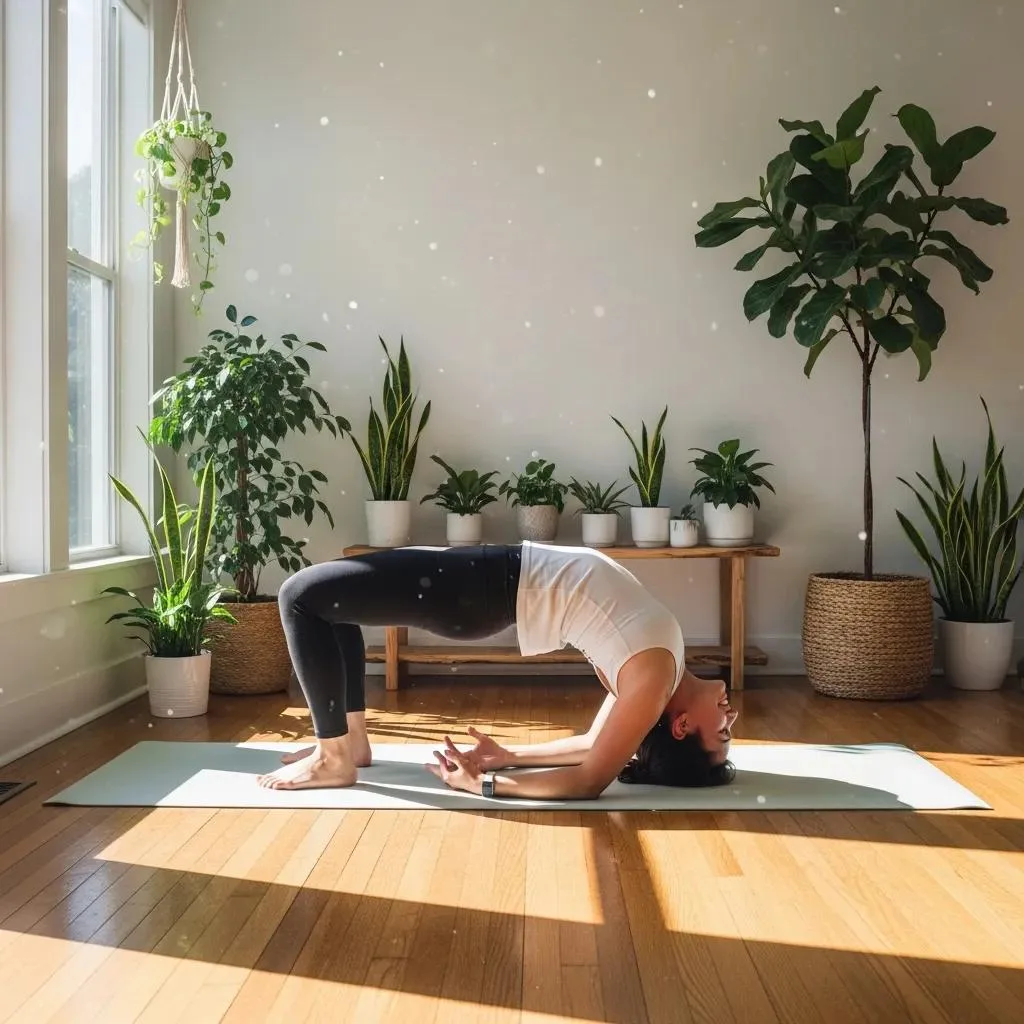
Setu Bandha (Bridge Pose) enhances mood by opening the anterior chest, stretching the pectoral muscles, and engaging the glute-hamstring complex to create a mild energizing lift. Chest opening supports deeper inhalations, which increase oxygenation and may enhance feelings of vitality and confidence; simultaneous activation of the posterior chain promotes an embodied sensation of strength. To practice, lie supine with knees bent, feet hip-width apart, press into the feet to lift the hips, keep the chin slightly tucked, and coordinate lifts with inhalations and lowerings with exhalations. For a restorative variant, place a block or bolster under the sacrum to maintain lift passively for 3–8 minutes while breathing gently.
Supported bridge reduces effort while preserving the chest-opening mechanics that can alleviate gloom by improving posture and respiratory capacity; this prepares the practitioner for forward-fold grounding and breath-based regulation described next.
What Are the Benefits of Seated Forward Bend for Grounding and Depression?
Paschimottanasana (Seated Forward Bend) promotes grounding through an inward-directed posture that slows cognition and encourages interoceptive attention to breath and bodily sensations. The forward fold creates calming pressure along the torso and facilitates lengthened exhalations, which downregulate arousal and reduce anxiety components that often co-occur with depression. To practice safely, sit with legs extended, hinge at the hips with a long spine, and use a strap around the feet if hamstrings limit reach; soften the bend by keeping knees slightly bent and resting the torso on a bolster if needed. Hold the posture for 3–6 minutes with slow, even breaths, and focus on lengthening the exhale to deepen the calming response.
Regular inclusion of seated forward folds within a balanced practice supports emotional regulation by alternating activation (backbends) with steadiness and inward reflection, creating a holistic approach to mood support.
How Can Yoga Reduce Stress and Promote Mindfulness?
Yoga reduces stress and cultivates mindfulness through coordinated mechanisms: breath regulation stabilizes autonomic balance, mindful attention increases prefrontal regulation of emotion, and restorative postures permit physiological recovery. These combined processes lower cortisol and enhance heart-rate variability (HRV) over time, promoting resilience to everyday stressors. A short mindful sequence and attention to Savasana reinforce present-moment awareness; the following bullets outline core mechanisms and a brief practice recipe to use during high-stress moments.
- Breath regulation: Slow, prolonged exhalations stimulate the vagus nerve and reduce sympathetic arousal.
- Vagal tone improvement: Inversions and diaphragmatic breathing enhance parasympathetic influence and HRV.
- Cognitive anchoring: Mindfulness techniques train attention to reduce rumination and reactivity.
Short daily practices that pair two to three poses with simple breathwork create a reliable stress-reduction routine; next we explore Savasana as the apex of stress relief and how to practice it effectively.
Why Is Savasana Considered the Ultimate Stress Reliever?
Savasana (Corpse Pose) is the ultimate stress reliever because it creates a controlled environment for deep parasympathetic recovery, allowing the body to integrate the effects of movement and breath while reducing metabolic and cardiovascular activity. In Savasana, the practitioner observes breath and bodily sensations without effort, supporting downregulation of the hypothalamic-pituitary-adrenal (HPA) axis and lowering cortisol when practiced regularly. To practice, lie supine with neutral spine, arms relaxed at the sides, and eyes closed; use blankets or bolsters under the knees and head for comfort, and practice for 5–15 minutes with soft, extended exhales. Guided body-scan variations enhance accessibility for beginners and offer a scaffolded entry into sustained stillness for nervous-system recovery.
Common mistakes include tensing to “do” relaxation and falling asleep; a gentle body-scan and breath counting help maintain mindful presence while reaping physiological benefits that persist beyond the session.
How Does Cat-Cow Flow Improve Mind-Body Connection and Emotional Regulation?
Cat–Cow flow synchronizes spinal movement with inhalation and exhalation to improve interoceptive awareness, mobilize the autonomic nervous system, and release tension stored in the torso and back. This breath-synced sequence enhances proprioception, helping practitioners notice the interplay between breath, movement, and emotion, which fosters better self-regulation during stress. To practice, begin on hands and knees, inhale to arch the spine and lift the chest (Cow), exhale to round the spine and draw the navel in (Cat), and repeat for 8–12 cycles, maintaining slow, full breaths. Use this flow as a quick regulation tool during moments of acute anxiety or as a warm-up to prepare the nervous system for deeper practices described below.
Regular integration of Cat–Cow supports embodied awareness that transfers to standing and seated practices, enabling more consistent emotional regulation across daily life.
What Are the Key Pranayama and Meditation Techniques for Emotional Balance?
Pranayama and meditation techniques regulate the autonomic nervous system by altering respiratory patterns and directing attention, producing acute stress reduction and long-term resilience. Techniques like Nadi Shodhana, Dirga (three-part breath), and brief mindfulness practices have distinct mechanisms—alternate nostril breathing balances hemispheric activity, three-part breath increases diaphragmatic activation, and loving-kindness cultivates affective shift—making them useful tools for emotional balance. The table below summarizes common techniques, their primary mechanism, and practical value to help you choose the most suitable practice quickly.
Different pranayama and meditation techniques suit different purposes: immediate calming, building resilience, or shifting affect. The following table synthesizes mechanism and practical value for applied decision-making.
This comparison helps select practices for acute versus long-term goals; below we provide stepwise instructions for Nadi Shodhana and a quick list of meditation techniques with practice recommendations.
- The selection above clarifies how to match technique to need: choose Nadi Shodhana for acute stress, Dirga for breath capacity, and loving-kindness for mood work.
How Does Nadi Shodhana Regulate the Nervous System and Reduce Stress?
Nadi Shodhana (alternate nostril breathing) reduces stress by creating rhythmic, balanced respiratory input that modulates autonomic tone and promotes symmetrical hemispheric activity, which is associated with emotional stability. The practice involves using the right hand to gently close one nostril at a time while breathing slowly and evenly through the open nostril, maintaining soft, diaphragmatic breaths for 5–10 minutes. Start seated with a straight spine, exhale fully, close the right nostril and inhale through the left, then switch nostrils for the exhale and continue the pattern; maintain a calm, steady rhythm and avoid forceful breaths. Regular short sessions reduce subjective anxiety within minutes and contribute to improved HRV and overall resilience when practiced consistently.
Nadi Shodhana is accessible for most people, but those with nasal obstruction should modify practice and focus on diaphragmatic breath alternatives until comfortable alternating airflow.
What Mindfulness Meditation Techniques Enhance Mental Clarity and Resilience?
Mindfulness meditation techniques enhance mental clarity and resilience by training sustained attention and altering habitual cognitive patterns like rumination and threat bias, which underpin anxiety and depression. Core accessible practices include breath-focused attention (5–20 minutes), guided body-scan (10–20 minutes), and open-awareness or loving-kindness sessions (10–20 minutes) that cultivate nonjudgmental presence and positive affect. Start with short daily practices, using consistent timing and a comfortable posture, and progressively increase duration as attention capacity grows; pairing short meditations with asana or Savasana deepens integration. These techniques strengthen prefrontal regulation over reactivity, improving working memory and emotional flexibility with regular practice.
Integrating brief mindfulness into movement or transition moments during the day reinforces skills acquired during formal practice, creating cumulative resilience against stress.
What Scientific Evidence Supports Yoga’s Benefits for Mental Health?
Contemporary research indicates that yoga and integrated mind-body practices produce measurable improvements in anxiety, depression, and stress biomarkers through mechanisms like HPA axis downregulation, increased HRV, and prefrontal cortical engagement. Meta-analyses and randomized controlled trials through 2023 report moderate effect sizes for anxiety and depression symptom reduction, and single-session studies show acute decreases in subjective stress alongside cortisol changes. The table below summarizes representative study findings by entity (pose or technique), measured outcomes, populations, and study durations to give a succinct evidence snapshot for practitioners and clinicians.
The EAV-style table below condenses research outcomes so readers can compare interventions and expected effects at a glance.
How Does Yoga Affect Brain Function and Cortisol Levels?
Yoga affects brain function and cortisol via HPA axis modulation, enhanced vagal tone, and changes in prefrontal-limbic connectivity that support top-down emotional regulation. Neuroimaging studies report increased prefrontal activation and altered amygdala responses after regular practice, while cortisol assays often show lower baseline levels or attenuated reactivity following structured programs. Single-session interventions typically produce transient cortisol decreases and improved mood, whereas longitudinal programs (weeks to months) produce more robust biomarker and functional changes. For measurable shifts in cortisol and neural markers, many studies suggest consistent practice several times weekly across multiple weeks yields the most reliable effects.
Understanding these mechanisms clarifies why combining asana, pranayama, and mindfulness produces broader neurophysiological benefits than isolated components in many research designs.
What Recent Studies Demonstrate Yoga’s Impact on Anxiety, Depression, and Stress?
Recent trials and meta-analyses through 2023 report that yoga-based interventions reduce anxiety and depression symptoms with moderate effect sizes, and acute-session research indicates meaningful reductions in state anxiety and perceived stress. Several randomized controlled trials show symptom improvements when yoga is used as an adjunct to standard care, with effect magnitude varying by intervention length, instructor training, and participant baseline severity. Single-session studies using Hatha or restorative sequences combined with pranayama report immediate mood benefits, while longer trials (6–12 weeks) show sustained symptom reduction and improved quality of life indices. Study limitations frequently include variability in intervention protocols and small sample sizes, indicating the need for standardized, larger trials to refine dosing and modality recommendations.
Collectively, current research supports yoga as a valuable complementary approach for mental health, while encouraging integration with conventional treatments and individualized practice planning.
How Can Beginners Start a Yoga Practice for Mental Health?
Beginners should start with short, consistent practices that prioritize breath awareness, accessible poses, and gradual progression to build safety, confidence, and measurable benefit. A recommended weekly cadence begins with three 20–30 minute sessions per week, mixing restorative poses, gentle flows, and pranayama; consistency, not duration, predicts early improvements in anxiety and mood. Safety considerations include honoring physical limitations, avoiding extreme inversions initially, and consulting healthcare providers when there are complex medical or psychiatric conditions. The checklist and sequence below give straightforward steps for getting started and choosing appropriate instruction.
These starter principles set realistic expectations and reduce the risk of injury while optimizing mental-health outcomes; next is a practical beginner sequence you can use immediately.
- Begin with foundational poses and breathwork to cultivate interoception and stability.
- Practice 15–30 minutes, 3–5 times weekly, adjusting frequency to tolerance and schedule.
- Seek qualified instructors for individualized modifications and safety guidance.
What Are Simple Yoga Poses and Sequences for Beginners?
A 10–20 minute beginner sequence for mental health combines breath-synced movement, grounding forward folds, chest opening, and restorative relaxation to balance activation and calm. Example sequence: begin with 1–2 minutes of Dirga breath seated, move to Cat–Cow for 8–12 cycles, rest in Child’s Pose for 1–3 minutes, practice Bridge or supported Bridge for 1–3 minutes, finish with Savasana or Legs-Up-the-Wall for 5–10 minutes. Use props like a strap, bolster, or block to maintain alignment and comfort; emphasize slow exhales and attention to bodily sensations throughout. Repeat the sequence 3–5 times per week and gradually increase duration as confidence grows.
This compact routine provides immediate regulation and a foundation for expanding practice into longer classes or targeted pranayama sessions as resilience increases.
How to Find a Qualified Yoga Instructor for Mental Health Support?
Finding a qualified instructor for mental health support involves evaluating training, experience with therapeutic approaches, and comfort collaborating with healthcare providers when appropriate. Look for teachers with foundational certifications plus additional training in restorative yoga, trauma-informed approaches, or yoga therapy, and ask about experience working with anxiety or depression. Interview prospective instructors about session structure, modifications, safety protocols, and how they integrate breath and mindfulness into classes; prioritize teachers who emphasize accessibility, gradual progressions, and monitoring of emotional responses. Virtual classes can offer accessibility, but in-person or small-group settings often allow closer adjustment and observation for those with complex needs.
Selecting an instructor who communicates clearly about goals and accommodations fosters a safe, effective practice that supports mental-health objectives and complements professional care when needed.