
Art Therapy for Mental Health: How It Helps, Common Techniques, and Recovery Support at Emulate Treatment Center
Art therapy uses creative processes — drawing, painting, sculpting and collage — to support mental health by giving people a symbolic, non‑verbal way to name and reshape emotions. Recent research through 2023–2024 shows that structured creative therapies can reduce anxiety and depression symptoms, help regulate stress physiology, and strengthen coping for people with trauma or substance‑use challenges. This guide explains how art therapy works, summarizes the evidence, and links common techniques (mandalas, collage, mindful drawing) to clinical goals such as emotional regulation and relapse prevention. You’ll find concrete examples, short mindfulness‑art exercises to try, and a practical patient pathway showing how art therapy fits into detox, inpatient, outpatient and counseling care. We also cover intake and scheduling expectations, family involvement options, and safety/privacy considerations so individuals and families can make informed next steps. Throughout, our focus is practical and clear: what to expect, how art therapy helps, and how Emulate integrates creative arts into comprehensive recovery plans.
What are the key benefits of art therapy for mental health?
Art therapy produces measurable gains in mood, anxiety and self‑regulation by pairing creative expression with therapeutic framing that supports cognitive and emotional processing. On a practical level, art tasks shift attention, trigger reward circuitry, and create symbolic distance from painful material — all of which can lower physiological arousal and make new meaning possible. Clinical studies show consistent reductions in self‑reported anxiety and depression and improved emotional awareness when creative therapies are integrated with standard psychological care. Below we list primary therapeutic benefits and present a compact summary of how those benefits map to common symptoms and evidence levels.
Primary outcomes clients often experience from art therapy include:
- Symptom reduction: Art‑based interventions can reduce anxiety and depressive symptoms by providing focused channels for expression and mood regulation.
- Better emotional regulation: Creative tasks help people identify, externalize and modulate emotions in a contained way.
- Trauma processing: Non‑verbal approaches let clients approach traumatic memories gradually and safely.
- Relapse resilience: Expressive arts build coping strategies and practical alternatives to substance use when cravings or triggers appear.
These benefits translate into observable changes in daily life. The next section outlines the physiological and psychological mechanisms that support those outcomes.
Summary of the evidence table and what it shows.
This table highlights common session focuses and the current evidence landscape, showing that expressive arts therapy offers practical mechanisms for symptom improvement across several clinical areas.
How does art therapy reduce anxiety and depression symptoms?
Art therapy reduces anxiety and depression by creating structured opportunities to externalize internal experience, redirect attention, and access reward responses through the act of making. Brief creative engagement can lower cortisol and increase positive affect via dopamine‑linked reward from completing a piece, which complements cognitive reframing used in talk therapy. Clinicians use graded assignments — short mindful doodling for acute anxiety, multi‑session narrative art for depression — to build tolerance and engagement. A simple exercise, such as timed mandala coloring paired with diaphragmatic breathing, narrows attention, anchors the present moment and produces a tangible artifact for reflection. Combining immediate emotional relief with skill building prepares clients for deeper therapeutic work and broader skill generalization.
In what ways does creative expression improve emotional regulation?
Creative expression supports emotional regulation by turning diffuse feelings into visible forms that clients and therapists can examine, label and reshape. Exercises like emotion‑mapping drawings or clay shaping let people notice impulses, name feelings and experiment with coping choices (color, texture, pressure) in a low‑risk space. Therapists use reflective prompts to connect the artwork to real‑world triggers and rehearsal of skills — for example, paced breathing or stimulus control — so coping transfers outside the studio. Repeated practice strengthens prefrontal regulation of limbic responses, increasing distress tolerance and flexibility under stress. These regulation gains guide the selection of techniques that emphasize mindfulness and sensory grounding, which we cover next.
Which art therapy techniques are most effective for mental wellness?
Effective techniques vary by therapeutic goal and individual needs. Clinicians choose methods — painting, collage, clay, mandalas — to target symptoms such as anxiety, trauma or depression. Each technique has distinct strengths: painting supports color‑based mood work, clay offers tactile grounding, and collage helps reconstruct narrative using found images. When combined with mindfulness, these techniques anchor attention and encourage non‑judgmental observation. Below is a concise inventory of commonly used methods, followed by a comparison of technique, mechanism and typical clinical use.
Common art therapy methods used in clinical care include:
- Painting and drawing: Externalize feelings and explore symbolic content through color and form.
- Clay and sculpting: Provide tactile grounding, containment and embodied regulation when words are hard to find.
- Collage and narrative art: Reframe personal stories and integrate fragmented experiences using imagery.
- Mandala work and guided coloring: Use structured patterns to focus attention and calm the nervous system in short sessions.
These methods blend expressive freedom with therapeutic structure. The table below clarifies when each technique tends to be most helpful.
Overview of the techniques comparison table.
This comparison shows how clinicians match techniques to therapeutic aims, allowing targeted interventions that fit each client’s needs and stage of care.
What are common art therapy methods used in treatment?
In clinical settings, methods are chosen to meet specific therapeutic aims in individual or group formats and often use simple, portable materials for accessibility. Typical sessions run 45–90 minutes and include a grounding opening, a focused creative task and a reflective processing phase to link artwork to coping strategies. Therapists select materials with client tolerance and safety in mind — watercolors for gentle exploration, clay for deeper sensory work — and use trauma‑informed pacing and containment. Group formats promote shared reflection and social learning; individual sessions allow deeper narrative exploration. Both formats emphasize rehearsing coping skills that can transfer to daily life. The next section explains how mindfulness commonly strengthens these effects.
How does mindfulness integrate with art therapy practices?
Mindfulness pairs present‑focused attention and non‑judgmental observation with creative tasks to produce immediate stress relief and durable skill acquisition. Simple exercises — breath‑paced mark‑making or guided mindful coloring — teach clients to notice thoughts without reacting, while the artwork becomes an anchor for reflecting on triggers and coping choices. Mindfulness‑art hybrids reduce rumination and enhance interoceptive awareness, supporting emotion regulation and relapse prevention in substance use treatment. Therapists encourage clients to attend to sensory details (texture, pressure, color) and connect those observations to bodily cues, reinforcing self‑soothing strategies that extend beyond the studio. These practices prepare clients for using art therapy across the recovery timeline, which we cover next.
How does art therapy support addiction recovery and long‑term sobriety?
Art therapy supports recovery by offering alternative ways to express emotions, building relapse‑resilient coping skills and helping clients reconnect to values and identity beyond substance use. In recovery programs, creative tasks reveal triggers, allow rehearsal of non‑substance responses, and support rebuilding a personal narrative disrupted by addiction. Program evaluations through 2023 indicate expressive arts components often improve engagement, reduce psychological distress and boost motivation when paired with standard counseling. Importantly, art therapy scales across settings — brief grounding exercises in detox, multi‑session narrative work in outpatient care — making it adaptable to each phase of recovery. The subsection below outlines how Emulate typically integrates art therapy within its model, consistent with our emphasis on structured guidance and family support.
What role does creative arts therapy play in Emulate’s addiction programs?
At Emulate Treatment Center, creative arts therapy complements clinical care across the continuum. Group art sessions in inpatient programs create safe, peer‑supported spaces to practice regulation and build routine, while individual art therapy in counseling supports deeper trauma work and personalized relapse planning. In outpatient care, modular art therapy helps clients rehearse skills in community settings and apply creative assignments between visits to sustain progress. Our approach emphasizes clear structure, appropriate family involvement and coordination with medical and behavioral teams so art therapy goals align with the overall treatment plan. Paired with relapse prevention and psychosocial supports, creative tasks help strengthen long‑term sobriety.
How can art therapy help address underlying trauma in recovery?
Art therapy addresses trauma by offering non‑verbal routes to access and process painful memories while preserving safety through pacing and containment. Therapists trained in trauma‑informed care use scaffolding — beginning with sensory grounding, moving to symbolic representation and avoiding intrusive exposure — so clients can approach material gradually. Techniques such as sensory clay work or focused narrative collage let clients externalize fragments before integrating them into a coherent story, reducing avoidance and building distress tolerance. Clinicians monitor regulation and make referrals to specialized trauma treatment when deeper interventions are needed. These adaptations help ensure creative therapies support recovery without retraumatization.
What to expect from Emulate Treatment Center’s art therapy programs?
Emulate frames art therapy within a clear, stepwise intake and treatment process that aligns creative work with medical and counseling services. Intake usually begins with an interdisciplinary assessment to identify clinical needs, trauma history and readiness for expressive work, followed by a tailored plan that outlines session frequency and goals. Program formats vary by level of care: brief grounding and orientation activities during detox, regular group and individual sessions in inpatient care, structured modules in outpatient programming, and art elements integrated into counseling sessions. Scheduling is collaborative — clinicians and care coordinators recommend cadence (for example, weekly groups plus biweekly individual art therapy when indicated) and review family participation options. Privacy, safety and informed consent are discussed during intake, and families receive education about boundaries and ways to support creative work at home.
Overview of the program comparison table and how to read it.
How is art therapy integrated across detox, inpatient, outpatient and counseling?
Art therapy is matched to clinical stability and treatment goals so care progresses from stabilization to long‑term skill consolidation. In early detox, brief, calming art activities teach immediate coping tools; as clients stabilize, inpatient programs introduce group creative work for social support and practice. Outpatient care emphasizes modular skill‑building and community reintegration through structured assignments and homework, while counseling integrates art tasks to address trauma, identity repair and relapse prevention. Emulate supports these transitions with interdisciplinary planning and clear communication to clients and families, ensuring continuity of creative care across settings. Details about intake and scheduling explain how clients start and move through these stages.
What is the intake and scheduling process for art therapy at Emulate?
Our intake and scheduling process is transparent and safety‑focused, designed to match art therapy resources to each client’s needs. First, clients complete a clinical assessment covering medical status, substance use, mental health history and trauma indicators. Next, clinicians review the role of art therapy and obtain informed consent explaining privacy and content boundaries. Then a customized schedule is recommended — examples include daily brief grounding tasks during detox, multiple weekly group sessions during inpatient care, or weekly outpatient modules with supplementary individual sessions. Finally, families are offered education and optional involvement pathways while confidentiality and client readiness are respected. This stepwise approach makes the process predictable and supportive for clients and families.
Practical intake checklist:
- Complete an initial clinical assessment to establish safety and treatment goals.
- Discuss art therapy scope, informed consent and privacy safeguards.
- Receive a recommended schedule matched to level of care (detox → inpatient → outpatient/counseling).
- Coordinate family involvement and ongoing scheduling with the care team.
These steps create a clear roadmap for starting art‑based treatment and set expectations for coordination and confidentiality as clients move through care.
How does art therapy facilitate healing from trauma and emotional challenges?
Art therapy helps heal trauma by enabling symbolic expression, restoring narrative coherence and building affect tolerance through graded exposure and containment. Non‑verbal modalities reduce reliance on potentially retraumatizing verbal disclosure and offer sensory pathways to process memories and emotions. Therapists use titrated exposure — small, representational tasks — and reflective processing to help clients integrate experiences while monitoring regulation and safety. Progress is tracked with observable markers such as increased engagement, improved mood tracking and a greater ability to discuss triggers without avoidance. The following subsections describe the emotional healing benefits and practical non‑verbal exercises clinicians commonly use.
What are the emotional healing benefits of expressive arts therapy?
Expressive arts therapy supports emotional healing by increasing self‑compassion, expanding emotional vocabulary and reducing avoidance through repeated practice in a safe setting. Clients often report an improved ability to name feelings, tolerate distress and connect personal meaning to experiences — all of which help rebuild a coherent life story after trauma or prolonged dysregulation. Therapists monitor progress with behavioral indicators such as greater session attendance, richer artwork and more stable mood tracking. These gains build resilience and improve interpersonal functioning, preparing clients to use creative coping strategies in daily life.
How does art therapy help process difficult emotions non‑verbally?
Art therapy processes difficult emotions non‑verbally by encouraging symbolization and gradual exploration through image‑making and movement, preserving safety while accessing material that may be overwhelming in talk therapy. Typical exercises include creating symbolic containers for painful memories, externalizing intrusive images onto paper for later reflection, and using rhythmic or tactile materials to regulate arousal before narrative work. Therapists pair these tasks with grounding and containment strategies — breathwork, sensory anchoring and time‑limited exposure — to prevent re‑traumatization and support stabilization. Short, structured practices like a “three‑minute externalization” help clients safely test and expand their distress tolerance while pursuing recovery goals.
How can families support loved ones through art therapy?
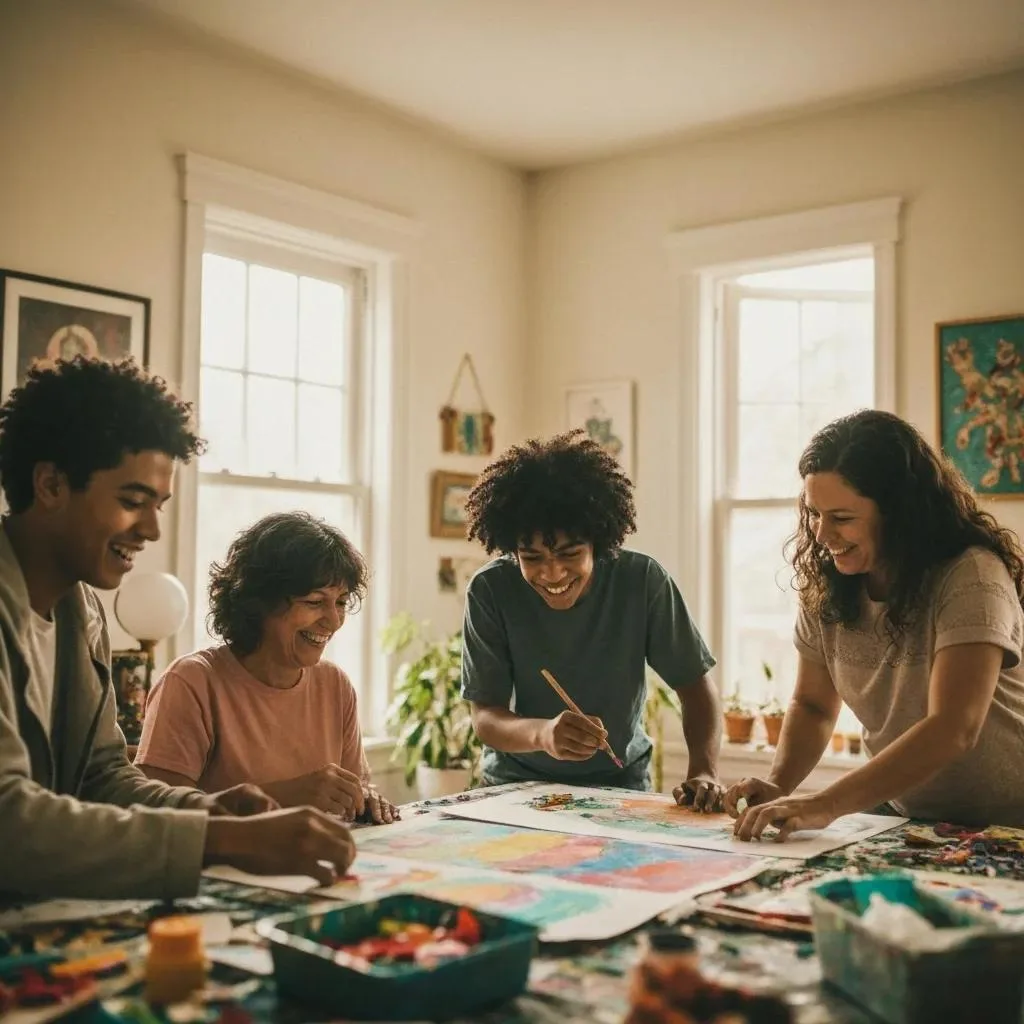
Families can support recovery by attending educational sessions, practicing guided at‑home art activities and respecting the boundaries set by the treatment team to protect privacy and safety. Family involvement usually focuses on learning supportive communication, co‑creating simple art tasks that reinforce coping skills, and participating in structured family‑art sessions when the client consents. At‑home activities — shared journaling with drawings, a collaborative collage of strengths, or a weekly mindful coloring time — provide low‑pressure ways to practice listening and reflection. Emulate offers family education and coordinated involvement as part of its structured approach, helping relatives understand confidentiality, timing and constructive participation. Below we explain resources and what families can expect if they choose to engage.
What resources does Emulate offer for family involvement in creative therapy?
Emulate provides family‑facing resources including informational briefings on art therapy, optional family‑art group sessions when appropriate, and practical guidance for supporting creative homework between appointments. These resources aim to improve family communication and give safe, structured ways to engage without compromising the client’s confidentiality. Clinicians emphasize trauma‑informed timing and consent so family participation is helpful rather than intrusive. Families are encouraged to coordinate involvement through the intake and scheduling process to ensure alignment with the client’s treatment plan and readiness.
How can family art therapy sessions enhance recovery and communication?
Family art therapy sessions foster recovery and communication by offering shared, structured activities that promote listening, mutual reflection and non‑verbal expression of feelings that are hard to say out loud. Paired collage, joint storytelling with images and similar exercises create neutral prompts for dialogue, helping rebuild trust and practice reflective listening in a supportive setting. Sessions are therapist‑facilitated with clear boundaries and debriefing to ensure emotional safety and constructive processing. When used appropriately, family art therapy strengthens relational supports that contribute to sustained recovery and improved household coping.
If you’d like guidance without pressure, we invite you to learn more about family involvement and our privacy practices.
Emulate Treatment Center guides individuals and families through clear, structured care options, including art therapy across detox, inpatient, outpatient and counseling pathways while maintaining safety and confidentiality. If you or a loved one are considering creative arts therapy as part of recovery, our team can explain intake steps, scheduling and family involvement options without pressure. We encourage questions about privacy safeguards and whether art‑based approaches fit your goals. Emulate prioritizes steady professional guidance, practical next steps and coordinated care to help people and families find the support they need.
Practical family support actions:
- Attend family education sessions to learn about art therapy goals and boundaries.
- Practice brief, structured at‑home art activities that reinforce coping skills.
- Coordinate joint sessions and scheduling through the treatment team.
These steps help families support recovery while respecting safety and confidentiality as clients engage in creative therapeutic work.
Frequently asked questions
What types of mental health conditions can benefit from art therapy?
Art therapy can help with a wide range of conditions, including anxiety, depression, PTSD and substance use disorders. By offering a non‑verbal outlet, it lets people explore and process emotions safely. Research shows art therapy can reduce symptoms, improve emotional regulation and strengthen coping — usually as part of a broader treatment plan alongside traditional therapies.
How long does an art therapy session typically last?
Sessions commonly last 45–90 minutes, depending on setting and goals. This timeframe allows for a grounding exercise, a focused creative activity and a reflective processing phase where the therapist and client link the work to coping strategies and treatment goals.
Can art therapy be effective for children and adolescents?
Yes. Art therapy is particularly useful with children and teens because it offers non‑threatening ways to express feelings they may not yet have words for. Creative work can boost self‑esteem, teach coping skills and address behavioral issues or trauma in developmentally appropriate ways.
What materials are typically used in art therapy?
Therapists use a range of materials: paints, colored pencils, markers, clay, collage supplies and textured items. Material choice depends on therapeutic aims and client preference — some tools invite sensory grounding while others support symbolic exploration.
Is art therapy suitable for people with no artistic skills?
Absolutely. Art therapy focuses on process over product. Therapists guide clients to use creative expression as a way to explore feelings and gain insight, not to produce polished artwork. No prior art experience is required.
How can families get involved in the art therapy process?
Families can support recovery by attending educational sessions, doing guided at‑home activities and joining family‑art sessions when the client consents. Emulate encourages family involvement that respects client confidentiality and aligns with therapeutic goals.
What should clients expect during their first art therapy session?
In the first session, expect a brief introduction and grounding exercise followed by a creative task tailored to your needs. The therapist will explain goals, set boundaries and create a safe space for exploration. This initial meeting focuses on building trust and comfort with the process.
Conclusion
Art therapy is a practical, evidence‑informed way to express emotions, process trauma and build coping skills through creativity. When added to an integrated treatment plan, it can improve emotional regulation and overall well‑being. If you or a loved one are curious about art therapy, contact Emulate Treatment Center to learn how our programs can support your recovery. Together, we can explore the healing potential of creativity in a safe, structured and compassionate setting.