


Understanding the Stages of Addiction and Recovery: A Comprehensive Guide to the Addiction Cycle and Recovery Journey
Addiction is a progressive condition in which repeated substance use or compulsive behaviors produce neuroadaptations, impaired control, and harmful consequences; recovery is the staged process through which individuals regain health, function, and self-directed goals. This guide explains both the stages of addiction development and the stages of recovery, using clear definitions, mechanisms, and practical next steps so readers can identify where they or a loved one may be in the addiction cycle and what evidence-based actions to take. Many people face confusion about how casual use becomes a substance use disorder and how recovery unfolds over time; addressing that uncertainty requires understanding behavioral reinforcement, tolerance, withdrawal, and the Transtheoretical Model’s stages of change. The article maps warning signs, stage-appropriate interventions, relapse-prevention strategies, and communication approaches for supporters so readers leave with a usable roadmap rather than abstract theory. We’ll begin by outlining the canonical stages of addiction development, then describe the Transtheoretical Model applied to recovery, followed by practical guidance for navigating treatment, relapse prevention tactics for long-term sobriety, and ways loved ones can support the process. Throughout, terms like stages of addiction, addiction cycle, recovery journey, relapse prevention strategies, and coping mechanisms for addiction recovery are integrated with semantic clarity to help readers act on the information immediately.
What Are the Key Stages of Addiction Development?
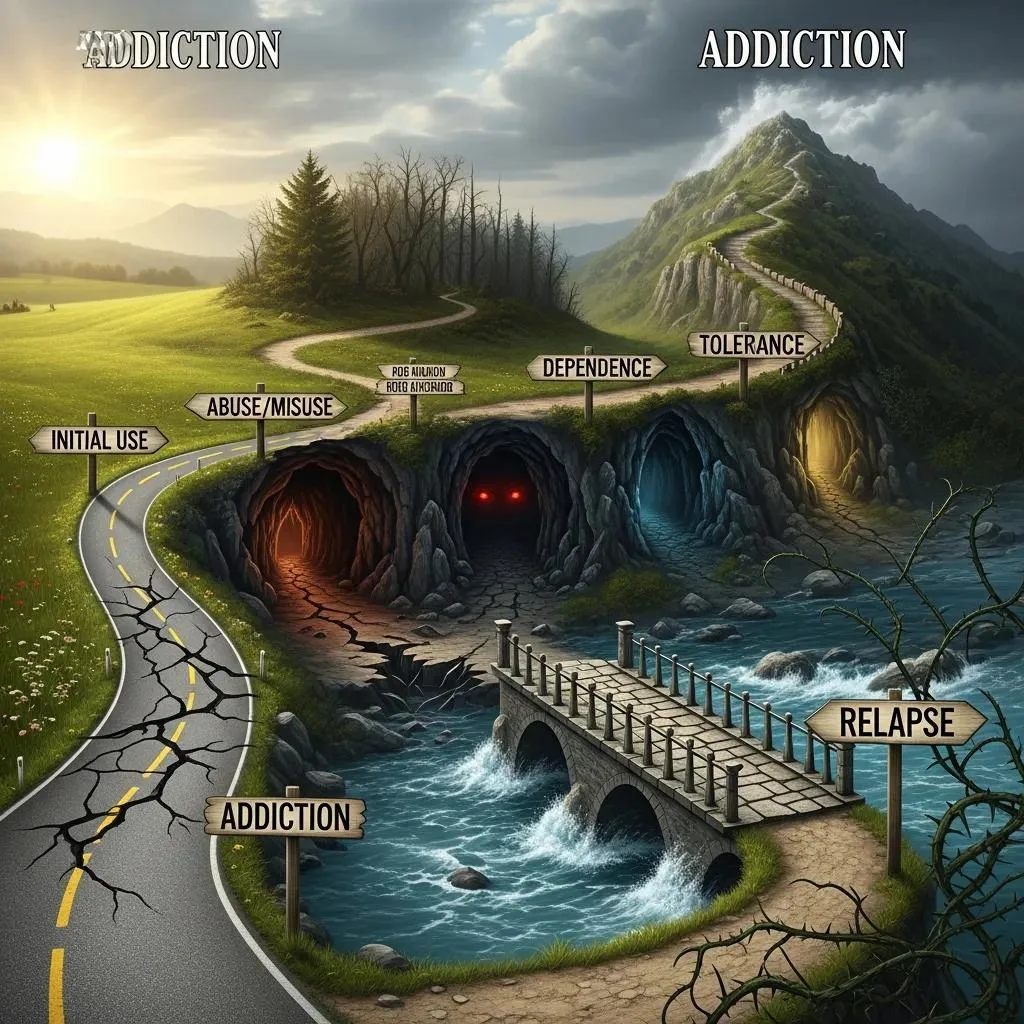
The stages of addiction development describe a progression from experimentation to compulsive use driven by behavioral reinforcement and neurobiological change, with each stage showing distinct behavioral and physiological markers. Recognizing these stages—Initial Use, Abuse/Misuse, Tolerance, Dependence, Addiction/Substance Use Disorder (SUD), and Relapse—helps clinicians and families match interventions to the severity and mechanisms involved. Early stages often reflect psychosocial drivers such as peer influence or coping with stress, while later stages reflect neuroadaptation where reward circuits and stress systems promote compulsive seeking despite negative consequences. Understanding these links clarifies why early recognition and targeted treatment reduce progression risk and why medical supervision becomes necessary as tolerance and withdrawal syndromes emerge. Below is a concise list of the canonical stages with one-line definitions designed for quick identification and featured-snippet style clarity.
The key stages of addiction development are:
- Initial Use: Voluntary experimentation driven by curiosity, social factors, or coping motives.
- Abuse / Misuse: Repeated harmful use that causes social, legal, or health problems without physiological dependence.
- Tolerance: Reduced effect from the same dose, leading to higher consumption to achieve prior effects.
- Dependence: Neuroadaptation producing withdrawal symptoms when substance use stops.
- Addiction (SUD): Compulsive use with impaired control, continued use despite harm, and significant functional decline.
- Relapse: Return to substance use after a period of abstinence, often triggered by stress or cues.
These concise definitions provide a quick way to spot where someone might be in the addiction cycle and indicate when escalation to clinical assessment is warranted. Recognizing these stages leads naturally to examining how initial use turns into sustained problematic use.
How Does Initial Use Lead to Addiction?
Initial use becomes a risk for later addiction when reinforcement learning, environmental triggers, and individual vulnerability converge to promote repeated behavior that strengthens neural reward pathways. People with genetic predispositions, early life stress, untreated mental health conditions, or certain social contexts are more likely to progress from experimentation to regular use because each rewarding episode reinforces behavior via dopamine-mediated learning. Repeated use builds conditioned cues—people, places, and emotional states—that evoke craving and automatic seeking, which accelerates movement into misuse and tolerance. Early warning signs include escalating frequency, using in risky situations, or using to cope with emotions; spotting these signs creates an opportunity for brief interventions and protective changes to prevent deeper neuroadaptation and dependence.
This explanation of mechanisms leads us to separate the observable signs of abuse, tolerance, and dependence so that practical differentiation and appropriate referral to medical care become clearer.
What Are the Signs of Abuse, Tolerance, and Dependence?
Abuse is characterized by harmful patterns—missed obligations, risky behaviors, or interpersonal conflicts—without necessarily showing physical withdrawal, whereas tolerance and dependence involve measurable physiological adaptation and withdrawal syndromes. Tolerance appears as the need for larger amounts to achieve the same effect, often accompanied by escalating use and risk-taking; dependence is evident when cessation produces withdrawal signs such as irritability, insomnia, tremor, sweating, gastrointestinal upset, or anxiety depending on substance. Functional impacts differentiate these stages: abuse often causes social/occupational decline, tolerance increases overdose risk, and dependence necessitates medical planning for safe detoxification. Medical evaluation is recommended when withdrawal risk is present or when tolerance-driven escalation raises safety concerns, since supervised detox and pharmacotherapy can mitigate medical dangers and support initial stabilization.
Understanding these clinical distinctions prepares the reader to consider structured models of recovery, specifically the Transtheoretical Model, which frames readiness and stage-appropriate supports.
Before moving into recovery stages, review the quick-reference comparison below that translates each development stage into observable indicators and the underlying mechanism that makes each stage consequential.
What Are the Stages of Addiction Recovery According to the Transtheoretical Model?

The Transtheoretical Model (TTM) frames recovery as movement through discrete, often non-linear stages—Precontemplation, Contemplation, Preparation, Action, Maintenance, and sometimes Termination—each defined by differing motivation, behavior change strategies, and supports required. TTM emphasizes that relapse is part of the process and that interventions must match readiness: motivational strategies in early stages, concrete planning and skill-building during preparation and action, and relapse prevention and reintegration during maintenance. Applying this model to the recovery journey helps individuals and clinicians tailor interventions such as motivational interviewing for ambivalence, structured treatment planning for action, and ongoing aftercare for sustained change. Understanding these stages also helps loved ones and providers recognize that movement is incremental and that supportive, stage-appropriate responses reduce resistance and promote durable outcomes.
Below is a comparative table aligning recovery stages with typical behaviors and practical steps to help readers self-identify and choose next actions.
How Do Precontemplation and Contemplation Stages Affect Readiness for Change?
Precontemplation involves limited recognition of harm and low readiness to change, while contemplation presents awareness coupled with ambivalence; both require strategies that increase motivation rather than immediate action. In precontemplation, the goal is to raise awareness using empathic dialogue and personalized feedback that links substance use to concrete life goals, whereas in contemplation the focus shifts to resolving ambivalence through decisional balance exercises and motivational interviewing techniques. Practical tactics include asking open-ended reflective questions, offering nonjudgmental information about risks and options, and suggesting small experiments (e.g., brief reductions) that preserve autonomy while testing outcomes. Involving family or professionals is appropriate when safety concerns exist or when ambivalence persists despite repeated brief interventions, since readiness often changes with supportive, non-confrontational input.
These early-stage techniques set the stage for preparation, where concrete planning becomes the focus and readiness translates into actionable steps.
What Happens During Preparation, Action, and Maintenance Stages?
Preparation is about concrete planning—setting goals, choosing treatments, arranging logistics—action involves initiating treatment services and behavior change, and maintenance focuses on sustaining gains through routines, coping, and aftercare plans. During preparation, individuals benefit from written plans, identification of barriers, selecting evidence-based options (behavioral therapies, medication when indicated), and mobilizing social supports. The action phase typically includes structured treatment components such as cognitive behavioral therapy, contingency management, medication-assisted treatment if appropriate, and supervised detox when dependence exists; early challenges often include cravings, sleep disruption, and emotional volatility. Maintenance emphasizes relapse prevention strategies, long-term coping skills, community reintegration, and periodic monitoring; success is measured by improved functioning and reduced recurrence of high-risk behaviors rather than absolute perfection. Expect setbacks and adjust plans accordingly, since relapse can inform stronger prevention strategies moving forward.
How Can Individuals Navigate the Recovery Journey Effectively?
Navigating recovery effectively requires a structured roadmap: acknowledge the problem, assess options, select stage-appropriate treatments, build a support network, and develop coping skills that replace substance-driven routines. Self-assessment tools and screening can clarify severity and readiness, while evidence-based treatments—behavioral therapies, medication when indicated, and structured aftercare—address both symptoms and underlying drivers such as co-occurring mental health disorders. Practical choices include choosing therapies aligned with one’s stage of change, creating a written relapse-prevention plan, and establishing daily routines that support sleep, nutrition, and stress management; these routines promote neuroplastic recovery by reinforcing healthy reward pathways. Recovery is incremental: celebrate small milestones, monitor progress with structured check-ins, and revise plans as needs evolve, since flexible, personalized strategies yield better long-term outcomes than one-size-fits-all approaches.
A practical checklist below organizes initial actions for someone recognizing a problem and preparing to seek help.
- Self-assess: Use validated screening questions to gauge frequency, harms, and readiness for change.
- Gather options: Identify evidence-based treatments and supports appropriate to your stage and severity.
- Plan first contact: Prepare a short script, list key concerns, and choose a safe setting for the conversation.
- Mobilize supports: Inform trusted friends or family and arrange for immediate safety if needed.
- Schedule intake: Book an assessment with a qualified clinician or service that matches your needs.
These actionable steps make the abstract process of seeking help concrete, and the next section explains specific practical actions for initial contacts and privacy considerations.
What Practical Steps Support Acknowledgment and Seeking Help?
Acknowledgment and help-seeking are facilitated by concrete tools: validated screening instruments, prepared conversation scripts, and clear safety plans for crisis situations. Screening tools help quantify risk and provide language to communicate concerns to clinicians, while scripts reduce anxiety when approaching supportive people or professionals—for example, stating observed changes, expressing care, and asking for help arranging an assessment. Privacy and safety considerations include selecting confidential settings, planning for transportation if intoxicated, and identifying emergency contacts if withdrawal presents medical risk. If immediate danger exists—overdose risk, severe withdrawal symptoms, or suicidal ideation—seek urgent medical evaluation; otherwise, schedule a structured intake with a provider experienced in substance use disorders. These steps convert recognition into manageable actions and prepare the individual for the treatment selection that follows.
How Do Support Systems and Coping Strategies Facilitate Recovery?
Support systems—family, peers, therapists, and mutual-aid groups—create social reinforcement for new behaviors, reduce isolation, and provide accountability that strengthens recovery-related neural pathways. Professional supports like cognitive behavioral therapy and medication-assisted treatment address both behavioral patterns and biological components of addiction, while peer support groups offer experiential guidance and long-term fellowship. Coping strategies include cognitive skills (urge surfing, thought reframing), behavioral tactics (exercise, sleep hygiene), and stress-reduction practices (mindfulness, breathwork) that replace substance-driven reward with healthy alternatives. Setting realistic, measurable goals and recognizing milestones supports motivation and produces positive reinforcement that sustains neural and behavioral change, making long-term sobriety more attainable.
What Are Effective Relapse Prevention Strategies for Long-Term Sobriety?
Effective relapse prevention combines trigger identification, practical coping plans, emergency supports, lifestyle adjustments, and ongoing monitoring to maintain gains and respond quickly when risk increases. Triggers fall into emotional, environmental, social, and physiological categories and require tailored tactics—emotion-focused coping for mood triggers, environmental restructuring for cue exposure, and boundary-setting for high-risk social contacts. Concrete prevention includes building a written relapse-prevention plan with warning signs, rapid-response steps, and designated supports, using behavioral rehearsals for high-risk scenarios, and maintaining routines that promote stability such as exercise, sleep, and community engagement. Aftercare options like continued therapy, alumni programs, and mutual-aid groups provide scaffolding for maintenance while periodic clinical reviews address co-occurring conditions and medication adjustments. Prioritizing these strategies reduces the frequency and duration of setbacks and supports durable recovery.
To match triggers to tactics, the following quick matrix helps readers connect common triggers to concrete prevention strategies and resources.
How Can Identifying Triggers Help Prevent Relapse?
Identifying personal triggers—specific people, places, emotions, or physiological states—creates the foundation for targeted prevention strategies that reduce automatic responses and enable deliberate coping. Simple exercises such as journaling cravings, mapping high-risk situations, and rating urge intensity after exposures reveal patterns that inform coping plans; once identified, triggers can be addressed through avoidance, environmental modification, skill rehearsal, or professional interventions like cue exposure therapy. Immediate tactics include urge-surfing, calling a designated support, and engaging a pre-planned distraction or grounding routine, while longer-term tactics involve building resilience via therapy and health routines that reduce physiological vulnerability. Regularly revisiting the trigger map and adjusting strategies ensures prevention remains aligned with evolving life circumstances and stressors.
What Plans and Supports Sustain Lifestyle Changes?
Sustaining lifestyle change relies on a layered approach: daily routines that reinforce stability, ongoing professional or peer supports for accountability, and structured aftercare programs for evolving needs. Core daily practices include consistent sleep, balanced nutrition, regular physical activity, and scheduled recovery-focused activities that replace substance use as a source of reward. Aftercare may involve continued therapy, alumni programs from treatment settings, mutual-aid groups, or community-based supports that provide long-term fellowship and relapse monitoring; scheduling periodic clinical check-ins helps detect early signs of recurrence or emerging comorbidities. Establishing review timelines—weekly for early recovery, monthly for maintenance—creates feedback loops for plan adjustment, and celebrating milestones helps maintain motivation. Embedding recovery into lifestyle routines shifts reinforcement away from substances toward sustained, meaningful activities.
How Can Loved Ones Support Someone Through Addiction and Recovery Stages?
Loved ones support recovery most effectively by recognizing the person’s stage, tailoring communication to readiness, encouraging treatment without enabling, and practicing self-care to remain effective allies over time. Understanding whether a person is in precontemplation, contemplation, or action changes the best response: curiosity and reflective listening in early stages, practical planning support in preparation, and active assistance with logistics during treatment. Boundaries and consistent consequences reduce enabling, while compassionate statements that link behavior to values foster motivation; scripts and role-plays help loved ones practice non-judgmental approaches that reduce defensiveness. Family self-care—attending support groups, seeking therapy, and maintaining personal routines—prevents burnout and models healthy coping, which ultimately supports sustainable recovery for the loved one.
- Do: Ask open-ended questions and listen reflectively to understand their stage.
- Do: Offer concrete help (transportation to appointments, childcare) when asked.
- Do: Set and maintain clear boundaries to avoid enabling harmful behaviors.
- Don’t: Use shame or punitive language that increases defensiveness.
- Don’t: Attempt to control treatment choices; instead, support evidence-based options.
What Communication Strategies Help Understand Their Stage?
Effective communication uses nonjudgmental listening, motivational interviewing techniques, and stage-appropriate messaging that encourage self-reflection rather than confrontation. Start with reflective statements that validate experience, then ask permission to share observations and use open-ended questions to explore ambivalence; for example, asking how substance use fits with their long-term goals invites contemplation. Avoid lecturing or ultimata that provoke withdrawal or secrecy, and instead offer small, tangible options such as attending a single assessment or trialing a brief reduction. Short example scripts and practice dialogues help family members approach sensitive conversations safely and productively. Using these techniques increases the chance the person will move toward preparation and active help-seeking.
How Can Families Encourage Treatment While Practicing Self-Care?
Families can encourage treatment by offering clear, compassionate referrals, helping arrange logistics, and maintaining firm boundaries that prioritize safety; at the same time, supporters must access their own resources to prevent burnout. Practical steps include preparing an intervention checklist with specific options, discussing consequences calmly, and facilitating initial appointments while ensuring family members also attend support groups or therapy. Boundary guidelines—limiting financial enablement, defining visitation rules, and communicating expectations—reduce chaos and clarify responsibilities. Self-care strategies such as peer support groups, individual counseling, and maintaining physical health provide emotional resilience that helps family members sustain long-term involvement without sacrificing their wellbeing.
- Recognize early warning signs and match responses to the person’s stage of change.
- Use motivational language and avoid confrontation in precontemplation and contemplation.
- Offer concrete assistance during preparation and action while maintaining boundaries.
- Prioritize family self-care through therapy and support groups to prevent burnout.