



Understanding Nar-Anon: How It Supports Families Affected by Addiction
Nar-Anon is a peer-led, 12‑step fellowship that helps family members and friends cope when someone they love struggles with drug addiction. Below we explain Nar‑Anon’s purpose, how the twelve‑step approach applies to families, common meeting formats and etiquette, and the practical benefits relatives frequently report. Many people feel isolated, anxious, or unsure how to respond when a loved one uses substances; Nar‑Anon offers structured peer support that reduces isolation and teaches healthier boundaries. You’ll also learn how Nar‑Anon relates to Al‑Anon and Narateen, and how medical and therapeutic care (detox, inpatient, outpatient, counseling) can work alongside family-focused peer support. Finally, we outline steps for finding meetings, what to expect the first time you attend, and how families can coordinate Nar‑Anon participation with professional treatment — including confidential, no‑pressure support Emulate Treatment Center can provide.
What Is Nar-Anon and How Does It Help Families?
Nar‑Anon is a mutual support fellowship for people affected by another person’s drug addiction. It centers emotional recovery through peer sharing and the 12‑step tradition. Members gain practical tools from shared experience, step work, and ongoing peer accountability — together these reduce isolation and teach skills that improve day‑to‑day functioning. Participation often helps family members reframe reactions, establish boundaries, and build consistent self‑care routines. The quick facts below summarize Nar‑Anon’s core supports to help you decide whether to try a meeting.
- Nar‑Anon is peer‑led and uses a 12‑step framework adapted for family recovery.
- Meetings emphasize anonymity, respectful sharing, and practical coping tools.
- Special formats (Narateen, speaker meetings, step studies) meet different age groups and learning preferences.
What Is the Purpose and History of Nar-Anon?
Nar‑Anon began as a companion fellowship to Narcotics Anonymous to address the emotional and behavioral effects addiction has on family and friends. Its purpose is to give affected relatives a place to share experience, strength, and hope without centering the addicted person’s clinical treatment — so family members can focus on their own recovery. Over time Nar‑Anon developed literature, meeting formats, and sponsorship practices similar to other 12‑step fellowships, while keeping a clear emphasis on family roles and boundaries. That history explains why Nar‑Anon pairs peer empathy with structured, behavior‑focused guidance and who typically benefits from attending.
Who Can Benefit from Nar-Anon Family Support?
Nar‑Anon welcomes adult family members, friends, and caregivers coping with another person’s drug addiction who want practical emotional support and recovery tools. Common participants include parents, spouses, siblings, grandparents, and close friends seeking to reduce enabling behaviors, learn to set boundaries, and manage stress tied to a loved one’s substance use. Narateen offers age‑appropriate meetings for adolescents and young adults. Families facing co‑occurring issues — such as mental health concerns or legal stressors — often find Nar‑Anon’s peer‑based coping strategies complement clinical supports and help inform next steps for coordinated care.
What Are the 12 Steps and Core Principles of Nar-Anon?
Nar‑Anon adapts the traditional 12 Steps to focus on family recovery: members recognize their powerlessness over another’s addiction, take personal inventories, make amends when appropriate, and pursue ongoing spiritual and practical growth. The central mechanism is accepting responsibility for one’s own thoughts and actions rather than trying to control the loved one’s substance use — a shift that typically reduces stress and strengthens boundary‑setting. Core principles include honesty, humility, service, and steady reliance on peer support to sustain long‑term change. Below is the steps list, followed by how those principles apply in family recovery.
- We admitted we were powerless over the addiction of our loved one and that our lives had become unmanageable.
- We came to believe a power greater than ourselves could restore us to emotional balance.
- We decided to turn our will and lives over to the care of a higher power as we understood it.
- We made a searching and fearless moral inventory of ourselves.
- We admitted to ourselves, to another person, and to a higher power the exact nature of our wrongs.
- We were entirely ready to have a higher power remove our defects of character.
- We humbly asked a higher power to remove our shortcomings.
- We made a list of people we had harmed and became willing to make amends.
- We made direct amends where possible, except when to do so would injure them or others.
- We continued to take personal inventory and promptly admitted when we were wrong.
- We sought through prayer and meditation to improve our conscious contact with a higher power.
- Having had a spiritual awakening, we carried the message to others and practiced these principles in all our affairs.
This ordered list clarifies each step’s intent and shows how step work helps family members move away from trying to control the addicted person and toward focusing on their own healing and healthier family dynamics.
What Are the 12 Steps of Nar-Anon?
The twelve steps act as a practical roadmap for emotional recovery: they move members from recognizing powerlessness to building ongoing practice and service. The steps encourage self‑examination, accountability, and spiritual growth — which translate into concrete actions like setting boundaries, improving communication, and engaging in sponsorship and meetings. Working the steps often includes reflective writing, guided sharing in step‑study groups, and mentorship from a sponsor who’s applied these principles in similar situations. Those practices help replace reactive habits with deliberate coping skills that increase stability and resilience.
How Do Nar-Anon’s Principles Guide Family Recovery?
Nar‑Anon’s guiding principles — anonymity, service, honesty, and personal responsibility — point families toward lasting change by combining nonjudgmental support with practical steps. Anonymity protects privacy so members can speak openly; service and sponsorship provide mutual accountability that reinforces healthier habits. In practice, members learn to limit enabling behaviors, adopt self‑care to reduce burnout, and use peer feedback to improve communication with the person who uses drugs. These principles produce measurable behavior changes: lower family stress, clearer expectations, and steadier daily routines.
What Happens at Nar-Anon Meetings and How Are They Structured?
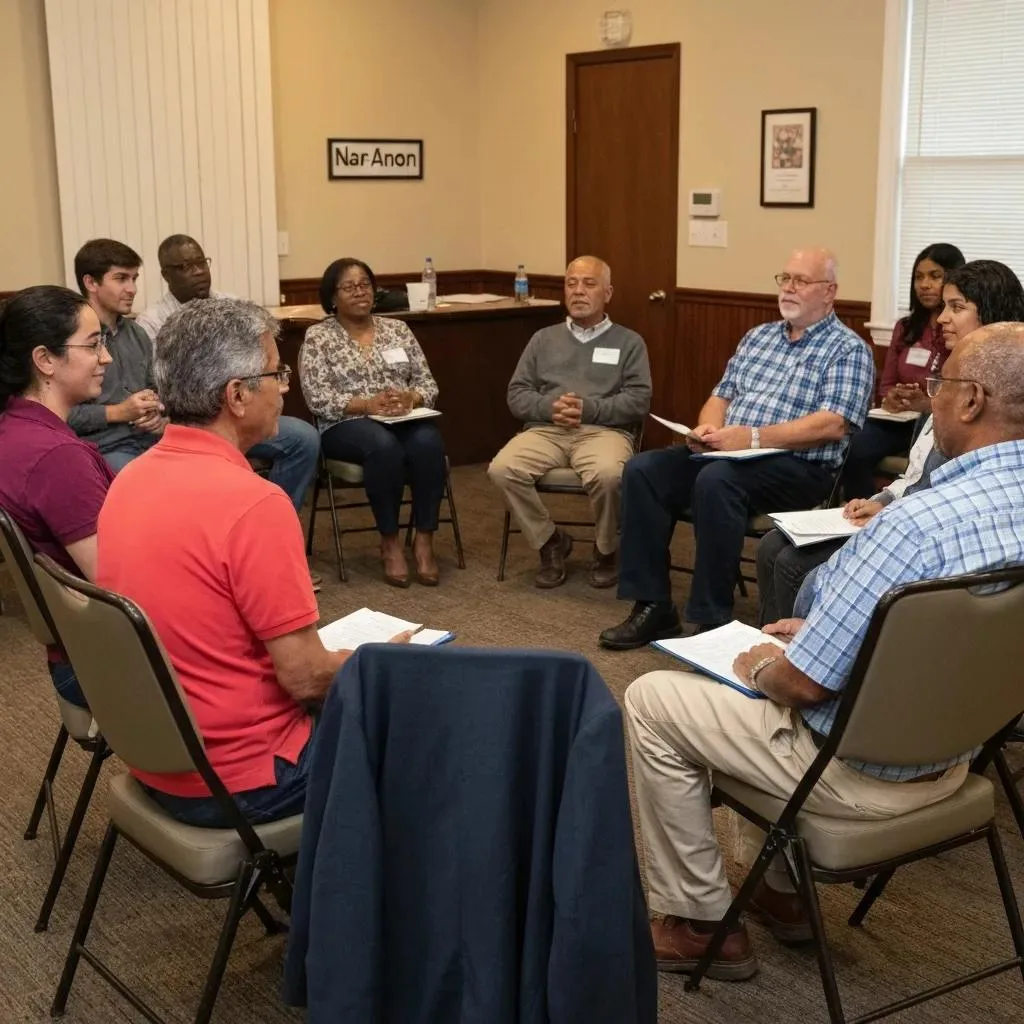
Nar‑Anon meetings come in several common formats — speaker meetings, discussion groups, step‑study meetings, and Narateen sessions — each suited to different learning styles and stages of recovery. The benefit comes from repeated exposure to peer stories and practical tools that normalize experience, model coping strategies, and offer social reinforcement for new behaviors. Meetings typically open with a reading or topic, include structured sharing with time limits, and close with resources; anonymity and confidentiality are stressed to keep the space safe. The table below summarizes meeting types and what newcomers can expect.
This breakdown helps newcomers choose the meeting type that best fits their needs, followed by practical guidance on attending and privacy expectations.
What Types of Nar-Anon Meetings Are There?
Speaker meetings feature a longer, prepared testimony from one member about their journey and coping strategies, often followed by group reflection — useful when you want a full narrative and concrete examples. Discussion meetings invite multiple attendees to share brief experiences around a chosen topic and get immediate peer feedback. Step‑study meetings dig into a specific step with readings and exercises that support personal change through structure and practice. Narateen meetings mirror these formats but are tailored for adolescents and young adults, offering a peer setting for younger family members to process confusion and fear.
How Does Nar-Anon Ensure Anonymity and a Safe Environment?
Anonymity is supported by practices like using only first names, discouraging outside contact without consent, and not allowing recordings or social media sharing of meeting content. Meetings typically start with ground rules — respectful listening, no cross‑talk during shares, and time limits so everyone has space — and groups encourage confidentiality between members. If safety or privacy concerns come up, members can speak privately with the chair or a sponsor, who can suggest next steps or alternate formats such as online or closed meetings.
If you need help finding meeting times that fit a treatment schedule or want practical coordination while a loved one receives care, see local resources and professional coordination options below or contact Emulate for confidential guidance.
What Are the Benefits of Nar-Anon for Families Coping with Addiction?

Nar‑Anon delivers emotional support, practical coping skills, and a community that models healthier behavior — all of which reduce isolation, ease anxiety, and improve boundary‑setting for family members. Those changes often translate into better day‑to‑day functioning, clearer communication, and a stronger ability to care for one’s own health while a loved one receives treatment. The table below compares core benefits, how Nar‑Anon provides them, and likely outcomes families can expect from regular participation.
These benefits usually appear through steady meeting attendance, engagement in step work, and service roles that reinforce new behaviors. Many members notice immediate relief from shame and gradual improvements in sleep, mood, and family interactions as they practice boundaries and self‑care. Over time, sustained engagement tends to increase problem‑solving skills and resilience, helping families manage crises more effectively and coordinate with treatment providers when needed.
How Does Nar-Anon Provide Emotional Support and Reduce Isolation?
Nar‑Anon reduces isolation by connecting you with peers who’ve lived similar experiences, which normalizes emotional responses and lessens shame. Meetings give structured opportunities to tell your story, receive empathetic feedback, and learn recovery language that replaces self‑blame. Over time members adopt practical tools — like setting limits and stepping away from enabling patterns — that lower chronic stress and clarify family roles. This shared learning improves emotional steadiness and helps people make clearer decisions under pressure.
What Personal Growth and Coping Skills Do Families Gain?
Members commonly develop concrete skills such as boundary‑setting, assertive communication, stress‑reduction techniques, and ways to protect privacy while seeking help. Skill building happens in step studies, through sponsorship, and by observing role models in meetings, where you can practice conversations and get feedback before trying them at home. These competencies reduce enabling behaviors and let family members prioritize their own mental health while still supporting a loved one in treatment. Those shifts foster healthier family dynamics and improve the chances of productive engagement with clinical care.
Peer support and clinical services complement each other: Nar‑Anon strengthens family coping and readiness, while Emulate Treatment Center can coordinate clinical treatments for the person with the substance use disorder as families continue their Nar‑Anon participation.
How Does Nar-Anon Differ from Al-Anon?
Nar‑Anon and Al‑Anon both use a 12‑step, peer‑support structure, but they differ mainly in focus: Nar‑Anon addresses the family impact of drug addiction, while Al‑Anon centers on the family effects of alcoholism. Differences show up in tailored literature, meeting themes, and common lived‑experience stories that reflect substance‑specific patterns. Both fellowships share core principles and can complement one another when alcohol and drugs are both involved. The summary below highlights the key distinctions and practical guidance for families choosing which group to attend.
- Focused audience: Nar‑Anon targets families affected by drug use; Al‑Anon targets those affected by alcohol use.
- Literature and examples: Each fellowship publishes material that reflects scenarios tied to different substances.
- Community culture: Meeting norms and common topics tend to reflect the patterns families face with drugs versus alcohol.
What Are the Key Differences Between Nar-Anon and Al-Anon?
The main distinction is topical: Nar‑Anon centers on behaviors and consequences commonly associated with drug addiction, while Al‑Anon centers on those associated with alcoholism. That focus shapes meeting content, suggested readings, and the types of stories members share. Membership practices and step interpretations are similar in structure but tailored in language and examples to each fellowship’s common scenarios. Choose the group whose examples resonate most with your situation — or attend both when alcohol and drugs are factors to gain broader perspectives.
How Do Both Support Groups Complement Each Other?
When addiction involves multiple substances or family roles look similar across substance types, attending both Nar‑Anon and Al‑Anon can broaden perspective and expand your peer network. Dual attendance gives access to a wider range of literature, diverse testimonies, and adaptable strategies that work across situations — like universal boundary‑setting and self‑care techniques. Practically, families may select meetings by topic or alternate groups to gather different insights. This combined approach often strengthens resilience and widens options for coordinated support.
How Does Emulate Treatment Center Support Families Alongside Nar-Anon?
Emulate Treatment Center offers clinical services that complement Nar‑Anon’s family recovery work, helping families and individuals pursue coordinated care without pressure or judgment. Emulate helps people understand treatment pathways — detox, inpatient, outpatient, and counseling — and connects families with referral and coordination support so Nar‑Anon participation can continue during medical and therapeutic care. The center emphasizes clear intake procedures, flexible scheduling to accommodate family meeting times, and privacy safeguards to protect personal information during coordination. The table below summarizes how Emulate’s services align with family needs and Nar‑Anon participation.
This comparison helps families weigh clinical options against availability and privacy needs so they can make informed choices while maintaining Nar‑Anon engagement.
How Does Professional Treatment Complement Nar-Anon Family Support?
Clinical treatment provides medical stabilization, evidence‑based therapies, and relapse‑prevention planning that directly address the substance use disorder, while Nar‑Anon focuses on the emotional recovery and behavior change of family members. Together they form a complementary system: clinical teams treat physiological and behavioral aspects of addiction, and Nar‑Anon helps family members manage their emotional responses and daily interactions in ways that support recovery and reduce enabling. Coordination depends on consent and boundaries; family involvement in treatment follows the patient’s privacy preferences and clinical team practices, and Emulate can offer non‑pressured guidance on staying engaged through Nar‑Anon while respecting those limits.
How Can Families Find Local Nar-Anon Meetings and Resources?
Start with official Nar‑Anon meeting directories and community listings, and consider online meetings when treatment schedules or caregiving responsibilities make in‑person attendance difficult. Practical steps include choosing meetings by format (speaker, discussion, step‑study, Narateen), checking times that match treatment visits or work schedules, and trying different meetings until you find the right fit. If scheduling conflicts arise because of a loved one’s treatment, online meetings or alternate times can keep support consistent; Emulate can suggest scheduling strategies and confidential referral pathways to local Nar‑Anon resources.
- Check Nar‑Anon directories for in‑person and online meeting times that fit your schedule.
- Prioritize meetings that match your needs (step study for structured work, Narateen for adolescents).
- Use online meetings when in‑person attendance conflicts with treatment or caregiving obligations.
Picking the right meeting and coordinating it with clinical schedules removes common logistical barriers and helps families keep a steady support network during a loved one’s treatment.
For families seeking confidential, no‑pressure assistance coordinating clinical options and peer support, Emulate Treatment Center can provide practical guidance on intake expectations, scheduling, and how to keep Nar‑Anon participation going during treatment transitions. Emulate’s role is to complement — not replace — peer support by helping families understand treatment options while preserving privacy and autonomy.
Frequently Asked Questions
What is the difference between Nar-Anon and other support groups for families?
Nar‑Anon specifically focuses on the challenges families face when a loved one uses drugs, while other groups like Al‑Anon focus on alcoholism. Each fellowship tailors its literature, meeting formats, and shared experiences to reflect the patterns that commonly arise with different substances, so members find examples and coping strategies that closely match their situation.
How can families effectively participate in Nar-Anon while managing treatment schedules?
Families can participate by choosing online meetings or selecting meeting times that align with treatment schedules. Check local directories for options and formats that suit your routine. Emulate can help coordinate scheduling so families can maintain their support network while still being present for loved ones during treatment — a flexibility that can lower stress and improve outcomes.
What role does sponsorship play in Nar-Anon?
Sponsorship offers one‑on‑one guidance from someone who’s navigated similar challenges. A sponsor helps you work the 12 Steps, offers perspective, and provides accountability as you apply these principles to daily life. That relationship supports deeper understanding and sustained personal growth.
Can Nar-Anon help families with co-occurring issues, such as mental health challenges?
Yes. Nar‑Anon’s coping strategies and peer support can be especially helpful when families face co‑occurring issues like mental health challenges. The group setting offers practical tools and emotional support that help family members manage stress while supporting a loved one with addiction. For clinical needs, combining Nar‑Anon with professional care usually gives the best results.
What should newcomers expect during their first Nar-Anon meeting?
Expect a respectful, welcoming space where you can listen or share at your own pace. Meetings often begin with readings, followed by structured sharing where people express thoughts and feelings. Anonymity is emphasized, so newcomers can participate without fear of judgment. Take your time — participation grows at your own comfort level.
How does Nar-Anon address the issue of enabling behaviors?
Nar‑Anon helps members identify and change enabling behaviors through shared stories and structured discussion. Members learn to spot patterns that unintentionally support addiction — like making excuses or taking on too much responsibility — and practice boundary‑setting and personal accountability so they can prioritize their own wellbeing.
What resources are available for families seeking additional support beyond Nar-Anon?
Beyond Nar‑Anon, families can access counseling, educational workshops, and targeted support groups. Emulate Treatment Center offers clinical services that complement Nar‑Anon, including guidance on treatment options and coordination. Online resources, books, and community programs can also expand understanding and coping strategies, building a stronger support network for families.
Conclusion
Nar‑Anon offers meaningful support for families navigating the challenges of addiction — helping members build emotional resilience, practical coping skills, and clearer boundaries. By joining this peer‑led fellowship, family members can reduce isolation and strengthen their wellbeing while a loved one seeks professional care. If you’re ready to start, look for a local Nar‑Anon meeting today — and reach out to Emulate Treatment Center if you’d like confidential, no‑pressure help coordinating clinical options alongside family support.