



Effective OCD & Substance Use Treatment: Integrated Care for Dual Diagnosis Recovery
Obsessive‑compulsive disorder (OCD) and substance use disorder (SUD) frequently occur together, creating a dual diagnosis that needs coordinated care for the best chance at recovery. This guide lays out how co‑occurring OCD and substance abuse typically present, why integrated treatment improves outcomes, which therapies work best, how medication is used safely alongside therapy, the levels of clinical support available, and practical ways families can help. You’ll find step‑by‑step expectations for intake, detox, residential and outpatient pathways, and learn how evidence‑based approaches like cognitive behavioral therapy (CBT) and exposure and response prevention (ERP) are adapted when substance use is present. Throughout, we use terms such as co‑occurring OCD, OCD addiction, dual diagnosis OCD substance use, and integrated treatment OCD and addiction to clarify options and next steps for people and families seeking help.
What Is Dual Diagnosis for OCD and Substance Abuse?
“Dual diagnosis” means a person has both OCD and a substance use disorder at the same time, and the two conditions influence each other. Many people begin using alcohol or drugs to ease intrusive thoughts or interrupt ritual cycles, while substance use can increase anxiety and make compulsive behaviors worse. Spotting a dual diagnosis early matters because treating only one condition often leaves the other untreated and raises relapse risk. Clinicians assess mood, behavior, thinking patterns, and substance use to create a single, integrated plan that treats both conditions together.
How Do OCD and Substance Use Disorder Interact?
OCD and SUD can become linked through behavioral and brain‑level feedback loops: compulsive rituals and substance use can both serve as short‑term coping strategies that ultimately reinforce each other. Someone might use substances to numb intrusive thoughts or shorten rituals, which reduces anxiety briefly but strengthens the pattern over time. Shared neurobiology—like disrupted reward circuits and heightened stress response—can make cravings and obsessions harder to break, increasing relapse risk. That overlap is why effective care addresses triggers, safety planning, and both symptom sets in a coordinated way.
What Are the Signs and Symptoms of Co-Occurring OCD and Substance Abuse?
A focused checklist helps families and clinicians distinguish core OCD symptoms from substance‑related signs while spotting the overlap that suggests dual diagnosis. OCD typically shows up as persistent intrusive thoughts, time‑consuming rituals, avoidance, and rising anxiety when rituals are blocked. Substance use signs include tolerance, withdrawal, preoccupation with obtaining substances, and continued use despite harm. When substance use appears alongside worsening compulsions or new substance‑linked rituals, dual diagnosis is likely. Urgent care is needed for severe withdrawal risk, suicidal thinking, or situations where impaired judgment threatens safety—recognizing these red flags helps get the person into the right level of care quickly.
- OCD signs often include frequent intrusive thoughts, repetitive rituals, avoidance of triggers, and significant time spent on compulsions.
- Substance use signs may include increased tolerance, withdrawal symptoms, loss of control, and continued use despite negative consequences.
- Combined red flags include using substances to relieve obsessional anxiety, missed responsibilities, risky behaviors, or increasing social isolation.
These patterns guide an integrated clinical intake that evaluates mental‑health symptoms and substance‑related risks before recommending next steps.
Why Is Integrated Treatment Essential for OCD and Addiction?
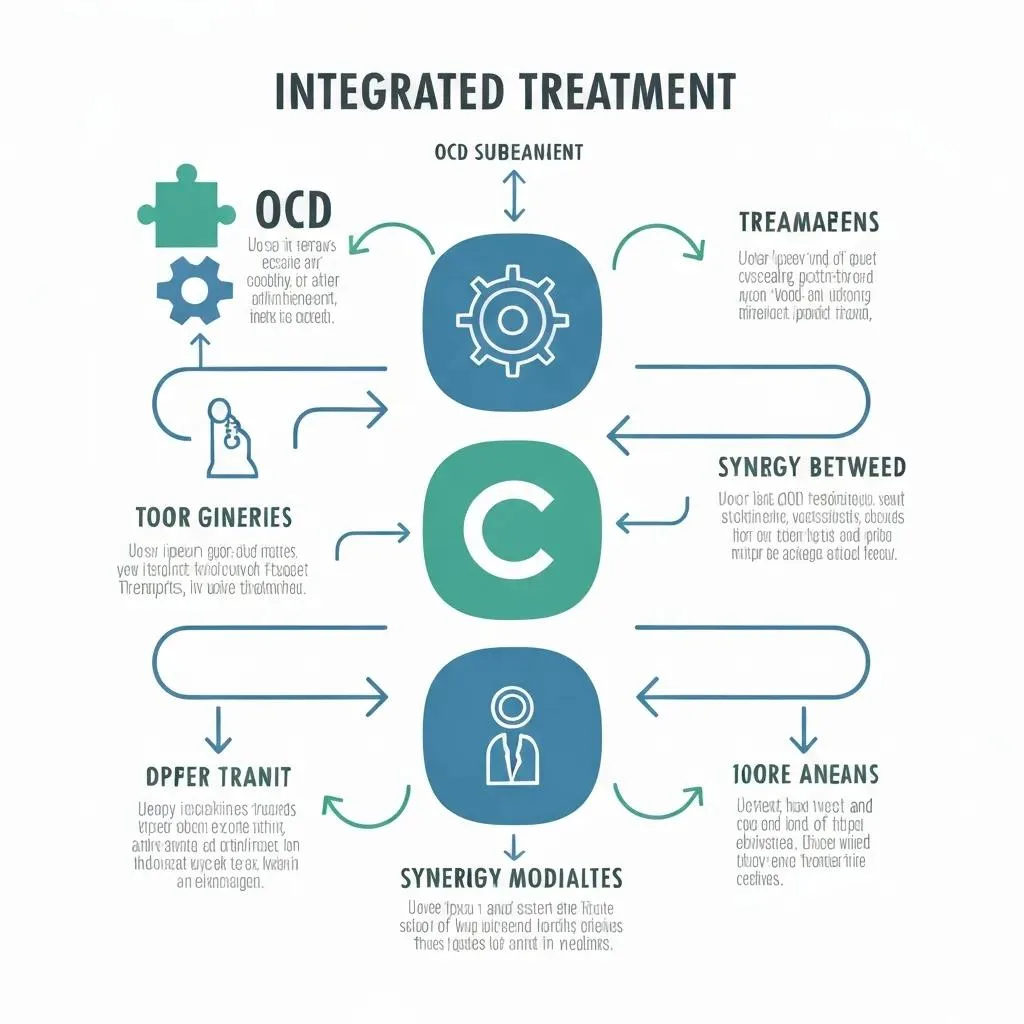
Integrated treatment—where therapy, psychiatry, nursing, and case management work from a single plan—is essential because it reduces fragmentation and addresses the mechanisms that link OCD and substance use. When teams share goals, patients are more likely to take part in exposure work, stick with medications, and maintain abstinence, all of which lower relapse risk. Treating the disorders separately can produce conflicting priorities (for example, focusing on abstinence without treating obsessional triggers), which often leads to repeated treatment episodes. Integrated care combines assessment, therapy strategies, and continuity across levels to meet the complex needs of people with dual diagnosis.
- Shared clinical planning: One unified plan aligns goals across providers and avoids contradictory interventions.
- Simultaneous symptom management: Treating both disorders together makes exposures and behavior change more effective.
- Continuity of care: Integrated pathways minimize gaps during transitions from detox to inpatient or outpatient services.
These principles inform practical decisions about therapy sequencing, medication monitoring, and family involvement explored in the sections that follow.
How Does Treating OCD and Substance Abuse Together Improve Outcomes?
Addressing OCD and substance use at the same time improves outcomes by tackling drivers of substance use while reducing the anxiety and rituals that maintain misuse. Research and program data show better retention, fewer relapses, and improved functioning when care is coordinated. Many people feel safer doing ERP once cravings are managed and medication is monitored, which supports more effective exposure work. These advantages support the use of multidisciplinary teams for dual diagnosis care.
What Are the Risks of Treating OCD and Substance Abuse Separately?
Separating treatment risks fragmented care, delayed symptom relief, and higher relapse because one disorder can undermine progress in the other. For example, SUD‑only programs may leave intrusive thoughts untreated, pushing someone back to substance use to cope; likewise, doing ERP without stabilizing substance use can be unsafe or ineffective. Fragmentation also creates inconsistent messaging, duplicated assessments, and gaps during transitions—problems that reduce engagement and recovery success. That’s why integrated assessment and planning at intake are so important.
Which Therapies Are Most Effective for Treating OCD and Substance Abuse?
Evidence‑based care for co‑occurring OCD and substance use centers on CBT and ERP as the foundation, with DBT and motivational interviewing (MI) as key adjuncts. CBT addresses the thinking and behavior patterns that sustain both compulsions and substance use; ERP targets avoidance and rituals through structured exposures. DBT builds distress tolerance and emotion regulation skills helpful for resisting cravings, and MI strengthens motivation when ambivalence is present. Blending these approaches into a clear, sequenced plan lets clinicians introduce exposures safely while reinforcing relapse‑prevention skills.
Below is a quick reference that explains core therapies, how they work, and what they target in dual diagnosis care.
Different therapies offer complementary strengths for treating co‑occurring conditions.
How Does Cognitive Behavioral Therapy Help Dual Diagnosis Patients?
CBT helps by identifying and changing the thoughts and behaviors that maintain both obsessional cycles and substance use. Techniques like cognitive restructuring, behavioral experiments, and skills training reduce catastrophic thinking and avoidance while teaching alternatives to substance use. CBT sessions typically include relapse‑prevention work, craving‑management strategies, and problem‑solving for triggers that overlap with obsessions. By strengthening coping options, CBT increases the chance that patients can engage safely in ERP and keep making progress after discharge.
What Role Does Exposure and Response Prevention Play in OCD and Addiction Treatment?
ERP is the most effective therapy for OCD and remains central when substance misuse is present, but it must be adapted to reduce relapse risk. ERP uses hierarchies of feared situations and prevents rituals; when substance‑related cues appear, clinicians add safety planning and targeted craving‑management skills. Providers usually start with lower‑risk exposures and pair ERP with CBT and DBT strategies so patients aren’t tempted to use substances as a coping tool. Properly integrated ERP reduces avoidance and helps break the link between obsessional distress and substance use over time.
How Do Dialectical Behavior Therapy and Motivational Interviewing Support Recovery?
DBT and MI bolster recovery by improving emotion regulation, relationships, and treatment engagement—areas often strained when OCD and SUD coexist. DBT teaches practical skills for tolerating distress and managing impulses so patients can resist compulsions and substance use in high‑stress moments. MI opens a nonjudgmental conversation that uncovers personal motivations and increases willingness to participate in ERP and medication plans. Together, these modalities complement CBT and ERP by preparing patients to handle day‑to‑day challenges and stick with their recovery plan.
What Are the Different Levels of Care for OCD and Substance Abuse Treatment?
Care levels range from medical detoxification to outpatient therapy and ongoing aftercare, with each level offering different intensity and supports for dual diagnosis patients. The right level depends on withdrawal risk, psychiatric stability, safety, and OCD severity. A typical care pathway starts with a comprehensive dual‑diagnosis assessment, may include detox or inpatient stabilization as needed, moves to PHP or IOP for intensive therapy, and then steps down to outpatient care and community supports. Clear communication about each level helps families plan for safe transitions.
Below is a practical comparison describing usual duration/intensity and who benefits at each level of care.
Compare levels of care to match clinical need with available services.
This comparison clarifies how intensity of care matches clinical needs and helps plan safe transitions between services.
Emulate Treatment Center provides comprehensive evaluation and guidance across these levels, helping individuals and families choose the appropriate next steps based on an integrated assessment. When needed, Emulate can coordinate care that includes medical detox, inpatient stabilization, PHP, IOP, and outpatient services to support recovery from co‑occurring OCD and substance use.
When Is Medical Detoxification Necessary for Substance Abuse?
Medical detox is necessary when withdrawal presents a significant medical or psychiatric risk and needs supervised management. Signs include a history of severe withdrawal (for example, seizures or delirium tremens), poly‑substance use, unstable medical conditions, or acute psychiatric symptoms that make staying safe at home unlikely. Detox provides 24/7 monitoring, medications to ease withdrawal, and short‑term stabilization so patients can enter the next level of care safely. Recognizing these criteria early helps families avoid dangerous, unsupported home detox attempts.
What Does Inpatient Treatment Involve for Co-Occurring Disorders?
Inpatient or residential care offers round‑the‑clock support with a structured daily schedule of individual therapy, group sessions, medication oversight, nursing care, and education tailored to co‑occurring disorders. Typical days combine CBT/ERP groups, DBT or skills training, psychiatric review, and coordinated case management—creating a safe setting to begin exposure work while minimizing substance‑use risk. Family education and supported contact are often part of care when appropriate, balancing privacy with meaningful involvement. This level stabilizes symptoms and prepares patients for the next step in recovery.
How Do Partial Hospitalization and Intensive Outpatient Programs Support Recovery?
PHP and IOP bridge inpatient care and outpatient therapy by offering frequent, structured treatment that keeps people connected to community life while providing clinical intensity. PHP usually resembles a full treatment day and suits those needing intensive therapy without 24/7 supervision. IOP offers fewer hours, allowing patients to maintain work or family responsibilities while receiving focused therapy and relapse‑prevention support. Both levels emphasize group skills training, individual therapy, medication coordination, and transition planning to lower the chance of readmission.
What Support Is Available Through Outpatient Counseling and Aftercare?
Outpatient counseling and aftercare provide long‑term maintenance through individual psychotherapy, medication management, family sessions, and peer or 12‑step supports that reinforce recovery skills. Ongoing care focuses on sustaining gains from ERP/CBT, managing stressors that trigger obsessions or cravings, and updating relapse‑prevention plans as life changes. Community resources—sober support networks, vocational programs, and education services—complement clinical care and aid reintegration. Reliable aftercare reduces relapse risk by maintaining accountability, monitoring symptoms, and addressing new challenges early.
How Is Medication Management Used in Treating OCD and Substance Abuse?
Medication supports treatment by lowering symptom severity so people can engage more fully in therapy and by treating physiological aspects of dependence under medical supervision. For OCD, selective serotonin reuptake inhibitors (SSRIs) are commonly prescribed to reduce intrusive thoughts and baseline anxiety, which helps with ERP participation. For SUD, evidence‑based pharmacotherapies can reduce cravings or stabilize withdrawal when clinically appropriate. Medication decisions are made collaboratively—psychiatrists, therapists, and nursing coordinate care, monitor for interactions and side effects, and time changes to support, not undermine, behavioral work.
Below is a concise overview of common medication types, their purposes, and how monitoring fits with therapy.
Medications are an adjunct to psychosocial treatment and require close coordination.
This overview emphasizes that medication supports behavioral work and must be integrated into a broader treatment plan.
Emulate Treatment Center provides coordinated medication management alongside psychotherapy, ensuring medication changes and monitoring are aligned with CBT/ERP and the overall recovery plan, without making specific medical claims.
What Medications Are Commonly Prescribed for OCD and Substance Use Disorder?
For OCD, SSRIs are the most common class used to reduce intrusive thoughts and create a stable baseline for behavioral treatment. For substance use disorders, a range of medically supervised options may help manage withdrawal or reduce cravings depending on the substance and medical history. Medication choices are individualized, regularly reviewed, and discussed with the treatment team to avoid interactions and to time adjustments so they support ERP and other therapies.
How Does Medication Management Integrate with Therapy and Treatment Plans?
Medication management is integrated through regular interdisciplinary meetings where psychiatrists, therapists, and nursing staff review symptoms, side effects, and progress to coordinate adjustments that enable psychotherapy. Medication can reduce symptom intensity enough to allow safe exposures, improve mood stability for learning skills, and minimize withdrawal barriers to participation. Frequency of review varies with clinical need—often weekly during stabilization and periodically during outpatient care. This collaborative model keeps medication aligned with therapeutic goals and patient safety.
How Can Families Support Recovery from OCD and Substance Abuse?

Families are a vital part of recovery when they provide education, structure, and consistent boundaries while respecting the person’s privacy and autonomy. Practical steps include learning how OCD and SUD interact, joining family therapy when invited, and creating safety plans that limit access to substances without enabling. When family actions match the clinical plan—reinforcing relapse‑prevention strategies, encouraging therapy attendance, and seeking caregiver support—they create a steadier environment for long‑term recovery.
Families can help in practical, nonclinical ways.
- Learn about OCD and substance use to recognize triggers and avoid unintentionally enabling behavior.
- Set clear, consistent boundaries that prioritize safety and accountability.
- Join family therapy or support groups to build communication and relapse‑prevention skills.
These steps let families provide steady, supportive care while clinicians manage clinical interventions and confidentiality.
What Is the Role of Family Therapy in Dual Diagnosis Treatment?
Family therapy educates relatives about co‑occurring disorders, improves communication, establishes healthy boundaries, and creates a shared relapse‑prevention plan that supports the person’s recovery goals. Sessions cover when to respond to cravings, when to contact clinicians, and how to support ERP homework without increasing anxiety. Confidentiality is explained so families understand what the treatment team can share while protecting the patient’s privacy. Participation is voluntary and adapted to the family’s readiness, with the goal of reducing conflict and strengthening supportive involvement.
How Do Support Groups Help Families and Patients Maintain Long-Term Recovery?
Support groups provide peer connection, practical tips, and ongoing accountability that complement clinical care. Options include SUD‑focused groups, OCD‑specific forums, and family‑oriented supports for caregivers. These groups reduce isolation, offer lived‑experience guidance, and provide encouragement between formal therapy sessions. Combining clinical treatment with peer and family supports builds resilience and creates multiple pathways for sustained recovery.
Emulate Treatment Center helps families understand care options and connect with appropriate resources, offering a calm, privacy‑respecting invitation to request a comprehensive assessment or learn more about available programs. Individuals and families seeking guidance are encouraged to contact Emulate for an integrated evaluation that clarifies the best level of care for co‑occurring OCD and substance use.
Frequently Asked Questions
What are the long-term effects of untreated dual diagnosis of OCD and substance abuse?
Untreated dual diagnosis can lead to worsening symptoms of both disorders, chronic mental‑health problems, and higher relapse risk. Over time, daily functioning, relationships, and work or school can suffer, and additional conditions—like depression or anxiety—may develop. Early intervention reduces these risks and improves the chance for sustained recovery.
How can I identify if someone is struggling with both OCD and substance abuse?
Look for a mix of obsessive thoughts, repetitive rituals, or avoidance together with signs of substance use such as withdrawal, increasing tolerance, or neglecting responsibilities. If the person uses substances to cope with anxiety or compulsions, that suggests a possible dual diagnosis. Approach them with empathy and nonjudgmental concern, and encourage professional evaluation—early recognition improves treatment options.
What role does aftercare play in the recovery process for dual diagnosis patients?
Aftercare provides ongoing support that helps maintain sobriety and manage OCD symptoms after higher‑intensity treatment. It includes regular therapy, medication follow‑up, support groups, and updated relapse‑prevention planning. Aftercare reinforces skills learned in treatment, addresses new stressors, and keeps people connected to supports that reduce the chance of relapse.
How can medication management be adjusted during treatment for dual diagnosis?
Medication is adjusted based on response, side effects, and changing symptoms. Regular assessments by the treatment team guide decisions such as dose changes, switching medications, or adding short‑term adjunctive agents. Collaboration between psychiatry, therapy, and nursing ensures medication supports therapeutic goals and patient safety throughout care.
What are some common misconceptions about dual diagnosis treatment?
Common misconceptions include the idea that one disorder can be treated successfully without addressing the other, or that a person must be fully sober before receiving help for OCD. In reality, integrated treatment is most effective. Another myth is that people with dual diagnosis lack motivation—many experience ambivalence and benefit from motivational strategies and supportive care. Understanding these points helps families seek appropriate, compassionate treatment.
How can families effectively communicate with a loved one struggling with dual diagnosis?
Communicate with compassion and without blame. Focus on observable behaviors rather than labels, use active listening, and express concern while offering support. Encourage open discussion about treatment options and show willingness to help the person access care. Setting clear boundaries while maintaining respect and support creates a safer environment for recovery.
Conclusion
Integrated treatment for co‑occurring OCD and substance use offers a practical, evidence‑based path to recovery by addressing both conditions together. Understanding how obsessive‑compulsive behaviors and substance use interact helps people and families choose therapies that fit their needs. If you’re exploring care options, Emulate Treatment Center can guide you through assessment and the right level of treatment to support sustained recovery. Reach out to learn more about next steps.