


Trauma-Informed Therapy: Healing from Past Experiences with Effective Trauma Care
Trauma-informed therapy is a treatment framework that recognizes the widespread impact of trauma and intentionally organizes care around safety, collaboration, and empowerment to support healing. This approach works by shifting the clinical question from “What’s wrong with you?” to “What happened to you?”, which changes interventions, pace, and outcomes by prioritizing nervous-system regulation and relational safety. Readers will learn how trauma affects mind and body, the core principles that guide trauma-informed care, the evidence behind major therapy modalities, and practical steps for finding and working with trauma-informed clinicians. The article maps the trauma recovery journey from stabilization through processing to post-traumatic growth, offering concrete coping skills, modality comparisons, and clinician-selection checklists informed by current research. As you move through each section you’ll see how safety, somatic regulation, and collaborative practices translate into measurable symptom reduction and long-term resilience.
What is Trauma-Informed Therapy and Why Does It Matter?
Trauma-informed therapy is a framework that integrates an understanding of trauma’s effects into every aspect of clinical practice, prioritizing safety, trust, and collaboration to improve outcomes. It matters because when clinicians recognize trauma’s neurobiological and social impacts they adapt pacing, consent, and techniques to reduce retraumatization and enhance engagement, which directly improves symptom reduction and relationship repair. Current research shows that trauma-aware approaches reduce dropout and increase the effectiveness of evidence-based interventions, making them crucial for sustainable recovery. This foundation sets up a contrast with more conventional therapeutic models and explains why principle-based care yields better long-term results for survivors.
How Does Trauma-Informed Therapy Differ from Traditional Therapy?
Trauma-informed therapy differs from traditional therapy in clinician stance, pacing, and emphasis on safety: clinicians adopt a collaborative, nonjudgmental posture that centers client choice and regulation strategies. Traditional models often focus on symptom change and insight without explicitly addressing physiological arousal or historical power dynamics, whereas trauma-informed clinicians integrate stabilization and consent before deep processing. For example, a trauma-informed therapist will pause exposure work to teach grounding and renegotiate consent, which reduces the chance of overwhelming clients and promotes sustained engagement. Understanding these differences helps clients choose approaches that align with nervous-system regulation and relational repair, leading into the practical listing of core principles that guide trauma-informed care.
What Are the Six Principles of Trauma-Informed Care?
The Six Principles of Trauma-Informed Care provide a practical map for safer, more effective services and programs grounded in trauma knowledge.
- Safety: Create physical and emotional environments where clients feel secure and protected.
- Trustworthiness & Transparency: Maintain clear communication and predictable practices to build reliability.
- Peer Support: Use shared experiences to normalize recovery and foster mutual validation.
- Collaboration & Mutuality: Share power and decision-making between clinician and client.
- Empowerment, Voice & Choice: Center strengths and provide options to increase agency.
- Cultural, Historical & Gender Awareness: Recognize systemic and identity-based factors that shape trauma responses.
These principles translate into concrete practices—safety planning, transparent consent, and culturally attuned interventions—that directly reduce re-traumatization and improve engagement, which leads naturally to understanding trauma’s effects on mind and body.
How Does Trauma Impact Mind and Body? Understanding Trauma Types and Effects

Trauma alters brain-body systems by dysregulating the stress response (HPA axis), heightening amygdala reactivity and sometimes impairing hippocampal memory integration, which leads to persistent hyperarousal, intrusive memories, and difficulties with context. These neurobiological changes produce both emotional symptoms like anxiety and shame and physical outcomes such as chronic pain, gastrointestinal distress, and sleep disruption. Recent studies indicate that trauma becomes embodied—autonomic dysregulation and somatic memory sustain symptoms even when conscious memories are fragmented. Recognizing these pathways clarifies why therapies that include somatic regulation and memory reprocessing often yield better outcomes than talk-only approaches and prepares us to categorize trauma types for tailored interventions.
What Are the Different Types of Trauma?
Trauma can be categorized into several types that affect treatment choices: single-incident trauma, complex/developmental trauma, childhood adverse experiences, medical trauma, racial and intergenerational trauma, and secondary/vicarious trauma. Single-incident trauma (e.g., an accident) often responds well to time-limited reprocessing therapies, while complex developmental trauma requires integrative, phase-based care focusing on stabilization and relational repair. Racial and intergenerational trauma intersect with systemic factors and require culturally informed approaches to validate historical harms. Knowing the trauma type informs modality selection and pacing, which connects directly to the symptom patterns and therapeutic strategies discussed next.
How Does Trauma Affect Emotional and Physical Well-Being?
Trauma manifests through emotional symptoms—hypervigilance, flashbacks, emotional numbing, avoidance—and physical symptoms—sleep problems, chronic pain, somatic tension, and autonomic instability. These outcomes are linked: persistent hyperarousal increases muscle tension and pain, while avoidance and numbing affect social bonds and mood regulation. Grounding and somatic check-ins can interrupt these patterns by down-regulating the nervous system; simple techniques like paced breathing and sensorimotor tracking often reduce acute distress. Integrating emotional and physical symptom management into therapy creates a bridge from initial stabilization toward processing and growth.
What Are the Benefits of Trauma-Informed Therapy for Healing and Recovery?
Trauma-informed therapy produces multiple benefits across emotional, relational, and physical domains by addressing safety, trust, and somatic regulation as core mechanisms of change. Clinically, clients experience reduced PTSD symptoms, improved mood, and better daily functioning; relationally, they often regain trust and relational capacity; physically, they report less hyperarousal, fewer somatic complaints, and improved sleep. Evidence from contemporary studies supports symptom reduction when trauma-informed principles are combined with trauma-focused modalities, and outcomes often improve when treatment includes peer support and culturally responsive care. These linked benefits explain why integrating trauma knowledge into therapy is not optional but foundational for reliable recovery trajectories.
Before examining specific modality comparisons, this table links core benefits to the mechanisms that produce them and suggests expected timelines for observable change.
This table clarifies how mechanisms like safety and somatic work map to outcomes, and it underscores realistic timelines for recovery, which immediately relates to how clinicians enact safety and empowerment in sessions.
How Does Trauma-Informed Care Promote Safety, Trust, and Empowerment?
Trauma-informed care promotes safety through clear boundaries, predictable processes, collaborative goal-setting, and consent practices that restore client agency. Clinicians use practical tools—safety planning, transparent session agendas, and grounding exercises—to reduce unpredictability and build trust. Empowerment emerges when clients have voice and choice over interventions, enabling gradual exposure and pacing aligned with readiness. Practically, clinicians should use language that normalizes responses and invite clients to co-design interventions, which increases adherence and prepares clients for deeper processing work.
What Role Does Resilience and Post-Traumatic Growth Play in Healing?
Resilience refers to the capacity to adapt to adversity, while post-traumatic growth describes positive psychological change that can follow trauma, such as increased personal strength or new life priorities. Trauma-informed therapy fosters these outcomes by emphasizing strengths, meaning-making, and supportive relationships that reframe traumatic experiences into sources of growth when appropriate. Therapeutic practices that encourage narrative re-authoring, values alignment, and skill-building support measurable changes like improved functioning and new social roles. These growth-oriented interventions complete the recovery arc from stabilization to integration, setting the stage for modality-specific processing techniques.
Which Trauma Therapy Modalities Are Most Effective? Exploring EMDR, Somatic Experiencing, CBT, and DBT
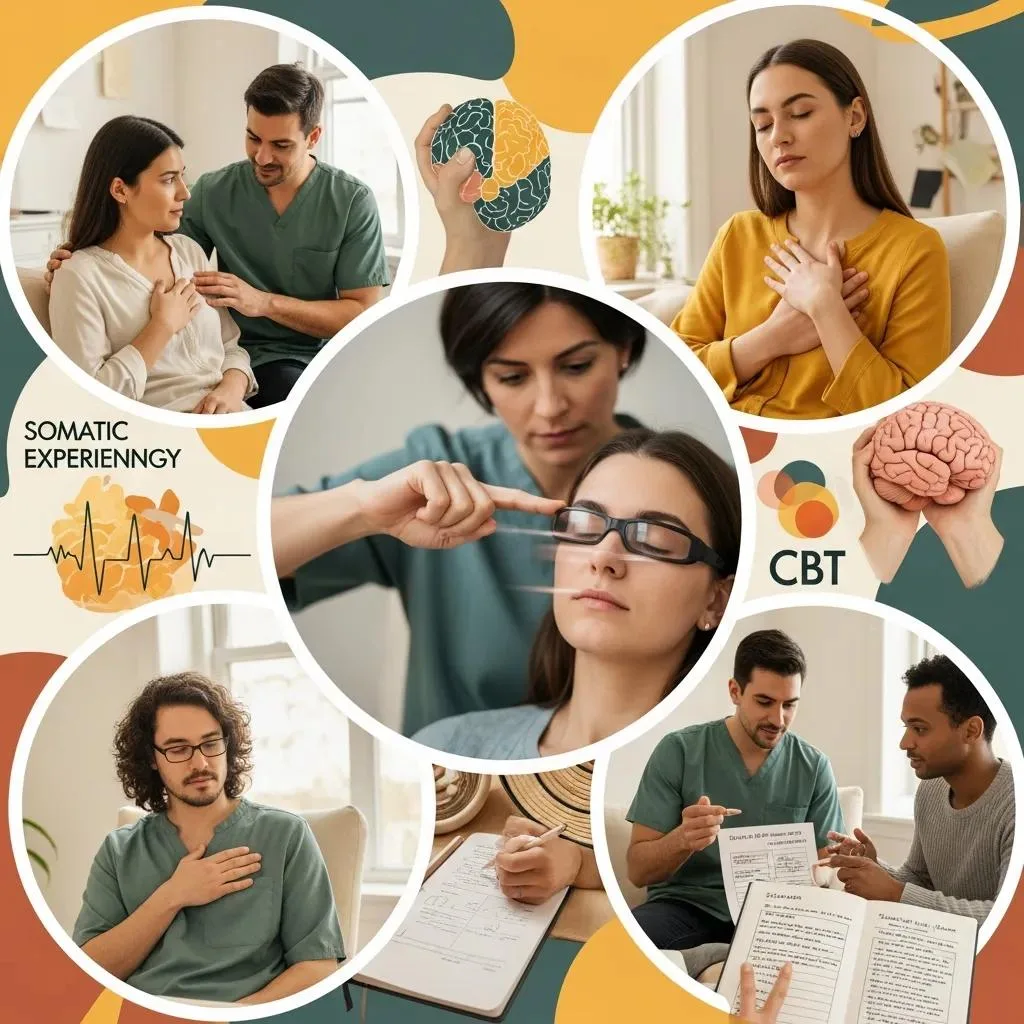
Trauma-focused modalities vary by mechanism: EMDR reprocesses traumatic memories via bilateral stimulation, Somatic Experiencing targets physiological discharge and regulation, CBT focuses on cognitive restructuring and exposure, and DBT teaches emotion regulation and interpersonal effectiveness for complex dysregulation. Choosing a modality depends on trauma type, symptom profile, and readiness for reprocessing; for example, EMDR and CBT are often effective for single-incident PTSD, while Somatic Experiencing and DBT integrate better for complex developmental trauma. Current comparative research supports a multimodal, phase-based approach where stabilization and somatic regulation precede intensive memory work to optimize outcomes.
Below is a comparison table of common modalities showing mechanism, typical use-case, and expected outcomes.
This comparison clarifies how each modality targets distinct elements of trauma, guiding clinicians and clients to choose complementary tools for a phased recovery plan.
How Does EMDR Therapy Help Process Traumatic Memories?
EMDR helps process traumatic memories by combining targeted recall with bilateral stimulation—eye movements, taps, or auditory cues—that appears to facilitate adaptive memory integration and reduce emotional charge. EMDR sessions follow established phases: history and safety building, preparation and resource installation, desensitization and reprocessing, and integration with closure. Evidence from randomized controlled trials supports EMDR’s effectiveness for PTSD symptoms, especially when clients have intact stabilization and grounding skills. Clinically, EMDR is best used when clients can tolerate memory activation and have co-regulation strategies in place, and its structured phases ensure pacing and consent throughout treatment.
What Are Somatic Experiencing Techniques and Their Benefits?
Somatic Experiencing focuses on tracking bodily sensations, using titration and pendulation to allow the nervous system to complete defensive responses and release trapped energy safely. Techniques include body scans, resourcing, guided movement, and orienting practices that recalibrate autonomic balance and increase interoceptive awareness. These methods reduce panic, chronic tension, and somatic pain by reorganizing threat-response patterns rather than relying solely on cognitive reframing. Somatic approaches often complement talk therapies by addressing implicit memory and physiological dysregulation, which supports integrated healing when combined with processing modalities.
How Can You Find and Work with a Trauma-Informed Therapist?
Finding a trauma-informed therapist involves targeted searching, careful screening for trauma-specific training, and evaluating relational fit and safety practices. Look for clinicians who explicitly describe trauma-informed principles, list trauma-specific qualifications, and offer a staged treatment plan emphasizing stabilization and consent. Initial contacts should clarify availability for safety planning, telehealth options, and whether the clinician uses somatic or reprocessing modalities. Knowing what to ask and what to expect helps clients make informed choices and starts the therapeutic relationship on solid footing.
Below is a practical selection checklist comparing important criteria when choosing a trauma-informed provider.
What Should You Expect During Trauma-Informed Therapy Sessions?
Early trauma-informed sessions typically begin with a thorough assessment, collaborative goal-setting, and safety planning that includes grounding and crisis protocols. Clinicians will explain their approach, obtain informed consent, and co-create a pacing plan that matches readiness for exposure or memory work. Sessions often include skill-building—breathing, grounding, resourcing—before processing, and clinicians will routinely check in about somatic states and comfort with interventions. These predictable structures reduce anxiety and help clients move gradually from stabilization to deeper therapeutic work.
Are Online Trauma Therapy Options Effective?
Telehealth can be effective for trauma therapy when clinicians adapt practices to online settings, maintain privacy, and incorporate digital-safe grounding and somatic techniques. Research indicates comparable outcomes for many trauma-focused treatments delivered via telehealth, provided there are protocols for crisis management and technology checks. Advantages include increased access and continuity of care; limitations include challenges for somatic discharge work and privacy concerns in the client’s environment. Adapting techniques—shorter exposures, increased resourcing, and clear emergency plans—helps maintain safety and effectiveness in virtual formats.
How Do Survivors Move from Trauma to Post-Traumatic Growth and Resilience?
Moving from trauma to growth follows a phased pathway: stabilize the nervous system, process traumatic memories, integrate learning, and cultivate meaning and new strengths. Each phase includes targeted practices—skills for regulation, structured processing, narrative integration, and community or values-based activities—that build resilience incrementally. Recovery timelines vary, but consistent practice of regulation and relational repair predicts better functional outcomes and a higher likelihood of post-traumatic growth. Practical roadmaps help survivors set attainable milestones and maintain momentum toward thriving.
What Coping Skills Support Long-Term Healing?
Effective coping skills include grounding, paced breathing, emotion-regulation skills, and social support strategies that can be used during acute distress and for ongoing regulation. Brief micro-practices such as the 4-4-8 breathing technique, sensory grounding lists, and short body scans provide rapid stabilization in moments of dysregulation. Skills training from DBT (emotion regulation, distress tolerance) and CBT (behavioral activation) extend coping capacity over time, while peer support and consistent routines reinforce safety and predictability. Regular practice of these skills moves survivors from reactivity to regulation, enabling deeper therapeutic work.
- Grounding (30–60 seconds): Name five things you can see, four you can touch, three you can hear, two you can smell, and one you can taste.
- Paced Breathing (4-4-8): Inhale for four counts, hold for four, exhale for eight to stimulate the parasympathetic system.
- Brief Body Scan (2 minutes): Notice sensations from feet to head, acknowledge tension, and gently breathe into tight areas.
These micro-practices are accessible and effective for acute distress and daily regulation, and they prepare survivors for deeper therapy by building baseline stability.
How Can Trauma Survivors Build Resilience and Thrive?
Survivors build resilience through a staged roadmap: stabilize physical and emotional safety, engage in paced processing, integrate insights into daily life, and pursue growth-oriented activities like volunteering or creative expression. Practices that encourage meaning-making, skill development, and community connection foster durable changes in identity and purpose. Clinicians can support this work by setting achievable goals, reinforcing strengths, and facilitating access to peer or community resources. Over time these steps translate into measurable outcomes—improved relationships, sustained functioning, and often experiences of post-traumatic growth that reflect new priorities and capacities.