


Comprehensive Guide to Substance Abuse Prevention: Community and Individual Efforts for Effective Addiction Prevention
Substance abuse prevention combines public health strategies and individual actions to reduce the onset and progression of substance use disorders, safeguard communities, and improve long-term wellbeing. This guide explains core risk and protective factors, community-based prevention programs, individual-level strategies that promote recovery and resilience, approaches tailored for youth, evidence-based models used by practitioners, and emerging trends shaping prevention through 2025. Many communities face rising challenges from novel products, shifting norms, and co-occurring mental health needs; targeted prevention reduces initiation, lowers overdose risk, and strengthens protective supports. Readers will learn how genetic and environmental influences interact, which community interventions change norms and access, practical skills individuals can adopt to prevent addiction, how schools and families implement proven programs, and which frameworks guide effective prevention planning. The article integrates current research-informed language and concrete lists and tables to make prevention concepts actionable for public health professionals, educators, families, and individuals seeking practical next steps.
What Are the Key Risk and Protective Factors Influencing Substance Use?
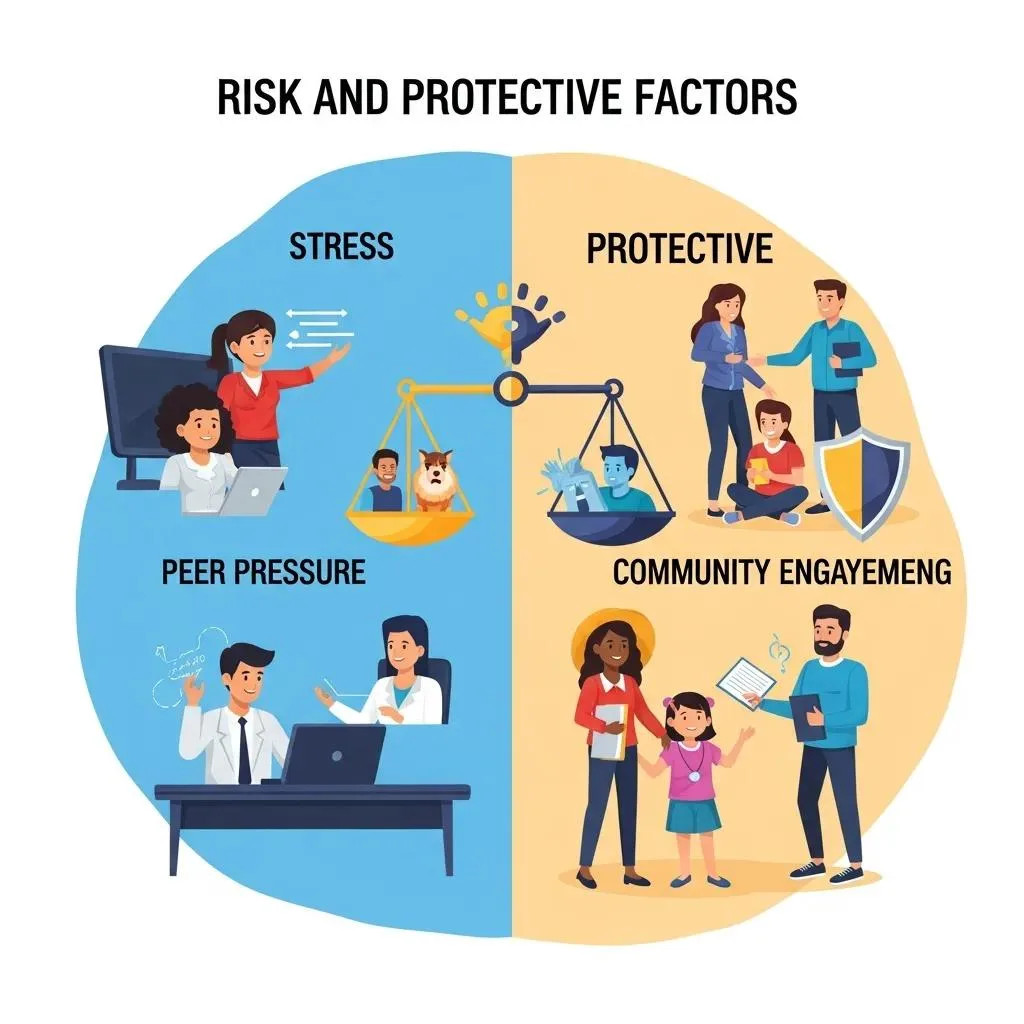
Risk and protective factors determine who is more likely to begin and escalate substance use by altering exposure, vulnerability, and resilience mechanisms; understanding these factors helps target prevention. Risk factors increase probability through mechanisms like reward-system sensitivity, social modeling, and stress-induced coping, while protective factors buffer exposure and strengthen adaptive coping and social bonds. Below are concise top-five lists useful for quick assessment and program targeting.
Major risk factors for substance use include:
- Genetic predisposition and family history of Substance Use Disorder, which influence neurobiological sensitivity to drugs and alcohol.
- Mental health conditions such as depression or anxiety that increase self-medication risk.
- Adverse childhood experiences and trauma that alter stress-response systems.
- Peer influence and availability that normalize use and increase access.
- Social determinants like poverty, neighborhood disorder, and low educational opportunity that elevate exposure and stress.
Key protective factors that reduce risk include:
- Strong family bonds and consistent parental monitoring that limit exposure and support healthy choices.
- School connectedness and positive adult engagement that provide alternative rewards and structure.
- Individual resilience skills—problem-solving, emotional regulation, and refusal skills—that change responses to risk.
- Access to mental health and primary care services that address co-occurring problems early.
- Community norms and policies that reduce availability and shift expectations about substance use.
The table below compares selected risk and protective drivers, showing mechanisms and prevention implications.
This table summarizes how common risk and protective factors operate and what they imply for prevention planning.
Understanding these mechanisms clarifies prevention choices and leads into a deeper look at gene-environment processes and resilience-building strategies next.
How Do Genetic and Environmental Risk Factors Contribute to Addiction?
Genetic and environmental factors interact through gene-environment interplay: inherited vulnerabilities shape sensitivity to substances while environment determines exposure and reinforcement patterns. Heritability estimates for substance use disorders vary by substance but indicate a substantial genetic contribution that is moderated by environmental triggers such as peer groups, availability, and stress. For prevention, this means universal strategies reduce population-level exposure while selective and indicated interventions focus on individuals with family histories or early behavioral indicators. Screening for family history combined with early behavioral programs can help identify those who benefit from intensified supports. Recognizing gene-environment dynamics clarifies why blended prevention—addressing both social determinants and individual biology—is essential and leads to examining protective factor strategies.
What Protective Factors Build Resilience Against Substance Use?
Protective factors operate by buffering stress, increasing coping capacity, and providing alternative rewards that reduce reliance on substances. Family communication techniques, stable caregiving, consistent school expectations, and extracurricular engagement build social capital and foster competence. Practical measures include routine family check-ins, school mentoring, accessible counseling services, and community opportunities for meaningful contribution that strengthen identity and purpose. Evidence shows bolstering these protective factors lowers initiation rates and supports recovery when problems arise. These resilience-building practices naturally connect to community-level programs that scale supports across populations, which the next section will address.
How Do Community-Based Prevention Programs Reduce Substance Abuse?

Community-based prevention programs reduce substance abuse by changing the social, physical, and policy environments that shape norms, availability, and enforcement, thereby lowering initiation and escalation. Effective community interventions combine coalition-building, public campaigns, policy change, and targeted services to alter supply and demand simultaneously. Below are mechanisms through which community programs produce measurable outcomes followed by a short comparative table and examples.
Community prevention works through these mechanisms:
- Coalition mobilization to align stakeholders and coordinate multi-sector strategies.
- Policy and enforcement changes that reduce availability and commercial access.
- Education and media campaigns that shift social norms and perceived acceptability.
Below is a comparison of common community program types and core measured outcomes to guide planning and evaluation.
This table compares program types, core components, and typical measurable outcomes to aid community decision-making.
Community coalitions often act as the organizing vehicle for these approaches, linking local data to policy levers and public messaging, which leads into how coalitions and campaigns operate in practice.
What Roles Do Community Coalitions and Public Health Campaigns Play?
Community coalitions organize diverse stakeholders—public health, law enforcement, schools, parents, and youth—to diagnose local problems, prioritize strategies, and implement evidence-based interventions. Coalitions facilitate shared data use, sustain funding, and coordinate evaluation, while campaigns translate strategies into tailored messaging and behavior-change communications. Key campaign components include audience segmentation, clear behavioral objectives, trusted messengers, and repeated exposure across channels. Measurable KPIs often include decreases in self-reported initiation, increased perceived risk, and higher rates of retail compliance; these indicators help coalitions refine tactics. Understanding coalition workflows clarifies how policy change and education are mutually reinforcing, which is the focus of the next subsection.
How Do Policy Changes and Education Campaigns Impact Substance Use?
Policy levers—such as age restrictions, retail licensing, prescription monitoring, and advertising limits—reduce physical and social availability and shift normative expectations, thereby lowering use rates. Education campaigns in schools and the community increase perceived harm, teach refusal skills, and promote help-seeking; alone they help awareness, and combined with policy they produce stronger, sustained declines. Examples of effective policy and education combinations include stricter retail compliance paired with youth-focused curricula that reduce underage access and initiation. Comparing policy versus education outcomes shows that policies change structural exposure while education changes individual knowledge and skills, so integrated strategies maximize prevention impact. These combined approaches set the stage for individual-level strategies that support prevention and recovery.
What Individual Strategies Help Prevent Addiction and Promote Recovery?
Individual strategies focus on strengthening skills, improving mental healthcare access, and building social supports that interrupt pathways to substance misuse and encourage recovery when problems begin. Effective personal approaches include learning coping and refusal skills, accessing early mental health care, engaging in supportive peer networks, and using brief interventions when risky use is detected. The section below lays out specific, evidence-aligned practices individuals can adopt and explains how these reduce progression to Substance Use Disorder.
Practical, evidence-based individual strategies include:
- Stress-management and emotional regulation: Practices like structured problem-solving and relaxation reduce reliance on substances to cope.
- Refusal and social resistance skills: Role-playing and rehearsed responses help individuals decline offers in peer contexts.
- Substitute rewarding activities: Engaging in sports, arts, or work-based goals provides alternative reinforcement.
- Early screening and brief intervention: Brief motivational conversations in primary care identify risky use and prompt behavior change.
These strategies are most effective when connected to accessible mental health care and supportive community resources, which leads into deeper practical steps and screening guidance.
Which Coping Skills and Behavioral Changes Are Effective?
Coping skills that demonstrably reduce substance-use risk include cognitive-behavioral problem-solving, emotional labeling and regulation, and behavioral activation to replace substance-using routines. Practicing brief techniques—such as identifying triggers, pausing before responding, and rehearsing refusal statements—builds automatic responses that reduce relapse risk. Habit-replacement strategies pair new rewarding behaviors with old cues to shift associations over time, while goal-setting and monitoring reinforce progress and self-efficacy. Training programs based on life-skills curricula consolidate these techniques for broad audiences, and integrating these skills into primary care and school settings increases reach and sustainability. Mastery of these coping skills naturally supports mental health care engagement, discussed next.
How Does Mental Health Support Prevent Co-occurring Disorders?
Integrated mental health support prevents co-occurring disorders by identifying and treating underlying psychiatric conditions that commonly precede or exacerbate substance use. Collaborative care models embed behavioral health in primary care and schools to improve screening, referral, and sustained treatment engagement. Screening tools such as brief symptom checklists help detect depression, anxiety, and trauma-related problems early, enabling timely interventions that reduce self-medication risk. Referral pathways tied to local behavioral health resources and peer-support options increase retention and outcomes, while addressing social determinants improves adherence. Linking mental health services to prevention programs strengthens the safety net and decreases progression to dual diagnoses, demonstrating the value of coordinated care.
How Are Youth and Adolescents Targeted in Substance Abuse Prevention?
Youth-focused prevention tailors interventions to developmental stages, targeting skills, family dynamics, and positive opportunities that reduce propensity for initiation during adolescence. Effective approaches integrate school curricula, family-based interventions, and positive youth development (PYD) strategies to address social influence, skill deficits, and lack of pro-social alternatives. Below are three program types with concise examples and evidence summaries that practitioners and parents can consider.
Three effective youth prevention program types include:
- School-based curricula (e.g., Life Skills Training): Schools deliver structured lessons on refusal skills, social competence, and normative education.
- Family interventions (e.g., Strengthening Families approaches): Programs improve parenting practices, communication, and supervision to reduce risk.
- Positive Youth Development programs: Extracurricular engagement and mentoring foster competence, connection, and contribution, countering risky peer influences.
Implementation considerations include fidelity to proven curricula, culturally responsive adaptation, and linking school programs with family engagement to amplify effects; these program types and their results are summarized in the next subsection.
What School-Based Programs and Family Interventions Are Most Effective?
School-based programs like Life Skills Training offer universal, skill-focused curricula that reduce substance use initiation by teaching social resistance, decision-making, and self-management. Family interventions—such as structured parenting skills programs—improve parental monitoring and family communication, which are consistently associated with reduced adolescent substance use. Evidence typically shows moderate-to-large effects for high-fidelity implementations, with stronger outcomes when programs combine school and family components. Practical tips for selection include assessing evidence level, ensuring staff training and program fidelity, and planning for sustained delivery across developmental windows. Effective school and family programs create a coherent prevention ecosystem that supports positive youth development, the focus of the following subsection.
How Does Positive Youth Development Reduce Substance Use Risks?
Positive Youth Development (PYD) reduces substance use risk by emphasizing strengths, opportunities for meaningful contribution, and the development of competence and connection rather than focusing solely on risk avoidance. PYD programs provide mentorship, skill-building, leadership roles, and safe after-school activities that increase perceived future orientation and self-efficacy. Mechanisms include redirected peer influence toward pro-social goals, increased time use in supervised settings, and improved access to supportive adults. Evaluations indicate PYD lowers risk behaviors when high-quality engagement and sustained opportunities are provided. Integrating PYD into school and community offerings complements skill-based curricula and family supports for comprehensive youth prevention.
Which Evidence-Based Models Guide Effective Substance Abuse Prevention?
Several well-established prevention models provide frameworks and curricula that guide planning, implementation, and evaluation, ensuring strategies are data-driven and replicable. Prominent models include the Strategic Prevention Framework and Life Skills Training, among others; each model pairs core elements with typical settings and target populations to help practitioners choose and adapt interventions. The section below reviews major models, includes a comparison table, and provides application guidance for real-world use.
Key evidence-based models and their roles include:
- The Strategic Prevention Framework (SPF): a five-step planning and evaluation process for communities.
- Life Skills Training: a school-based curriculum focused on refusal skills and social competence.
- Family-based and selective interventions: targeted approaches for high-risk families.
The table below summarizes each model and typical settings where they are applied.
This comparison helps practitioners match models to population needs and implementation capacity.
Understanding these models leads into a short practical guide on using SPF in community contexts and a note on other model choices.
What Is the Strategic Prevention Framework and Its Application?
The Strategic Prevention Framework (SPF) organizes prevention through five iterative steps: assess community needs and resources; mobilize stakeholders and build capacity; plan by selecting evidence-based strategies; implement with fidelity; and evaluate outcomes to refine efforts. A practical SPF application might begin with local data collection on youth initiation, convening a coalition of schools, law enforcement, parents, and healthcare providers, selecting a mixed strategy (policy enforcement + LST + family support), and setting KPIs like reduced past-month use and increased perceived risk. Timelines typically span multiple years to allow implementation, monitoring, and course correction. Evaluation relies on surveillance data, school surveys, and program-level fidelity measures, which together inform ongoing planning and scaling decisions.
H3 parsing error placeholder – (see below)
This placeholder indicates an atypical input that requires interpretation as an additional short subsection under the evidence-based models H2; it will be treated as a brief synthesis of implementation pitfalls and corrective actions. Implementation pitfalls include inadequate training, poor fidelity, and lack of community buy-in, all of which undermine effectiveness. Corrective actions consist of investing in staff training, ongoing coaching, process evaluation, and stakeholder engagement to ensure programs match community needs and are sustained. Addressing these implementation realities increases the likelihood that evidence-based models will produce the intended prevention outcomes.
What Are the Latest Statistics and Emerging Trends in Substance Use Prevention?
Recent research through 2025 highlights shifting use patterns, new products, and evolving prevention priorities that shape program design and public health response. Trends include changing adolescent perceptions about risk, the rise of novel nicotine products that alter initiation pathways, continued concerns about opioid-related harms, and greater emphasis on integrating behavioral health into prevention. The section below outlines data-informed trends and a focused discussion on new substances affecting prevention needs.
Current statistics and trends indicate:
- Variable trends in alcohol and cannabis use across regions with some declines in adolescent use but increases in certain adult populations.
- Persistent opioid-related morbidity and a need for overdose prevention education tied to fentanyl risks.
- The emergence of novel nicotine products and shifting marketing strategies that require updated prevention messaging and regulation.
These patterns emphasize the need for adaptive prevention strategies, which brings us to a look at particular new product challenges next.
What Do 2023-2025 Data Reveal About Substance Use and Overdose Rates?
Recent surveillance through 2025 shows continued public health attention to overdose trends, with opioid-involved overdoses remaining a leading contributor to mortality in many areas and polysubstance patterns complicating prevention and response. Data also reveal heterogeneity by age and geography: some youth cohorts report lower prevalence of traditional tobacco while experimenting with alternative nicotine products, whereas adults show divergent patterns in alcohol and stimulant use. These data underscore the importance of real-time monitoring, targeted outreach to high-risk populations, and integrating overdose prevention education into broader prevention planning. The surveillance emphasis transitions naturally into how specific new products are influencing prevention needs.
How Are New Substances Like Oral Nicotine Pouches Changing Prevention Needs?
Emerging products—such as oral nicotine pouches and other non-combustible nicotine forms—change prevention needs by altering initiation pathways, youth appeal, and perceived harm, thereby requiring updated messaging and policy responses. These products often present discreet use and targeted marketing that reduce traditional social deterrents and complicate detection in school settings. Prevention strategies must adapt by clarifying relative risks, enforcing age and retail access restrictions, and integrating product-specific content into school curricula and public campaigns. Updating surveillance tools and community policies ensures prevention keeps pace with product innovation and protects vulnerable youth and adult populations.
- Monitor product trends to identify emerging threats and tailor messaging accordingly.
- Update school and community curricula to address specific products and marketing tactics.
- Coordinate policy and enforcement to limit youth access and mitigate rapid uptake.
Adapting prevention strategies to these trends preserves program relevance and effectiveness in changing environments.


