


Outpatient Treatment FAQ: Your Questions Answered with Definitions and Program Comparisons
Outpatient treatment refers to non-residential behavioral health services delivered in scheduled sessions so people can receive care without overnight stays, maintaining daily responsibilities while accessing therapy and medical management. This FAQ answers common treatment questions, compares Partial Hospitalization Programs (PHP), Intensive Outpatient Programs (IOP), and standard Outpatient (OP) services, and explains therapies, conditions treated, and practical steps for choosing care. Many readers want to know how outpatient rehab differs from inpatient care, what therapies are evidence-based, and how relapse prevention and aftercare work; this article provides clear definitions, decision guidance using ASAM-related concepts, and actionable checklists. You will find concise definitions, side-by-side comparisons, therapy mappings, and patient-facing questions to ask providers as you evaluate programs. The following sections cover core principles of outpatient care, program types and a comparison table, conditions treated and how co-occurring disorders are managed, common therapies and delivery formats, practical enrollment questions including insurance considerations, and recovery and aftercare strategies with relapse-prevention planning. Throughout, target terms like outpatient treatment faq, PHP vs IOP vs OP comparison, outpatient therapy for depression, and relapse prevention strategies in IOP are woven into the content to aid clarity and search relevance.
What is Outpatient Treatment? Definition and Core Principles
Outpatient treatment is a form of behavioral health care delivered without an overnight stay, combining scheduled clinical contacts, psychotherapy, and case management to support recovery while patients continue living at home. It works by providing structured therapeutic interventions—individual, group, family counseling, and medication management—on a predictable schedule so skills can be practiced in real-world contexts and progress monitored. The primary benefits include flexibility, reduced disruption to work or family roles, and easier integration of behavioral skills into daily life, which supports longer-term generalization of gains. ASAM Criteria and the continuum of care place outpatient services as levels of care suitable for mild-to-moderate conditions and for transitions after higher-intensity treatment, so assessment and matching are central to safety and effectiveness.
Outpatient care emphasizes individualized treatment plans that combine evidence-based therapies with pragmatic supports like case management and medication-assisted treatment when indicated. This individualized approach reduces the risk of under-treatment by ensuring therapy intensity matches clinical need and promotes continuity of care through coordination with primary care and community resources. Understanding the difference between outpatient and more intensive residential services is essential when determining safety, monitoring needs, and expected outcomes. The next section compares outpatient and inpatient care directly to help clarify when each is recommended.
How Does Outpatient Treatment Differ from Inpatient Care?
Outpatient treatment differs from inpatient care primarily in setting, monitoring intensity, and duration: outpatient care allows patients to live at home while attending scheduled sessions, while inpatient care provides 24/7 residence and medical supervision. This difference matters because inpatient settings offer intensive monitoring for medical stabilization or severe withdrawal risk, whereas outpatient programs focus on skill-building, therapeutic work, and gradual reintegration into daily life. Outpatient is appropriate when medical risk is low and the individual has a safe home environment, but inpatient is recommended for acute medical risk, unstable housing, or severe intoxication or withdrawal. When deciding between them, assessment using ASAM Criteria or similar placement tools guides the level of care by balancing clinical severity, safety needs, and available supports.
Outpatient care typically has lower direct costs and fewer disruptions to employment, yet it requires reliable follow-through and a supportive environment to maximize benefits. Coordination with prescribers and case managers can augment outpatient safety through regular medication checks and contingency plans for escalation of care. If symptoms or risk escalate, programs should have clear step-up pathways to IOP, PHP, or inpatient levels, so patients and families know what to expect. The following subsection outlines the practical and clinical benefits of outpatient therapy and flexible care.
What Are the Benefits of Outpatient Therapy and Flexible Care?

Outpatient therapy delivers practical advantages including lower cost, the ability to maintain work or family responsibilities, and opportunities to apply therapeutic skills in real-life settings immediately after sessions. Clinically, outpatient models support skill generalization—patients practice coping strategies in their environment, which strengthens relapse-prevention skills and functional recovery. Flexible scheduling and hybrid delivery (in-person plus telehealth) increase access for those with transportation or childcare constraints, and stepped-care designs allow intensity to increase or decrease as clinical needs change. For many mild-to-moderate conditions and maintenance phases after residential care, outpatient treatment provides a sustainable recovery pathway without requiring full-time institutionalization.
Patients who need more structured supervision can step up to IOP or PHP, but many benefit from the community integration and autonomy outpatient care provides. Evidence shows that combining psychotherapy, group support, and medication when appropriate improves outcomes for depression, anxiety, and substance use disorders in outpatient settings. Understanding these benefits helps patients and clinicians select the right intensity of care, which leads into an explicit comparison of program types below.
What Are the Types of Outpatient Programs? Comparing IOP, PHP, and Standard OP
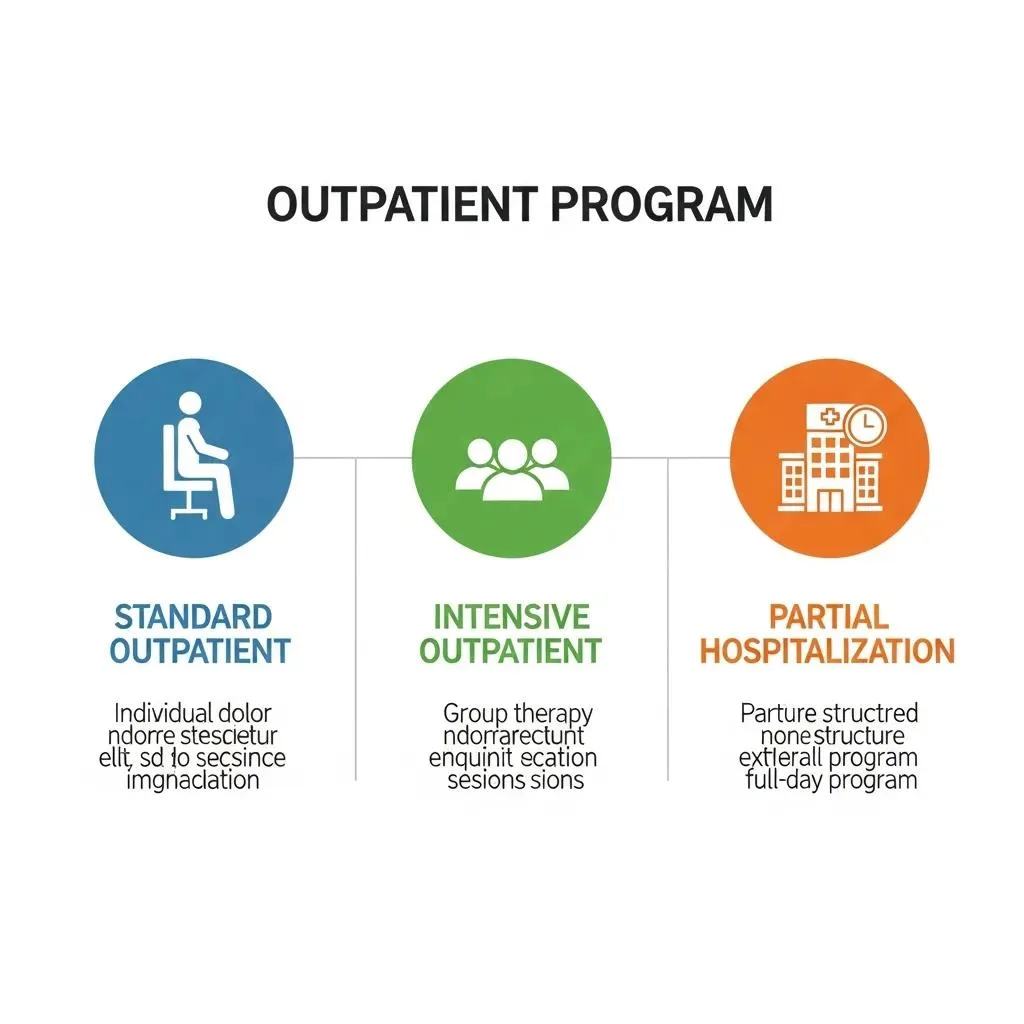
Outpatient services span a continuum of intensity from standard Outpatient Programs (OP) to Intensive Outpatient Programs (IOP) and Partial Hospitalization Programs (PHP), each defined by contact hours, clinical staffing, and suitability for specific needs. OP generally provides weekly individual therapy plus occasional group sessions for mild conditions, IOP increases to roughly 9–20 hours per week with group and skills training for moderate severity, and PHP is a day-treatment model exceeding 20 hours per week with nursing and close clinical oversight for higher acuity or step-down care. Choosing among OP, IOP, and PHP hinges on clinical severity, safety needs, medication requirements, and capacity for daily self-care; ASAM Criteria and structured assessment inform the correct placement.
The table below compares program type, intensity, typical duration, and best-for suitability to make program selection clearer for patients and clinicians.
This comparison clarifies how intensity, duration, and clinical oversight increase across OP → IOP → PHP, helping patients match program choice to symptom severity and life constraints. In the next subsections, concrete descriptions of IOP and PHP highlight schedules, staffing, and common clinical goals.
What is an Intensive Outpatient Program?
An Intensive Outpatient Program (IOP) typically provides structured therapy across multiple days per week, totaling approximately 9–20 hours, and blends group skills training, individual counseling, and medication management as needed. IOP aims to stabilize symptoms, teach coping and relapse-prevention techniques, and prevent hospitalization while allowing patients to maintain home responsibilities; common diagnoses include moderate substance use disorders, recurrent depression, and anxiety disorders. A sample weekly IOP schedule might include three group therapy days with skills modules, two individual therapy check-ins, and weekly medication-management visits if indicated, promoting consistent therapeutic exposure without overnight stays. Coordination with primary care, psychiatry, and community supports is essential in IOP to manage comorbid medical conditions and prescriptions.
IOP often functions as the preferred intensity for those requiring more than weekly outpatient therapy but not continuous monitoring, and it supports transitions from inpatient discharge or as a step-up from OP when symptoms worsen. The therapeutic mix emphasizes evidence-based modalities such as CBT and DBT skills training tailored to substance use or mood disorder needs. Clear outcome monitoring and defined criteria for stepping up or down in care enhance safety and effectiveness; the next subsection details PHP structure and indications.
What is a Partial Hospitalization Program and How Does It Compare?
A Partial Hospitalization Program (PHP) is a day-treatment model delivering intensive clinical contact—usually more than 20 hours per week—with interdisciplinary teams that include therapists, psychiatrists, and nursing staff for higher-acuity stabilization without inpatient admission. PHP commonly serves individuals stepping down from inpatient care who still need medical oversight, those requiring close medication titration, or people with intense symptom burden who benefit from full-day therapeutic structure. Typical PHP days combine group therapy, individual sessions, psychiatric medication management, and skill-building workshops, often five days per week, offering both therapeutic intensity and medical monitoring. Compared with IOP, PHP provides greater staffing ratios, more frequent clinical review, and enhanced capacity for managing withdrawal, medication adjustments, or acute suicidal ideation in a supervised outpatient context.
PHP is particularly suitable when active medical monitoring or frequent psychiatric review is necessary but 24-hour admission is not warranted, and it supports rapid stabilization before transitioning to IOP or OP. The higher contact hours accelerate skill acquisition and symptom control but require more time commitment, so practical considerations like transportation and work leave factor into program selection. Having compared program intensities, the next major section reviews which conditions are commonly treated in outpatient settings and how co-occurring disorders are handled.
Which Conditions Are Treated in Outpatient Programs? Addiction and Mental Health Focus
Outpatient programs treat a broad range of behavioral health conditions including substance use disorders (alcohol, opioids, stimulants), mood disorders such as depression and bipolar spectrum conditions, anxiety disorders, PTSD and trauma-related disorders, and personality-related difficulties when stable. These programs adapt intensity and modalities—OP, IOP, PHP—based on severity, risk, and functional impairment; co-occurring disorders are common and require integrated treatment approaches that address both mental health and substance use concurrently. Evidence supports outpatient management for mild-to-moderate presentations and as maintenance or step-down care after inpatient stabilization, provided assessment and monitoring are robust.
Outpatient models include medication-assisted treatment (MAT) where indicated, trauma-informed care, and specialized tracks for dual diagnosis to reduce fragmentation of services and improve outcomes. Care teams use screening tools, ASAM-like placement criteria, and regular reassessment to ensure the chosen outpatient level remains appropriate. The following subsections describe how outpatient care addresses substance use specifically and what mental health program variations are available.
How Does Outpatient Treatment Address Substance Use Disorders?
Outpatient treatment for substance use disorders typically integrates assessment, counseling (CBT, motivational interviewing), group therapy, relapse-prevention planning, and medication-assisted treatment when clinically indicated, forming a multi-component recovery plan. Programs use evidence-based elements such as cognitive-behavioral relapse skills, contingency management where appropriate, and case management to address social determinants of recovery like housing and employment. ASAM Criteria guide placement decisions—determining whether OP, IOP, or PHP best matches medical risk, withdrawal potential, and psychosocial needs—ensuring safety and continuity. Ongoing monitoring, urine drug testing when relevant, and coordination with prescribers support adherence to medication regimens and early detection of relapse risk.
Relapse rates vary and are influenced by the match between treatment intensity and clinical need, presence of co-occurring psychiatric disorders, and availability of aftercare supports; therefore, strong discharge planning with links to peer support and continuing care improves long-term outcomes. Many outpatient programs emphasize skill generalization, connecting therapy to community supports, which increases the likelihood of sustained recovery. The next subsection outlines types of outpatient mental health programs for non-substance diagnoses.
What Types of Outpatient Mental Health Programs Are Available?
Outpatient mental health programs range from standard weekly therapy for mild-to-moderate depression or anxiety, to IOP tracks for more severe or treatment-resistant presentations, and PHP for acute stabilization without hospitalization. Standard outpatient services typically include individual psychotherapy, psychiatric medication management, and periodic group or family sessions, while IOP provides concentrated group-based skills training and more frequent clinical review for severe symptoms or functional impairment. Specialized outpatient tracks—such as trauma-focused programs, dialectical behavior therapy (DBT) for emotional dysregulation, and integrated dual-diagnosis care—address condition-specific needs and improve outcomes when matched properly. Stepped-care models allow patients to escalate intensity to IOP/PHP if symptoms persist or decline, ensuring responsiveness to clinical change.
Selecting an appropriate outpatient pathway involves evaluating symptom severity, safety, home supports, and medication needs; programs with clear intake assessments and documented escalation pathways reduce the risk of under-treatment. The following major section maps therapies and delivery formats commonly used in outpatient care.
What Therapies and Modalities Are Offered in Outpatient Treatment?
Outpatient treatment employs a range of evidence-based therapies—Cognitive Behavioral Therapy (CBT), Dialectical Behavior Therapy (DBT), motivational interviewing, medication management, and group and family counseling—delivered in individual, group, and telehealth formats to meet diverse needs. Modalities are combined to match diagnosis and goals; for example, CBT and medication management for depression, DBT skills groups for borderline personality features, and integrated group therapy for substance use disorders. Telehealth and hybrid models increase access and can replicate many in-person services effectively when privacy and technology needs are addressed. The therapy-to-use-case mapping below helps clinicians and patients understand which approaches fit which conditions.
This table demonstrates how therapies map to diagnoses and delivery formats, guiding selection based on evidence and logistics. The next subsections explain CBT/DBT implementation and the role of group and family counseling more specifically.
How Are Cognitive Behavioral Therapy and Dialectical Behavior Therapy Used?
Cognitive Behavioral Therapy (CBT) targets maladaptive thought-behavior links to reduce symptoms of depression, anxiety, and substance use by teaching cognitive restructuring and behavioral activation techniques in structured sessions. Sessions typically involve agenda-setting, skills teaching, in-session practice, and homework assignments that promote behavioral change; CBT is effective in individual and group modalities and adapts well to telehealth delivery. Dialectical Behavior Therapy (DBT) combines weekly individual therapy, group skills training (emotion regulation, distress tolerance, interpersonal effectiveness), and phone coaching to support those with severe emotional dysregulation and self-harm risk. Both CBT and DBT are evidence-based, with numerous trials supporting symptom reduction and improved functioning when fidelity to treatment models is maintained.
Patients should expect active skills practice, measurable goals, and regular outcome tracking in these therapies, which facilitates progress monitoring and adjustments. Clear coordination with medication management and case supports increases the treatments’ real-world effectiveness; the following subsection explores group and family counseling contributions.
What Role Do Group and Family Counseling Play in Outpatient Care?
Group therapy provides peer support, psychoeducation, and repeated skills practice, leveraging social learning to normalize experiences and strengthen relapse-prevention and coping strategies in outpatient settings. Family counseling addresses systems-level factors—communication patterns, boundary setting, and support for adherence to treatment plans—which is particularly valuable for adolescent patients and adults with significant family involvement. High-quality group and family offerings include clear facilitator training, confidentiality agreements, and structured curricula to ensure therapeutic benefit and safety. Participation guidelines and informed consent help manage boundaries, confidentiality, and expectations for family members joining treatment.
Evaluating group/family quality involves checking facilitator credentials, curriculum consistency, and mechanisms for individual follow-up; these elements improve engagement and outcomes. The next major section provides practical questions to ask before starting outpatient treatment and includes a checklist-style table to evaluate providers and coverage.
What Practical Questions Should You Ask Before Starting Outpatient Treatment?
Before starting outpatient treatment, ask targeted questions about intake assessment, clinician credentials, program structure and intensity, individualized treatment planning, and insurance or payment arrangements to ensure a good match and clear expectations. Preparing a checklist helps patients evaluate providers consistently and compare options based on evidence, logistics, and aftercare planning. Use the table below to organize core questions to ask providers, what to expect in answers, and what constitutes a strong response to help inform decision-making.
This table creates a practical framework to assess programs before enrollment and sets expectations for transparent answers. The following subsections address cost and insurance considerations and strategies to find the right provider.
How Do Cost and Insurance Coverage Affect Outpatient Treatment Options?
Insurance coverage and cost affect program accessibility: OP, IOP, and PHP may be reimbursed differently depending on plan type, medical necessity determinations, and preauthorization requirements; verifying benefits before enrollment prevents surprise bills. Patients should ask insurers which codes and levels of care are covered, whether prior authorization is required, and what copays or deductibles apply to psychiatry, group therapy, and drug testing. Providers should offer assistance in benefit verification and estimated out-of-pocket costs, plus information on sliding-scale fees, charity programs, or community resources if coverage is limited. Documenting conversations with both insurer and provider and obtaining written estimates reduces billing uncertainty and supports informed consent.
When cost is a barrier, explore telehealth options, community behavioral health centers, and peer-support organizations as supplementary resources to maintain continuity of care. Clear financial planning paired with a clinical treatment plan ensures patients can access recommended intensity without interruption. Next, tips for finding the right outpatient provider are described.
How Can You Find the Right Outpatient Provider for Your Needs?
Finding the right outpatient provider involves verifying licenses, specialties, and evidence-based offerings, contacting intake staff with a prepared script, and assessing logistics like location, hours, telehealth options, and availability of integrated care for co-occurring disorders. Use a short intake script asking about assessment procedures, clinician credentials, treatment modalities offered, and outcome measurement to quickly compare programs. Watch for red flags such as vague treatment descriptions, lack of licensed staff, or absence of clear escalation pathways; prefer programs that document individualized plans, outcome tracking, and coordination with medical prescribers. Confirming caregiver involvement options and discharge planning ensures continuity of support after program completion.
A methodical search and an informed first call help match program attributes—intensity, modality, and specialization—to clinical needs and life constraints. The next major section turns to recovery planning and relapse prevention following outpatient treatment.
What Are the Recovery and Aftercare Options Following Outpatient Treatment?
Aftercare planning is a structured set of follow-up supports—scheduled therapy appointments, medication management, peer support groups, and community resources—designed to sustain gains made during outpatient treatment and reduce relapse risk. Effective aftercare includes a written plan with clear appointment schedules, emergency contacts, relapse-prevention strategies, and linkages to community-based supports such as 12-step or SMART groups and vocational or housing services when needed. Ongoing medication management visits and periodic outcome monitoring help detect early signs of deterioration and trigger timely intervention. Planning for transitions across levels of care—OP, IOP, and community supports—maximizes continuity and long-term recovery.
Relapse-prevention work in outpatient settings emphasizes trigger identification, coping skill rehearsal, social support mobilization, and adherence to medications where prescribed; the next subsections outline concrete relapse-prevention strategies and emerging trends shaping outpatient care.
What Strategies Support Relapse Prevention in Outpatient Programs?
Outpatient relapse-prevention strategies combine behavioral techniques, social supports, and monitoring to reduce recurrence risk, including identifying triggers, developing coping scripts, scheduling high-frequency early follow-ups, and integrating peer support networks. Specific tactics include personalized coping plans, frequent brief check-ins in the first 30–90 days, medication adherence support with pill checks or pharmacy coordination when appropriate, and structured involvement in community recovery groups. Programs often implement a 30/60/90-day aftercare schedule that increases support early and tapers as stability grows, creating safety nets for high-risk periods. Regular outcome monitoring and rapid re-engagement pathways if relapse indicators appear are central to maintaining recovery gains.
These layered strategies—skills training, monitoring, social supports, and medication adherence—work together to provide early-warning detection and timely response, reducing the likelihood of full relapse. The following subsection highlights emerging outpatient trends patients should consider when evaluating modern programs.
What Emerging Trends Are Shaping Outpatient Care, Including Virtual and Holistic Approaches?
Recent trends through 2023–2024 include growth in telehealth and virtual IOP/OP offerings, use of digital tools for remote monitoring and appointment reminders, integration of lifestyle and holistic supports (sleep, nutrition, exercise), and increasing emphasis on trauma-informed care and integrated dual-diagnosis tracks. Telehealth expands access and can effectively deliver psychotherapy, medication management, and some group formats, while digital platforms and AI-enabled tools support care coordination and symptom tracking when privacy and clinical oversight are addressed. Holistic approaches that combine evidence-based psychotherapy with attention to sleep hygiene, nutrition, and physical activity are gaining traction as adjuncts to standard treatment, improving engagement and overall functioning. As new modalities emerge, patients should evaluate evidence, confidentiality, and whether programs have clear protocols for technology-based care, ensuring innovations complement—not replace—clinical judgment.
These trends reflect a move toward flexible, patient-centered outpatient services that combine traditional psychotherapy and medication with technology and lifestyle supports to enhance accessibility and outcomes.