


OCD Treatment & Therapy Woodland Hills CA: Comprehensive Guide to Effective Care
Obsessive-Compulsive Disorder (OCD) is a treatable anxiety disorder characterized by recurrent intrusive thoughts (obsessions) and repetitive behaviors or mental rituals (compulsions) that significantly impair daily functioning. For residents of Woodland Hills, CA, understanding diagnostic pathways and evidence-based options such as Exposure and Response Prevention (ERP) and Cognitive Behavioral Therapy (CBT) is critical to finding timely, effective care. This guide explains what OCD looks like, how local clinicians assess it using validated tools, and which therapies and support services are available in the Woodland Hills area. It also covers age-specific approaches for children, adolescents, and adults, practical steps to locate ERP-trained clinicians or psychiatrists, and how insurance, sliding-scale care, and financing affect access. Finally, the guide outlines strategies to manage co-occurring conditions and maintain long-term recovery with relapse-prevention tactics. Read on to learn symptom profiles, therapy mechanisms, how to evaluate providers, cost-check steps, and day-to-day coping tools that help restore functioning.
What is Obsessive-Compulsive Disorder and How is it Diagnosed in Woodland Hills?
OCD is defined by persistent obsessions—intrusive, distressing thoughts or images—and compulsions—repetitive acts performed to reduce distress—driven by anxiety rather than pleasure. The underlying mechanism involves heightened threat appraisal and maladaptive habit loops, which therapy targets by breaking the obsession-compulsion cycle and retraining response patterns. Accurate diagnosis produces clearer treatment plans and better outcomes for people seeking compulsion help CA or OCD treatment Woodland Hills residents need. Local clinicians commonly screen using structured interviews and validated measures to determine severity, functional impact, and comorbidities before recommending ERP, CBT, medication, or combined approaches. The next sections break symptoms and diagnostic workflow into actionable details clinicians and patients use to plan care.
What are the common symptoms and types of OCD?
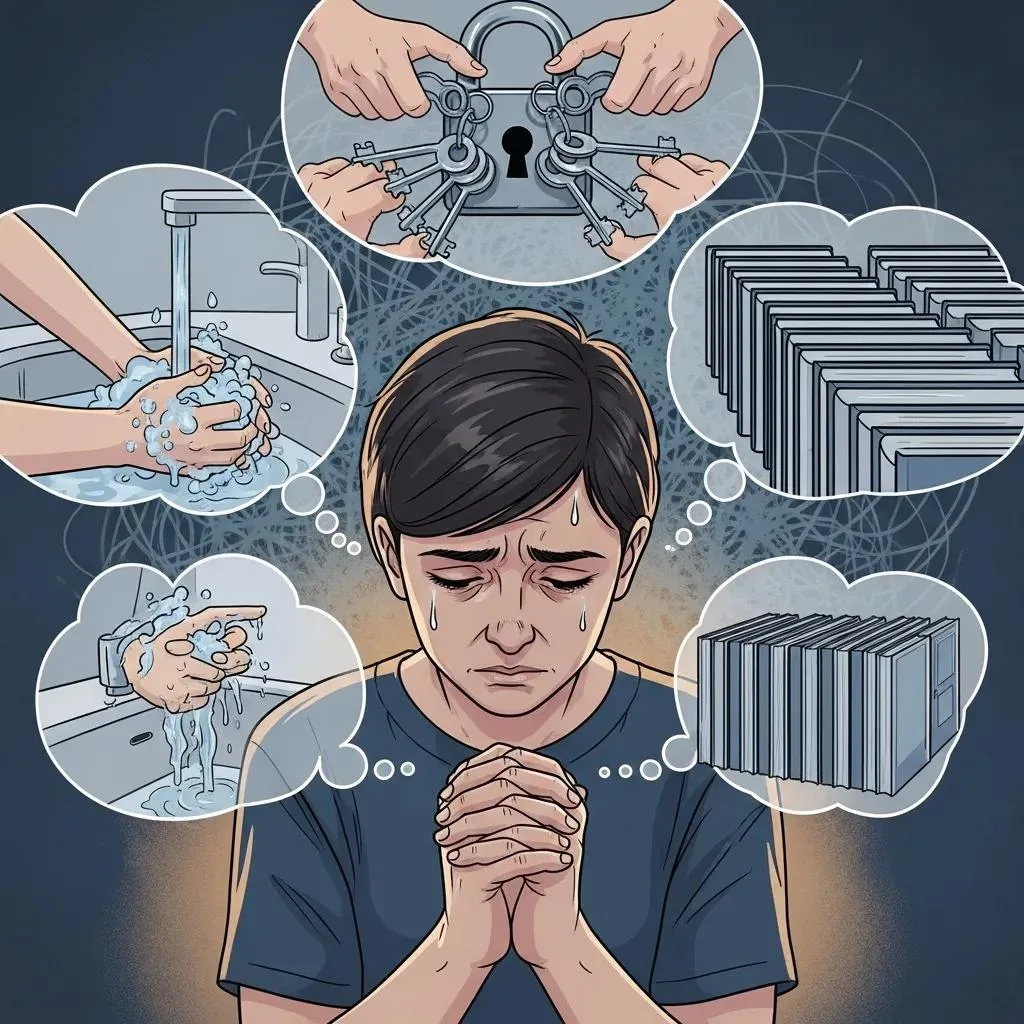
OCD presents in recognizable clusters that guide treatment focus and exposure design. Common subtypes include contamination OCD (fear of germs/cleaning rituals), symmetry/order OCD (ordering, arranging), pure O or primarily obsessional OCD (intrusive thoughts without overt rituals), scrupulosity (moral or religious obsessions), and hoarding disorder; each subtype elicits specific compulsive responses and functional impairment. Examples clarify presentation: contamination OCD may lead to repeated handwashing causing skin damage, while pure O often involves mental checking or reassurance-seeking that disrupts concentration. Recognizing these patterns helps determine whether ERP exposures should be behavioral, imaginal, or cognitive, and whether family-based interventions are needed. Understanding subtype differences also sets the stage for diagnostic assessment tools used by Woodland Hills clinicians.
How do specialists diagnose OCD in Woodland Hills patients?
Specialists in Woodland Hills follow a stepwise clinical pathway: initial phone intake to triage urgency, a structured clinical interview assessing DSM-5 criteria, and use of validated scales such as the Yale-Brown Obsessive Compulsive Scale (Y-BOCS) or the Obsessive-Compulsive Inventory-Revised (OCI-R) to quantify severity. Differential diagnosis screens for related conditions like generalized anxiety disorder, major depressive disorder, tic disorders, and obsessive-compulsive personality disorder traits to avoid misclassification and to sequence treatment properly. Clinicians also check for safety risks—suicidality, severe avoidance, or inability to perform self-care—and refer to psychiatry for medication evaluation when symptoms are moderate-to-severe or when rapid symptom reduction is needed. This diagnostic workflow ensures a tailored care plan that balances psychotherapy, medication management, and higher levels of care when indicated.
Which Evidence-Based Therapies are Available for OCD Treatment in Woodland Hills?
Evidence-based treatment for OCD centers on behavioral and pharmacologic interventions that target core mechanisms of obsessional thinking and compulsive responding. ERP and CBT are first-line psychotherapies supported by rigorous research and are deliverable in individual, group, intensive outpatient, or teletherapy formats depending on severity and access. Psychiatrists provide medication management—typically selective serotonin reuptake inhibitors (SSRIs) or augmentation strategies—when combined with therapy to accelerate response or manage comorbidities. Local delivery options in Woodland Hills range from weekly outpatient ERP to short-course intensive programs and virtual care that preserves fidelity to ERP principles. Below is a concise comparison of common approaches to help patients and clinicians choose the right path.
How does Exposure and Response Prevention therapy work for OCD?
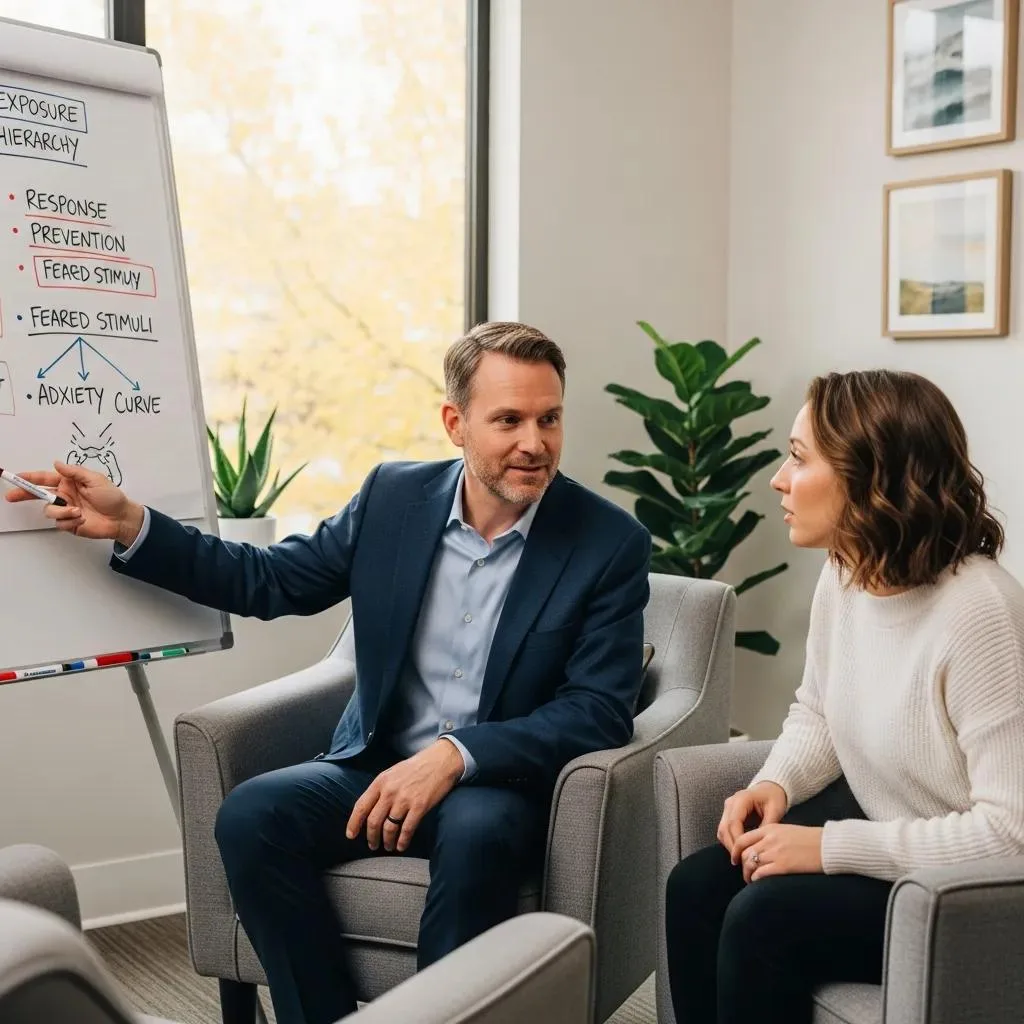
ERP works by repeatedly and systematically exposing a person to obsessional triggers while preventing the ritualized response, which reduces anxiety through habituation and corrects faulty threat predictions. Sessions typically begin with assessment and collaborative hierarchy-building—ranking situations from least to most distressing—then proceed to in-session and homework exposures that are repeated until distress decreases without performing rituals. Typical outpatient ERP involves weekly sessions and daily practice; many patients show meaningful improvement within 8–12 weeks, with high-quality evidence supporting significant symptom reduction for the majority who complete a full course. ERP’s effectiveness depends on consistent practice and clinician fidelity to preventing ritual behaviors, which is why trained ERP therapists emphasize realistic homework and caregiver coaching when applicable.
What is Cognitive Behavioral Therapy and its role in OCD treatment?
CBT for OCD includes cognitive restructuring, behavioral experiments, and strategies to modify beliefs about responsibility, threat, and thought-action fusion that maintain obsessions. While ERP targets behavior directly, CBT complements ERP by challenging catastrophic interpretations of intrusive thoughts and reducing neutralizing behaviors that sustain anxiety. For primarily obsessional presentations or when clients struggle with imaginal exposures, CBT techniques such as thought records and reality-testing can make ERP exposures more tolerable and targeted. CBT may also be used as a primary approach for milder cases or as an adjunct in stepped-care models, improving long-term relapse prevention when combined with periodic booster sessions.
How Can You Find Qualified OCD Specialists and Mental Health Services in Woodland Hills?
Finding clinicians skilled in ERP and integrated care requires checking credentials, training in OCD-specific protocols, and practical experience with the disorder’s subtypes. Woodland Hills patients should look for licensed psychologists, licensed mental health clinicians, and board-certified psychiatrists who list ERP or OCD specialization, supervised experience treating OCD variants, and willingness to use validated measures for progress tracking. Local directories and clinician listings can be starting points, and some regional providers and treatment centers maintain ERP-trained staff who deliver both outpatient and intensive options. The next subsection provides a checklist of qualifications to prioritize and useful questions to ask during initial contacts.
What qualifications and credentials should OCD therapists in Woodland Hills have?
When evaluating clinicians, prioritize a licensed clinician (PhD/PsyD, LCSW, LMFT, LPCC) with explicit ERP training, supervised experience treating OCD, and familiarity with assessment tools like the Y-BOCS. Ask prospective therapists whether they use guided exposures, how they structure homework, and how they measure outcomes; these questions reveal treatment fidelity. Red flags include vague answers about ERP, promises of quick cures, or reliance on medication as a sole strategy for classic OCD presentations. Verifying a clinician’s training in ERP workshops or supervised ERP practice helps ensure the therapist can design graded exposures tailored to contamination OCD, pure O, scrupulosity, or symmetry-related presentations and coordinate with psychiatry when medication is warranted.
Where to access local mental health clinics and support groups for OCD?
Woodland Hills residents can search community mental health clinics, university training clinics, and specialist centers that advertise ERP-competent staff; listings on therapist directories and local mental health networks are practical starting points. Peer-led support groups and online support communities provide additional encouragement and maintenance practice, though facilitator credentials and group focus should be checked for clinical appropriateness. Local providers mentioned in public listings and topical reports—such as Elevated Healing Treatment Centers, Embracing You Therapy, LifeSync Malibu Behavioral Health, the OCD Center of Los Angeles – Woodland Hills, and therapist directories like Psychology Today—often indicate whether clinicians offer ERP, teletherapy, or intensive formats. Telehealth options expand access to ERP-trained clinicians outside immediate geography while maintaining evidence-based techniques when in-person care is limited.
What Are the Treatment Options for Children, Adolescents, and Adults with OCD in Woodland Hills?
Age-specific protocols adapt exposures and involvement of family, school, and developmental considerations to maximize engagement and safety. Treatments for children and adolescents emphasize parent- or family-based CBT/ERP, with coaches guiding exposures and school liaison work to address impairment in classroom functioning. Adult care focuses more on individual ERP/CBT, group therapy, and integrated medication management when necessary, with options to intensify care through IOPs for severe cases. Understanding these distinctions clarifies referral decisions, and the table below compares age-based features to help families and providers plan coordinated care.
How is OCD treatment tailored for children and adolescents?
For children and adolescents, clinicians adapt exposure tasks to developmental level and involve parents as coaches to reinforce practice and reduce accommodation behaviors at home. Sessions are typically shorter and include role-play, gradual in-vivo exposures, and coordination with school staff to address avoidance that impairs learning; therapists provide parent coaching to replace accommodating responses with supportive coaching. Medication via pediatric psychiatry is considered when symptoms severely limit functioning or when behavioral interventions alone produce insufficient response, with careful monitoring for side effects. Early intervention using family-based ERP often yields strong functional gains and reduces the risk of entrenched avoidance patterns.
What adult OCD therapies and support services are available locally?
Adults in Woodland Hills can access individual ERP/CBT, therapist-led group ERP classes, and intensive outpatient programs for more severe or persistent symptoms, as well as teletherapy options that maintain ERP fidelity for remote patients. Psychiatric medication management complements psychotherapy for many adults, especially when comorbid depression or severe anxiety complicates participation, and workplace or relationship impacts may be addressed via occupational supports or couples therapy. Criteria for intensifying care include persistent high Y-BOCS scores despite regular ERP, severe avoidance undermining self-care, or safety concerns; in those cases, IOPs or coordinated multidisciplinary programs provide concentrated behavioral practice and psychiatric oversight.
How Do Insurance, Costs, and Financing Affect OCD Treatment Accessibility in Woodland Hills?
Cost and insurance coverage are frequent barriers to accessing evidence-based OCD care; coverage varies by plan, network status, and whether services are billed as outpatient therapy or psychiatric medication management. Understanding insurance terms (in-network vs out-of-network, session limits, preauthorization requirements) and referencing relevant CPT codes for psychotherapy and psychiatry helps patients verify benefits. Sliding-scale clinics, university training clinics, and nonprofit resources often provide lower-cost options, while telehealth can reduce costs and expand access to ERP-trained clinicians. The table below shows common coverage scenarios and typical out-of-pocket ranges to guide planning and benefit verification conversations.
What insurance plans cover OCD therapy and medication management?
To verify coverage, follow a three-step process: call the insurer to confirm mental health benefits and network status, ask whether ERP/CBT sessions require preauthorization or have session caps, and confirm psychiatric medication management is billed under medical benefits with potential separate copays. Ask the insurer for applicable CPT codes for psychotherapy and psychiatry and whether diagnostic codes will influence medical necessity reviews. Providers’ billing staff can assist by confirming in-network status or offering superbills for out-of-network reimbursement, and patients should document all insurer responses for follow-up when scheduling treatment.
Steps to verify benefits:
- Ask your insurer whether mental health parity applies and confirm in-network providers for psychotherapy and psychiatry.
- Request information on preauthorization, session limits, and copay/coinsurance amounts for both therapy and psychiatric visits.
- If out-of-network, confirm reimbursement rates and whether the provider offers superbills for claims.
These steps reduce surprises and speed access to appropriate therapy options; next we address where to find lower-cost alternatives.
Are there affordable or sliding scale options for OCD treatment in Woodland Hills?
Lower-cost care sources include community mental health centers, university training clinics staffed by supervised trainees, nonprofit organizations, and clinicians who offer sliding-scale fees or pro bono slots. When requesting sliding scale, be prepared to discuss income quickly and ask about waitlist policies and expected trainee supervision levels; trade-offs often include longer wait times or abbreviated session formats. Online low-cost therapy platforms and group-based ERP can expand affordable access while preserving evidence-based practice elements, though patients should evaluate facilitator training and program structure. Being proactive—asking clinicians about payment plans, trainee options, or group programs—often uncovers viable, lower-cost paths to receive ERP or CBT without compromising treatment quality.
How Can Patients Manage Co-occurring Conditions and Maintain Long-Term OCD Recovery?
Long-term recovery from OCD commonly requires integrated management of comorbid conditions and ongoing relapse-prevention planning to sustain gains after acute treatment. Common co-occurring disorders include major depressive disorder, other anxiety disorders, and attention-deficit/hyperactivity disorder (ADHD); these conditions influence treatment sequencing and may require concurrent pharmacotherapy or tailored behavioral strategies. Maintenance strategies include scheduled booster sessions, self-monitoring tools, peer support participation, and crisis planning for early escalation if symptoms return. The following list outlines practical relapse-prevention components patients can adopt to protect treatment gains and recognize when to step up care.
Key relapse-prevention strategies include:
- Scheduled Booster Sessions: Periodic therapist check-ins to reinforce ERP gains and adapt hierarchies.
- Self-Monitoring Toolkit: Routine symptom tracking, exposure logs, and coping scripts to detect early warning signs.
- Peer and Family Support: Ongoing participation in support groups and family coaching to reduce accommodation and encourage practice.
- Crisis Plan: Clear steps for escalating to psychiatry, higher level of care, or emergency services if safety concerns arise.
These strategies form a layered maintenance plan that combines self-management, professional supports, and community resources to reduce relapse risk and aid recovery continuity.
What are common co-occurring disorders with OCD and their impact?
Depression and other anxiety disorders commonly co-occur with OCD, often amplifying distress and reducing motivation for therapy homework, which can slow ERP progress. ADHD may complicate treatment adherence by impairing organization and sustained practice, while tic disorders can interface with compulsive rituals, requiring behavioral adjustments. Integrated treatment plans that address comorbidities—combining psychotherapy adaptations, medication management, and structured supports—lead to better outcomes than treating OCD in isolation. Recognizing and treating co-occurring conditions early improves engagement in ERP and enhances functional recovery.
What strategies support relapse prevention and ongoing mental health?
Effective relapse prevention blends periodic professional contact, structured self-practice, and social support to keep response patterns adaptive. Booster sessions every 1–3 months for the first year after acute treatment, continued daily or weekly exposure practice, and access to peer-led groups or online maintenance programs help reinforce learning and extinguish old avoidance habits. Building a personalized coping toolkit—brief exposures, mindfulness skills to tolerate discomfort, and a written action plan for symptom escalation—enables early intervention and reduces the need for intensive services. When symptoms escalate despite these measures, prompt coordination between therapist and psychiatrist facilitates stepped-up care.
- Booster Visits: Schedule regular check-ins to review exposures and adapt hierarchies.
- Practice Routines: Maintain short, frequent exposure exercises to preserve gains.
- Social Supports: Engage family or peer groups to reduce accommodation and encourage practice.
These practices create a sustainable maintenance system that guards against relapse while preserving daily functioning.