

Comprehensive Mental Health Resources in Woodland Hills & LA County: Access, Support, and Services
Mental health resources encompass clinical therapy, crisis intervention, community supports, and public behavioral health programs that help people manage conditions, cope with stressors, and maintain wellbeing in their communities. This guide explains what counts as local mental health resources in Woodland Hills and LA County, why timely access matters, and which pathways—private therapy, county services, school-based supports, and crisis hotlines—connect residents to care. Readers will learn how to choose therapy modalities, navigate LA County public programs, help teens access age-appropriate services, respond to crises, and find low-cost options including sliding-scale clinics and community organizations. The article maps practical steps, key contacts, and eligibility checkpoints so you can act quickly when someone needs help and plan longer-term care when stability returns. Throughout, keywords like Woodland Hills mental health, LA County mental health services, crisis intervention Los Angeles, and sliding scale therapy Woodland Hills are woven into clear, actionable explanations.
What mental health therapy options are available in Woodland Hills?

Therapy options in Woodland Hills include several evidence-based modalities that address different needs: individual therapy targets personal symptoms and coping skills, group therapy builds peer support and social learning, family therapy addresses relational dynamics, and teletherapy increases access by delivering sessions remotely. These modalities function as hyponyms under the hypernym “mental health services” and are delivered across private practices, community clinics, school-based settings, and telehealth platforms; each option produces different outcomes such as symptom reduction, improved communication, or crisis stabilization. Understanding settings and expected intake processes helps residents choose a pathway that aligns with cost, availability, and clinical goals, and the following subsections break down types of services and how to find affordable providers locally.
Different therapy types in Woodland Hills vary by setting, cost implications, and intended clients.
This table clarifies how therapy types map to practical choices and helps readers match their needs to likely settings in Woodland Hills. The following subsections explain these therapies and how to find providers who offer affordable options.
Types of therapy services offered locally
Individual therapy focuses on one-on-one work to identify patterns, develop coping strategies, and set measurable treatment goals; it is often chosen for anxiety, depression, trauma, and adjustment issues.
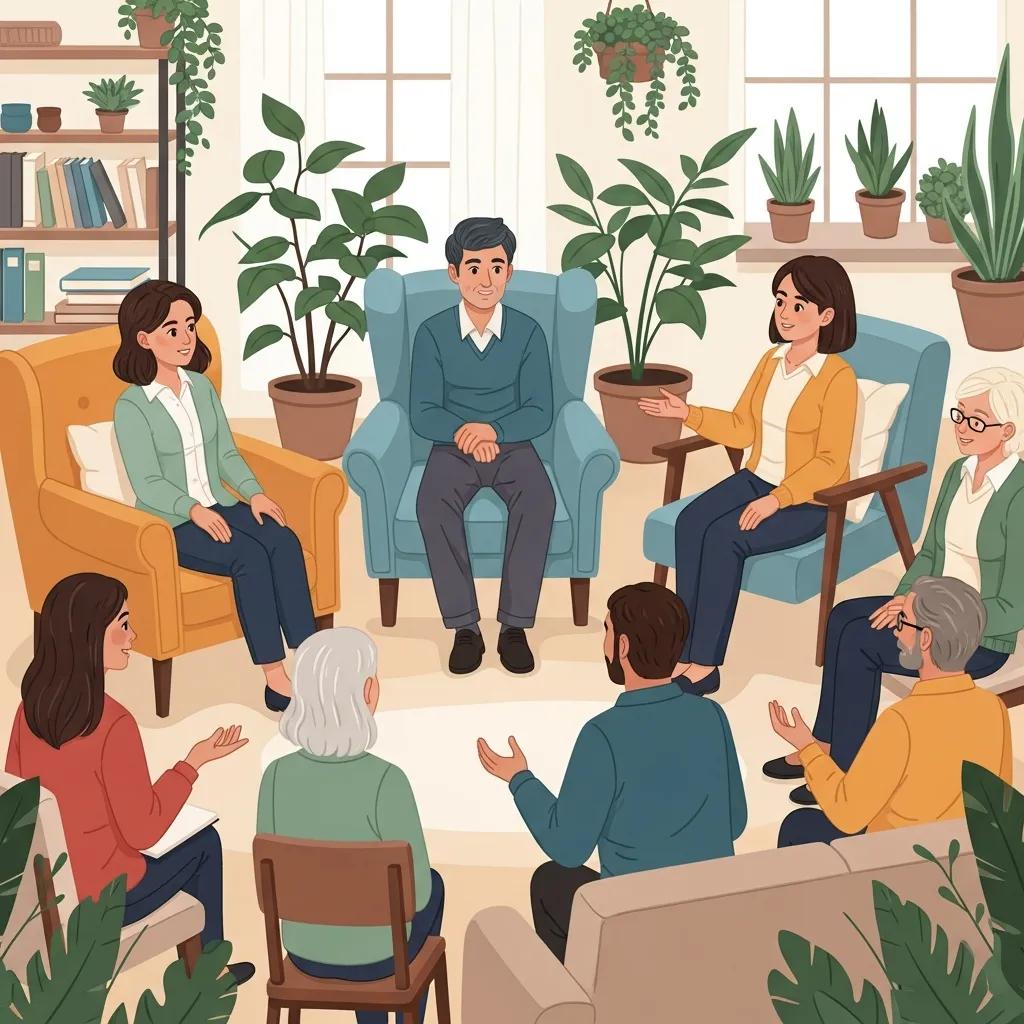
Group therapy brings 6–12 people together to practice skills, receive feedback, and build peer support, making it effective for social anxiety, substance use recovery, and chronic stress; groups often lower per-person cost compared with individual sessions.
Family and couples therapy address relational patterns, improve communication, and coordinate care across caregivers and providers; these modalities are important when dynamics at home or with partners contribute to distress.
Teletherapy extends all these modalities into virtual formats, reducing travel barriers and expanding provider choice; many clinicians now offer a mix of in-person and telehealth sessions to match client needs and schedules.
Understanding these distinctions helps you select a therapy type that matches clinical goals and practical constraints, and the next subsection explains concrete steps to locate affordable local providers.
How to find affordable Woodland Hills therapy providers
Start your search by contacting community clinics, sliding-scale therapist directories, and local mental health organizations that list clinicians offering reduced fees or pro bono services. When you call, ask clear questions: whether they offer sliding-scale fees, what documentation is required for reduced cost, whether they accept Medi-Cal mental health services, and whether teletherapy is available to broaden options. Consider university-affiliated training clinics and nonprofit counseling centers as cost-effective alternatives; trainee clinicians often provide supervised services at lower rates while still delivering evidence-based care. Finally, prepare a short intake summary of concerns, insurance status, and availability to expedite matching; having basic information ready helps intake teams recommend the right modality and informs next steps such as brief assessments or referrals to county services. These practical steps lead naturally into understanding the larger public programs available across LA County, which can complement or substitute private options.
Which mental health services does LA County provide?
LA County provides a spectrum of public mental health services through county-run behavioral health programs, mobile crisis teams, outpatient clinics, and specialized youth services administered by the Department of Mental Health (LA County). These programs function at a system level to provide crisis stabilization, outpatient treatment, case management, and community-based supports, making them a central access point for uninsured or low-income residents and for those eligible for Medi-Cal mental health services. Access pathways commonly include phone-based intake, walk-in centers, or referrals from schools, clinics, and emergency services; understanding eligibility and intake steps helps people determine whether county services are the best fit.
The compact EAV table below summarizes representative county program types, eligibility, and typical access routes to make it easier to identify which program to contact based on immediate needs.
This summary highlights how county programs differ by purpose and enrollment route, and the next subsection provides more detail on public program models and where to seek information during intake.
Overview of public mental health programs in LA County
LA County’s public mental health offerings include crisis stabilization units, outpatient therapy clinics, mobile crisis teams, and targeted youth programs that operate in-person and increasingly through telehealth platforms. Crisis stabilization focuses on immediate safety and short-term intervention, while outpatient clinics provide ongoing therapy, case management, and care coordination to support recovery and community integration. Mobile crisis teams and outreach services aim to reach people where they are—on the street, in schools, or at home—to de-escalate situations and connect individuals to appropriate follow-up care. These public programs are part of a behavioral health ecosystem that includes community clinics and nonprofit partners, enabling referrals and continuity of care across settings. Understanding this landscape clarifies when to call a crisis team versus when to seek scheduled outpatient support through county services.
Eligibility and access to LA County mental health services
Eligibility for county mental health services typically prioritizes clinical need, residence in LA County, and often Medi-Cal enrollment or low-income status, though crisis services are generally available regardless of insurance. Common documentation that expedites access includes identification, proof of county residency when available, and any prior treatment records that clarify diagnosis or recent hospitalizations; having this information on hand speeds the intake and assessment process. Access usually begins with a phone screening or walk-in assessment, followed by an intake evaluation that determines the appropriate level of care—crisis stabilization, outpatient therapy, or specialty youth services—and whether case management or medication support is required. Practical tips to expedite service include preparing a concise history of symptoms, current medications, and emergency contacts before calling; this readiness helps intake staff place individuals in the correct program quickly and reduces delays in receiving care.
How can teens access mental health support in LA County?
Teen mental health access in LA County spans school-based counseling, county youth programs, community clinics, and virtual counseling options designed to respect adolescent confidentiality while involving guardians as needed for safety and consent. These pathways work together so that teens can receive brief therapeutic interventions, ongoing counseling, group supports, and case management depending on severity and setting; school counselors often serve as the first contact point and refer students to county or community services when needs exceed school capacity. Confidentiality rules and parental consent requirements vary by age and service type, so caregivers and teens should clarify consent norms during intake to understand what information will be shared. The subsections below describe specialized teen programs and practical resources for parents and guardians who are supporting their children through emotional or behavioral challenges.
Teen-focused services combine clinical care, case management, and school-linked support to address developmental needs.
- School-based counseling: On-campus counselors provide short-term support and referrals for longer-term care.
- County youth programs: Specialized services target adolescents with higher-acuity needs through case management and therapy.
- Telehealth options: Virtual sessions increase access for teens who prefer remote care.
These pathways help caregivers decide where to begin and how to coordinate services; the next subsection details program types and the intake process for adolescents.
Specialized teen mental health programs and counseling
Specialized teen programs include short-term school counseling, county-run youth mental health teams, group therapy tailored for adolescents, and targeted interventions for substance use or eating disorders; each model emphasizes developmental considerations and family involvement as appropriate. Referral sources commonly include school counselors, pediatricians, juvenile probation, or self-referral when a teen or caregiver requests help; after referral, an intake assessment evaluates risk, functional impairment, and the right level of intervention. Services often blend short-term skill-building with longer-term therapy or case management, and they may integrate school attendance plans and coordination with educational staff to support academic functioning. Clinicians working with teens are typically trained in adolescent development and confidentiality issues, and they balance privacy with safety by explaining consent and reporting limits upfront. Understanding these program characteristics prepares families for what to expect during intake and subsequent treatment planning.
Resources for parents and guardians of teens
Parents and guardians benefit from clear steps to support a teen in distress: start by having a calm, nonjudgmental conversation that acknowledges concerns and expresses willingness to find help, then consult school counselors or pediatric providers to identify next steps for assessment or referral. Prepare to document observed symptoms, behavior changes, sleep and appetite patterns, and any risk indicators such as talk of self-harm—this information helps clinicians perform a focused intake and determine urgency.
Parent-focused supports include caregiver education workshops, parent support groups, and coaching on crisis planning and de-escalation techniques; these resources help adults provide stable support while clinicians address clinical issues. If safety concerns emerge, prioritize immediate crisis resources and explain to the teen that seeking urgent help is an act of care; this transition leads into the next section on crisis intervention resources and the concrete steps to take during emergencies.
What crisis intervention resources exist in Los Angeles?

Crisis intervention resources in Los Angeles include 24/7 hotlines, mobile crisis teams, walk-in crisis stabilization centers, and emergency services that provide immediate assessment, de-escalation, and short-term stabilization for people experiencing acute behavioral health emergencies. The core mechanism is rapid triage—hotlines or on-site clinicians assess imminent risk, arrange transport when necessary, and connect individuals to appropriate follow-up care such as outpatient programs or inpatient stabilization if indicated. Key entities in the crisis landscape include the 988 Suicide & Crisis Lifeline and county-operated urgent behavioral health centers that coordinate with hospitals and law enforcement when safety requires it. The subsections below list immediate contacts and outline prioritized steps caregivers and individuals should follow when a crisis unfolds, aiming to reduce harm and secure appropriate care quickly.
Before the table and steps, here is a concise list of primary crisis resources available in Los Angeles:
- 988 Suicide & Crisis Lifeline for immediate emotional support and suicide prevention.
- Mobile crisis teams that provide in-person assessment and de-escalation.
- Walk-in crisis stabilization centers offering short-term observation and referral.
These resources form the first line of response during a behavioral health emergency and guide whether to seek in-person urgent care or phone-based support.
Emergency mental health hotlines and walk-in centers
Emergency hotlines such as the 988 Suicide & Crisis Lifeline provide immediate telephonic support, crisis counseling, and linkage to local resources; these numbers connect callers to trained responders who assess risk and recommend next steps. Walk-in crisis stabilization centers operate as short-term, urgent care sites where clinicians evaluate safety, provide medication management as needed, and coordinate transitions to outpatient or inpatient services; intake typically includes a risk assessment, brief history, and immediate safety planning. Mobile crisis teams are dispatched when in-person evaluation is needed to de-escalate on-site situations and provide rapid linkage to stabilizing care. Knowing when to call 911 versus a crisis hotline depends on immediate danger: call 911 for imminent threats to life or safety, and call crisis hotlines for emotional emergencies where no immediate physical risk is present. Understanding these distinctions helps families choose the most appropriate resource when seconds matter.
Steps to take during a mental health crisis
When someone is in crisis, prioritize immediate safety by removing means of self-harm from the environment, staying with the person if safe to do so, and using calm, nonconfrontational language to reduce distress; this first step decreases acute risk and creates space for assessment. Next, contact an appropriate crisis resource—use 988 or a local mobile crisis team for urgent emotional support and de-escalation, or call 911 if there is imminent danger or active self-harm requiring emergency services. Prepare essential information to share with responders: the person’s current behavior, recent threats or attempts, medications, medical history, and emergency contacts to speed triage and treatment decisions. After immediate stabilization, document events, follow up with outpatient supports or county programs for ongoing care coordination, and set up a safety plan that identifies warning signs, coping steps, and trusted contacts. These prioritized actions help move a crisis from acute danger toward structured care and recovery, and they lead into strategies for finding affordable ongoing treatment in Woodland Hills.
How to find affordable mental health care in Woodland Hills?
Affordable care in Woodland Hills is available through sliding-scale clinics, community mental health centers, nonprofit organizations, and insurance programs such as Medi-Cal mental health services that reduce out-of-pocket costs for eligible residents. The practical approach combines searching directories of low-cost providers, asking about sliding-scale policies at community clinics, and exploring university training clinics where supervised trainees provide reduced-fee services. The EAV table below compares common affordability options—sliding scale clinics, community health centers, and training clinics—highlighting intake requirements and typical cost ranges so readers can quickly identify realistic starting points. After the table, concrete steps outline how to apply for reduced fees, negotiate payments, and coordinate with county services when necessary.
This comparison clarifies how intake and costs differ across clinic types and primes readers to prepare documentation and questions that expedite access to reduced-fee care.
Sliding scale and low-cost therapy options
Sliding scale models adjust fees based on household income, family size, and demonstrated need; clinicians and clinics typically request basic income information or documentation to determine an affordable rate. To find sliding-scale providers, inquire at community clinics, ask local mental health resource directories, and contact nonprofit counseling centers that prioritize underserved populations; asking directly about available slots for reduced-fee clients is an efficient first step. When contacting providers, prepare to explain your financial situation, ask whether reduced fees apply to telehealth, and clarify session length and cancellation policies to avoid unexpected charges. If immediate affordability is a barrier, request short-term crisis-focused sessions to stabilize symptoms while pursuing longer-term, lower-cost arrangements through county services or training clinics. These tactics help bridge urgent needs and sustainable care, and the next subsection describes community organizations that often provide complementary supports at low or no cost.
Community organizations offering mental health support
Local nonprofits, faith-based groups, peer-support organizations, and volunteer-run support groups provide workshops, drop-in groups, and peer counseling that complement formal therapy and often cost little or nothing. These organizations commonly deliver group-based wellness programs, psychoeducation, peer-led recovery meetings, and family support workshops that help reduce isolation and offer practical coping skills while clients wait for clinical services. To access these resources, search local community mental health calendars and contact organizations that list offerings for specific populations such as veterans, caregivers, or youth; many groups welcome new members and provide intake over the phone or by email. Combining community-based supports with sliding-scale clinical treatment creates a layered care plan that addresses both emotional needs and skill-building, and this community integration underscores the benefits of utilizing local resources described next.
What are the benefits of utilizing local mental health resources?
Local mental health resources offer faster access, continuity of care, and culturally competent services that draw on community knowledge and local referral networks, improving outcomes through coordinated follow-up and easier collaboration with schools, primary care, and county programs. Local providers and community organizations can tailor interventions to cultural and linguistic needs, integrate family and school contexts into treatment plans, and provide in-person supports that reinforce outpatient therapy and case management. Ongoing wellness programs and group supports foster community resilience, reduce isolation, and create sustained opportunities for prevention and early intervention; these benefits often lead to fewer emergency visits and better long-term management of chronic conditions. The subsections below explain how local networks improve care coordination and outline common community programs that sustain recovery and wellness over time.
Local resources create advantages in access, continuity, and culturally informed care that larger, disconnected systems may lack.
- Faster access: Local clinics and counselors can often schedule sooner than distant specialists.
- Personalization: Providers familiar with community context deliver more relevant interventions.
- Integrated follow-up: Local networks facilitate warm handoffs between schools, clinics, and county services.
These benefits illustrate why investing time in local pathways can yield better outcomes, and the following subsections give concrete examples of coordination and ongoing wellness programs.
Improved access and personalized care in Woodland Hills and LA County
Local networks improve care coordination by enabling direct communication among therapists, school counselors, and county case managers, which ensures that safety plans, medication changes, and school accommodations are implemented consistently. When providers operate within the same community, they can attend school meetings, facilitate timely transitions from crisis stabilization to outpatient care, and engage family members in culturally sensitive ways that increase treatment adherence. This proximity also supports continuity—clients are more likely to keep appointments and follow through with therapy when travel time is minimal and providers understand local barriers such as transportation and work schedules. The result is a personalized care pathway that adapts to life realities and reduces fragmentation, making local resources a practical choice for sustained mental health management.
Community support and ongoing wellness programs
Community wellness programs include peer support groups, psychoeducational workshops, stress reduction classes, and ongoing prevention initiatives that maintain gains achieved in therapy and build resilience across populations. These programs often run through community centers, faith-based organizations, and nonprofits, offering low-cost or no-cost options for ongoing engagement and social connection that reduce relapse risk and reinforce healthy coping strategies. To find ongoing offerings, check local community calendars and ask clinics or county programs for referrals to recurring groups and workshops; many programs accept new participants on a rolling basis and provide a mix of virtual and in-person options to increase accessibility. Regular participation in community wellness activities complements clinical care by sustaining social supports and promoting durable recovery.