


Genetic Factors in Addiction: Understanding Hereditary Links and Risk
Addiction is a complex brain disorder with substantial hereditary influence: current research estimates that genetics account for roughly 40–60% of the variance in liability to substance use disorders. This article explains what “hereditary” means in this context, how specific genes and the dopamine reward system shape vulnerability, and why environment and epigenetics can amplify or mitigate inherited risk. Readers will learn population-level heritability concepts, the main genes implicated in addiction biology, how dopamine circuitry translates genetic variation into behavior, and how gene-environment interactions and recent studies (2023–2024) refine prevention and treatment. The guide also translates genetic insights into realistic personalized strategies—pharmacogenomics and genetic counseling—while clarifying limitations and ethical considerations. By the end, you’ll have an evidence-grounded map linking genes, neural mechanisms, environment, and actionable clinical directions for reducing addiction risk.
Is Addiction Hereditary? Exploring Genetic Contributions to Substance Use Disorder
Hereditary in addiction refers to the proportion of variance in risk that is attributable to inherited genetic differences rather than environmental differences, with heritability estimates typically in the 40–60% range. This means genes shape vulnerability by altering brain development, neurotransmitter systems, and metabolic pathways that influence how rewarding or aversive substances feel. Understanding this population-level estimate helps clinicians and families assess relative risk without assuming inevitability, because environment and personal history strongly modulate outcomes. Presenting heritability clarifies that genetic predisposition is one part of a multifactorial process, helping guide prevention strategies that focus on modifiable exposures.
What Percentage of Addiction Risk Is Attributed to Genetics?
Heritability estimates for substance use disorders generally fall between 40% and 60%, derived from twin, family, and large-scale genomic analyses that partition variance into genetic and environmental components. These figures indicate that roughly half of the population variation in risk is linked to inherited factors, while the remainder reflects environmental exposures and gene-environment interplay. Importantly, heritability is a population statistic—not a prediction for any single person—so two individuals with similar genes can have very different outcomes depending on life experiences. Recent genomic studies refine these estimates by identifying specific risk loci and polygenic scores that explain part of the heritable signal, but they do not provide deterministic forecasts.
How Does Family History Influence Addiction Susceptibility?
Family history acts as a practical proxy for inherited vulnerability because it captures shared genes and shared environments such as parenting, socioeconomic factors, and early exposures. Studies show that children of parents with addiction have substantially higher risk than population baseline—often several-fold depending on substance and context—yet the absolute risk varies widely with environmental buffering or stress. Family history therefore flags elevated vigilance and prevention needs, not predetermined fate; targeted interventions, monitoring, and supportive environments can reduce progression to disorder. Recognizing family history as combined genetic plus environmental signal informs both clinical screening and personalized prevention planning.
Which Genes Are Linked to Addiction? Key Addiction Genes and Their Functions
A growing number of genes and genomic regions contribute to addiction liability by influencing neurotransmission, receptor function, reward sensitivity, and substance metabolism. Key implicated genes include receptors and transporters that shape synaptic signaling, enzymes that metabolize drugs, and regulatory genes that influence neural development and plasticity. Mapping these genes clarifies mechanistic pathways—dopaminergic signaling, GABAergic inhibition, opioid receptor function, and alcohol metabolism—and helps prioritize targets for pharmacology and risk stratification. Below is a concise reference that links gene to biological role and the direction of clinical or behavioral impact for common variants.
Intro to the gene table: The following table summarizes several well-studied genes, their core molecular functions, and how common variants tend to shift addiction risk or response.
This table clarifies how molecular roles translate into behavioral risk and why some genes are substance-specific while others affect broad vulnerability. Understanding these meronym relationships—receptors, transporters, enzymes—helps connect genotype to phenotype.
What Roles Do DRD2, OPRM1, and GABRA2 Play in Addiction?
DRD2 encodes the dopamine D2 receptor, a critical mediator of reward learning and reinforcement; lower D2 availability is associated with greater impulsivity and propensity for compulsive use. OPRM1 encodes the mu-opioid receptor that modulates reward from opioids and alcohol; genetic variants can change subjective effects and medication responsiveness. GABRA2 encodes a GABA-A receptor subunit that regulates inhibitory control and alcohol sensitivity, with certain alleles linked to increased alcohol problems and impulsive traits. Together these genes show how receptor-level variation alters neural circuit function and behavioral tendencies toward problematic substance use.
How Do Variations in ADH1B and ALDH2 Affect Alcohol Use Disorder Risk?
ADH1B and ALDH2 encode sequential enzymes in ethanol metabolism: ADH1B converts ethanol to acetaldehyde, and ALDH2 clears acetaldehyde. Fast-acting ADH1B alleles produce rapid acetaldehyde accumulation, often reducing drinking and lowering AUD risk by causing transient aversive effects. Conversely, ALDH2 deficiency causes pronounced flushing and discomfort after drinking, strongly deterring consumption and reducing AUD incidence in many carriers. Population prevalence of these variants varies geographically, explaining part of regional differences in alcohol-related behaviors and illustrating how metabolism genes exert substance-specific protective or risk-modifying effects.
How Does the Dopamine Reward System Connect to Addiction Genetics?
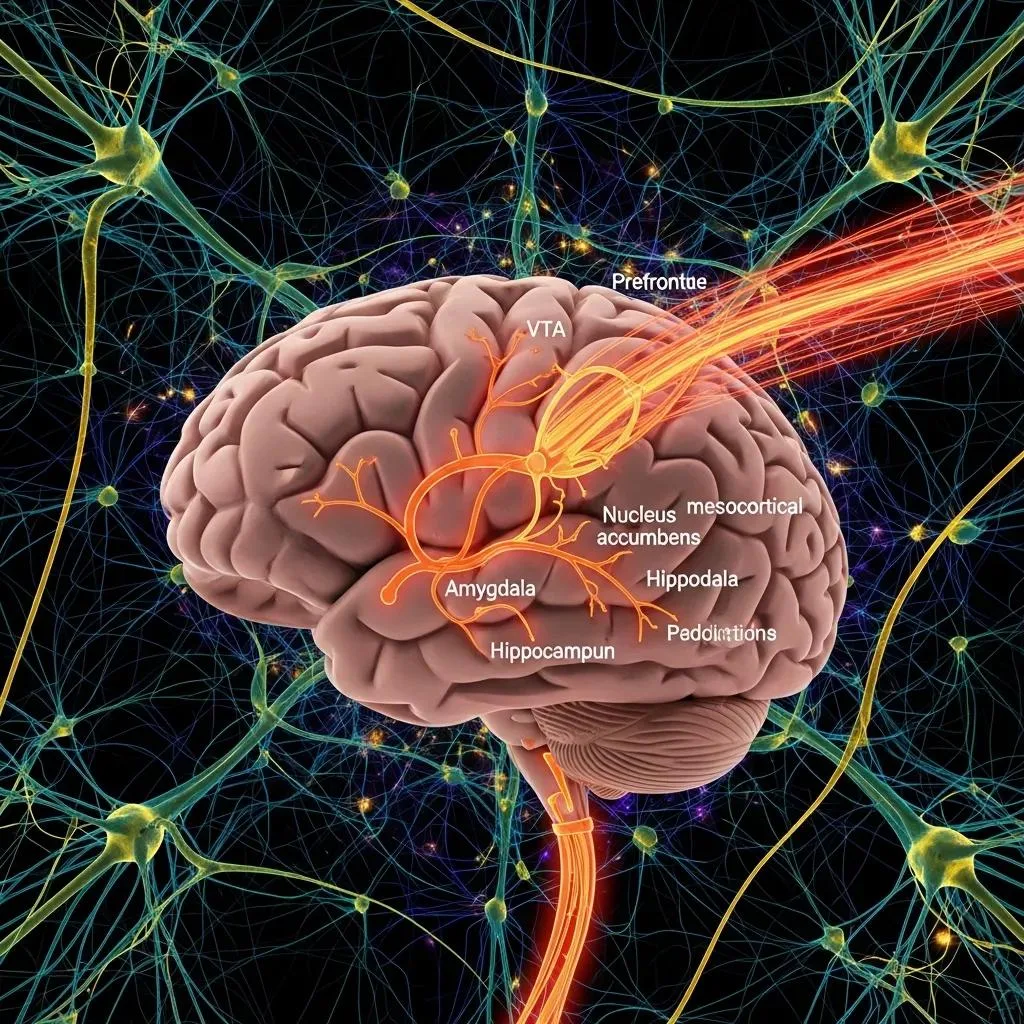
The mesolimbic dopamine pathway—spanning the ventral tegmental area to the nucleus accumbens and prefrontal cortex—encodes reward prediction, reinforcement, and motivation, making it central to addiction biology. Genetic variation in genes that regulate dopamine synthesis, receptors (D1–D5), transporters, and catabolic enzymes shapes signal amplitude and duration, thereby influencing how strongly substances reinforce behavior. When genetics shift reward sensitivity or learning rates, individuals may experience amplified reinforcement from a drug, accelerating habit formation and compulsive use. Understanding genetic modulation of dopamine signaling clarifies mechanistic links between genotype and the behavioral trajectories that lead to substance use disorders.
Introductory list: Key dopamine-related mechanisms influenced by genetic variation.
- Reward sensitivity modulation: Variants change how rewarding substances feel by altering receptor function.
- Reinforcement learning rate: Genetic differences influence how quickly cues become associated with drug reward.
- Dopamine clearance and persistence: Enzyme and transporter polymorphisms affect signal duration and tolerance development.
These mechanisms explain why genetic changes in dopamine pathways translate into measurable differences in addiction vulnerability and treatment response.
What Is the Role of Dopamine and Its Receptors in Addiction?
Dopamine mediates reward prediction and reinforcement learning by signaling discrepancies between expected and received outcomes; D1-type receptors generally promote action initiation while D2-type receptors often gate learning and habit formation. Balanced D1/D2 signaling supports adaptive motivation, whereas imbalances—shaped by genetic variation—can increase impulsivity or compulsivity. At the circuit level, altered receptor expression or sensitivity changes synaptic plasticity and the salience of drug-related cues, accelerating the transition from voluntary use to compulsive seeking. Recognizing receptor-specific roles informs pharmacological strategies that aim to rebalance dopaminergic tone.
How Do Genetic Variations Influence Dopamine Signaling and Reward Response?
Genetic variants can change receptor density, transporter efficiency, and the activity of enzymes like COMT that metabolize dopamine, thereby altering both the amplitude and temporal profile of dopamine signaling. For example, reduced DRD2 expression diminishes inhibitory feedback, increasing reward-seeking, while COMT variants affect prefrontal dopamine clearance and executive control over impulses. These molecular changes map onto behavioral phenotypes such as faster habit formation, higher tolerance thresholds, and increased risk-taking. Translating these genotype→phenotype relationships supports targeted interventions that modify reward learning or strengthen executive control.
What Is the Role of Environment in Gene-Environment Interaction for Addiction?
Gene-environment interaction occurs when environmental exposures modify the effect of genetic predisposition on addiction risk, while gene-environment correlation describes how genes influence exposure likelihood. Environmental factors like early drug exposure, childhood trauma, peer influence, and socioeconomic stressors can magnify genetic vulnerabilities by shaping neural development and stress-response systems. Epigenetic mechanisms—DNA methylation, histone modification, and non-coding RNAs—mediate how life experiences alter gene expression without changing DNA sequence, producing plasticity that can increase or decrease addiction susceptibility. Mapping these pathways clarifies prevention opportunities and underscores the reversibility potential of some epigenetic changes.
Intro to environment EAV table: The table below maps common environmental modifiers to epigenetic mechanisms and their typical effects on gene expression and addiction risk.
This mapping shows how environment converts exposures into molecular signals that shape long-term risk, highlighting targets for intervention.
Which Environmental Factors Modify Genetic Addiction Risk?
High-impact environmental modifiers include early initiation of substance use, adverse childhood experiences, persistent socioeconomic hardship, and peer or cultural norms that facilitate use. These factors interact with genetic predisposition; for example, high polygenic risk plus early exposure often predicts steeper trajectories toward disorder than either factor alone. Prevention strategies therefore focus on delaying initiation, reducing trauma exposure, improving social supports, and changing normative environments—actions that can blunt genetic risk expression. Identifying modifiable environmental levers provides practical pathways to reduce population-level incidence despite inherited vulnerability.
How Does Epigenetics Alter Gene Expression Related to Addiction?
Epigenetic processes regulate whether genes are switched on or off in response to life experiences: DNA methylation typically represses gene transcription, histone modifications adjust chromatin accessibility, and non-coding RNAs fine-tune translation. Substance exposure and stress can induce persistent epigenetic changes in reward and stress circuits, altering expression of receptors, transporters, and plasticity genes in ways that promote craving and relapse. Importantly, some epigenetic marks are dynamic and responsive to behavioral therapies, pharmacological agents, or environmental improvements, offering hope that early interventions can reverse maladaptive gene expression patterns and lower addiction risk.
What Are the Latest Research Findings on Addiction Genetics and Their Implications?
Recent work (2023–2024) has expanded genomic discovery, revealing shared polygenic architecture across substance use disorders and identifying cell-type–specific mechanisms that refine translational targets. Notably, studies have implicated neuroimmune cells—microglia—in modulating alcohol-related risk, and large collaboration projects with consumer-genetics partners have uncovered novel loci linked to cannabis use and comorbid psychiatric traits. These advances provide more granular targets for drug development and better-informed polygenic risk models, though clinical translation requires cautious validation and ethical oversight. Summarizing recent discoveries helps researchers and clinicians prioritize mechanistic studies and translate genetic knowledge into interventions.
Introductory list of recent study focuses:
- Microglia and neuroimmune signaling: New data links immune cell behavior to AUD vulnerability.
- Cross-disorder GWAS: Shared loci suggest common biology between SUDs and psychiatric disorders.
- Consumer-genetics collaborations: Large sample sizes reveal novel risk regions for cannabis traits.
How Does Microglia Behavior Affect Alcohol Use Disorder Genetic Risk?
Recent research highlights microglia—the brain’s resident immune cells—as modulators of synaptic remodeling and neuroinflammation, processes that interact with genetic variants to influence alcohol-related behaviors. Studies show that certain genetic backgrounds alter microglial reactivity to alcohol exposure, leading to prolonged neuroinflammatory states that can reinforce maladaptive plasticity in reward circuits. Translationally, this suggests targeting neuroimmune pathways could complement traditional approaches, opening avenues for treatments that modulate microglial activation to reduce AUD progression and relapse vulnerability.
What Genetic Links Have Been Found in Cannabis Use Disorder?
Large genomic analyses combining clinical and consumer datasets have identified multiple loci associated with cannabis use and problematic use, implicating genes involved in synaptic function, neurodevelopment, and psychiatric vulnerability. Some regions overlap with loci linked to mood disorders and cognitive traits, indicating pleiotropy and shared risk mechanisms. These findings improve risk prediction models and suggest that interventions addressing co-occurring psychiatric symptoms, cognitive control, and developmental windows may reduce progression to cannabis use disorder.
How Can Genetic Insights Inform Personalized Prevention and Treatment of Addiction?
Genetic knowledge is beginning to inform personalized addiction medicine through pharmacogenomics, refined risk stratification, and genetic counseling that translates risk into tailored prevention and treatment plans. Pharmacogenomic markers can guide medication selection and dosing for opioid, nicotine, and alcohol-use treatments, while polygenic risk scores and family-history data can help prioritize prevention resources for high-risk individuals. Genetic counseling offers structured risk communication, ethical guidance, and referral pathways, although limitations in predictive accuracy and access mean genetics complements—not replaces—behavioral and environmental interventions. Below is a comparative table of current genomic-informed tools and their clinical utility.
Intro to personalized medicine table: This table compares intervention types, what they assess, and current clinical utility or availability.
What Is Personalized Addiction Medicine and Pharmacogenomics?
Personalized addiction medicine uses genetic and phenotypic information to tailor prevention and treatment, with pharmacogenomics focusing on how genetic variation influences medication efficacy and tolerability. Practical examples include using metabolic or receptor genotypes to anticipate medication response and adjusting treatment plans accordingly, though predictive strength varies by medication and disorder. While some pharmacogenomic tests are clinically actionable, many remain investigational; therefore, clinicians must integrate genetic data with behavioral assessment, comorbidities, and patient preferences to optimize outcomes.
How Does Genetic Counseling Help Manage Addiction Risk?
Genetic counseling provides structured assessment and communication of inherited risk, helping individuals and families understand probabilities, interpret test results, and make informed choices about prevention or family planning. Counselors can translate polygenic or single-gene findings into personalized risk-reduction recommendations, refer to psychosocial supports, and address privacy and ethical concerns. Importantly, counseling clarifies limitations: genetic results rarely predict certainty and should be combined with environmental and behavioral strategies to reduce addiction risk effectively.
This article has mapped how hereditary factors, specific genes, dopamine circuitry, environment, recent research, and personalized strategies interconnect to shape addiction risk and clinical options. Understanding these relationships empowers clinicians, researchers, and families to prioritize prevention, tailor treatments, and pursue emerging translational pathways grounded in genetics and neurobiology.