

Developing New Hobbies: How to Enrich Life in Recovery and Support Mental Health
Recovering from substance use or other addictive behaviors often leaves people searching for safe, meaningful ways to fill time, manage cravings, and rebuild identity. Developing new hobbies and leisure activities in recovery provides structured outlets for emotion, practical coping mechanisms, and opportunities to form sober social connections, which together support mental health and long-term sobriety. This article explains why hobbies matter in addiction recovery, which types of activities deliver the strongest benefits, and how to find and sustain new interests through practical self-assessment and low-barrier action steps. You will learn specific hobby categories, starter plans, relapse-prevention strategies, and real-life examples that show how hobbies replace old patterns with purpose and routine. The sections below cover the key benefits, the hobby types best suited to recovery, a step-by-step how-to for getting started, ways hobbies build routine and prevent relapse, and anonymized success stories plus expert-style recommendations to integrate hobbies into therapeutic work.
What Are the Key Benefits of Hobbies in Addiction Recovery?
Hobbies in recovery are leisure activities intentionally chosen to promote well-being, structure, and positive identity, and they work by redirecting attention, building skills, and creating social ties that reduce relapse risk. These activities reduce stress through distraction and flow, improve mood via physical or creative engagement, and supply regular positive reinforcement that strengthens self-efficacy. Hobbies also expand social networks and provide alternative contexts for belonging that replace substance-focused environments. Understanding these benefit domains helps people prioritize which leisure activities to try based on immediate needs like stress reduction, social connection, or physical health.
Hobbies deliver core recovery benefits in distinct domains:
- Mental health regulation: Activities provide distraction, flow, or expressive outlets that lower rumination and craving.
- Social support: Group hobbies and volunteering build sober peer networks and accountability.
- Physical well-being: Active pastimes improve sleep, mood, and stress-hormone balance.
These domains overlap, so selecting hobbies that touch multiple areas—like team sports that are both physical and social—magnifies impact. The next section details how hobbies reduce stress and improve mental well-being through specific mechanisms and examples.
Introductory comparison of benefit domains, mechanisms, and practical examples:
This table clarifies how each benefit domain maps to mechanisms and concrete activities that readers can test quickly. The mental and social pathways are especially relevant for preventing isolation that often precedes relapse, which leads into specific stress-reduction mechanisms next.
How Do Hobbies Reduce Stress and Improve Mental Well-being?
Hobbies reduce stress by shifting attention from cravings to absorbing tasks that produce a flow state, by offering creative outlets that process emotions, and by promoting physiological regulation through movement or breath. Flow occurs when a task’s challenge matches skills, producing deep engagement and reduced self-focused rumination; this neurocognitive shift lowers anxiety and interrupts craving cycles. Creative practices like painting or expressive writing let people externalize and reframe difficult feelings instead of suppressing them, supporting long-term emotional processing. Because these mechanisms operate at cognitive and physiological levels, regular engagement in suitable hobbies builds resilience and creates accessible coping mechanisms for moments of high stress.
These stress-reduction effects are reinforced by consistent practice and will be further amplified when hobbies are social or physical, as discussed in the next subsection on community and connection.
In What Ways Do Hobbies Foster Social Connection and Community?
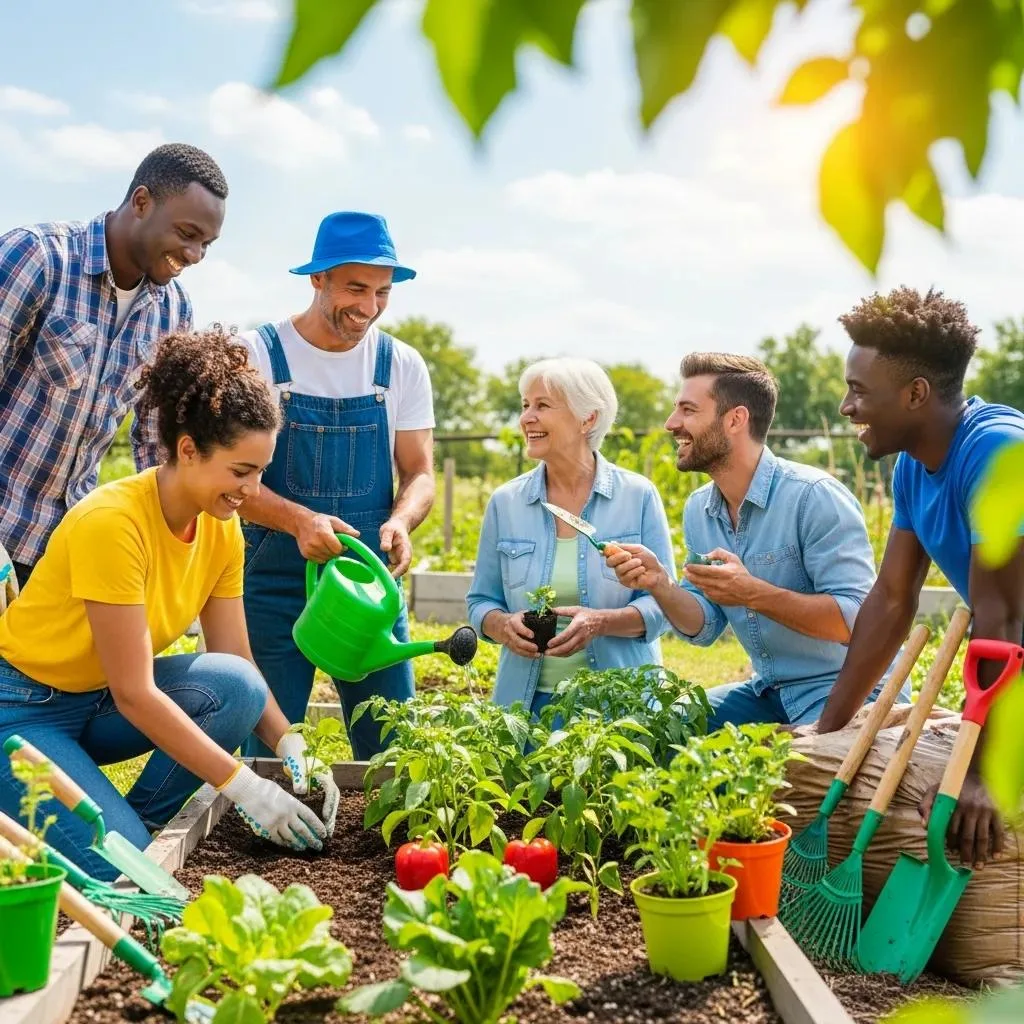
Group-based hobbies, classes, and volunteer activities create reliable social structures that reduce isolation and provide informal accountability; these social connections decrease relapse risk by offering support during vulnerable moments. Joining a class or club gives repeated opportunities to meet peers in sober contexts, which rebuilds social identity around shared interests rather than substance use. Volunteering adds a purpose-driven dimension—helping others strengthens self-worth and connects individuals to mission-oriented communities that reinforce prosocial behavior. Online hobby groups can be an accessible bridge, but in-person meetups often deliver stronger bonding and routine.
To join community options, start with a low-commitment class or volunteer shift to test fit and build ties slowly, then cultivate a small network of hobby peers who can act as recovery allies during high-risk times.
Which Types of Hobbies Best Support Mental Health and Sobriety?
Different hobby categories serve distinct recovery needs; choosing among creative, physical, mindfulness-based, social, and intellectual activities helps match interests to therapeutic goals. Creative hobbies facilitate emotional expression and identity work, physical hobbies stabilize mood and sleep, mindfulness-based activities teach present-moment skills that reduce reactivity, social hobbies supply belonging, and intellectual pursuits build competence and cognitive engagement. Selecting a mix that addresses several domains—such as yoga (physical + mindfulness) or community choir (creative + social)—can deliver compounded benefits.
Common hobby categories and quick rationales:
- Creative hobbies: Encourage expressive processing and provide tangible progress markers that boost self-esteem.
- Physical hobbies: Improve neurochemistry through endorphins and reduce stress hormones for mood stability.
- Mindfulness-based hobbies: Strengthen attention regulation and decrease impulsivity that can lead to relapse.
- Social hobbies: Build sober networks and meaning through shared activity.
- Intellectual hobbies: Rebuild cognitive confidence and provide constructive mental engagement.
Below is a quick comparison table mapping specific hobby examples to primary benefits and starter steps to help readers pick an entry point.
This table helps convert interest into action by combining benefit, rationale, and simple starter steps. The next subsections explore creative and physical/mindfulness hobbies in more detail, with micro-challenges to begin immediately.
What Are Creative Hobbies That Aid Emotional Expression?

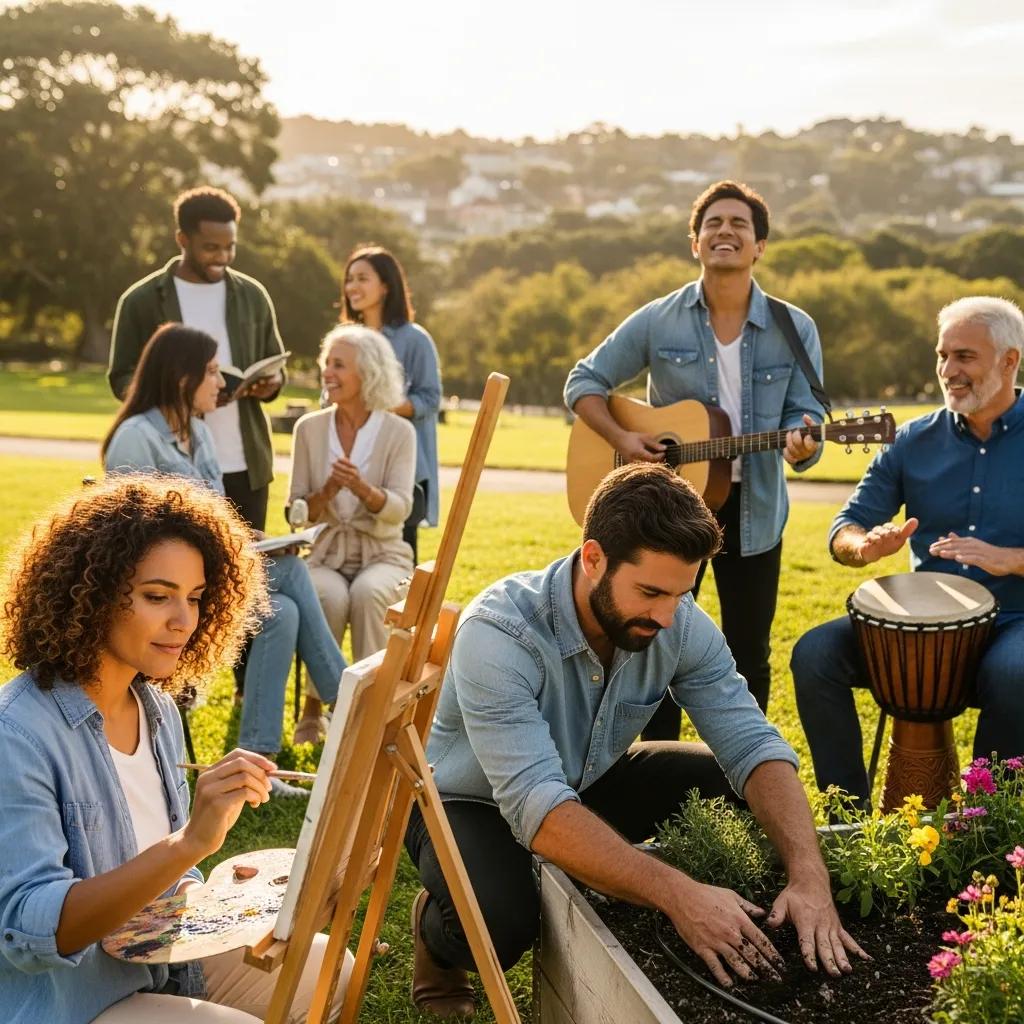
Creative hobbies like painting, music, photography, and expressive writing help channel difficult feelings into tangible products and narratives, which reduces rumination and strengthens a non-addictive identity. Starting requires minimal supplies: a sketchbook and pencils, a simple recording app, or a basic journal, and brief daily practices produce progressive skill and confidence. A practical 30-day micro-challenge—15 minutes of free writing every morning or five quick sketches after dinner—builds habit and creates a visible portfolio of progress that supports self-efficacy. Creative groups and workshops also provide structured feedback and social reinforcement, turning a private practice into a communal activity that enhances recovery resources.
Starting with small, consistent sessions keeps pressure low while producing measurable wins that motivate continued engagement and skill development.
How Do Physical and Mindfulness-Based Activities Promote Recovery?
Physical activities and mindfulness practices support recovery by improving neurochemistry—raising endorphins and reducing cortisol—while strengthening self-regulation and sleep quality. Low-barrier options like daily brisk walking, short yoga sequences, gardening, or ten-minute guided meditations can be done without special equipment and fit into busy schedules. Establishing brief routines—such as a 10-minute morning stretch and a 20-minute evening walk—provides predictable anchors that reduce decision fatigue and create sober time blocks. Over weeks, these practices recalibrate stress responses and increase tolerance for discomfort, making cravings less compelling and improving overall mood.
Begin with small, measurable commitments to build physiological benefits and then gradually extend duration or intensity as confidence and capacity grow.
How Can Individuals Find and Start New Hobbies During Recovery?
Finding new hobbies in recovery begins with simple self-assessment, low-commitment experiments, and scaffolding plans that minimize barriers like time, cost, or fear of failure. A focused self-assessment reveals values, available time, past interests, and social preferences, which can be matched to hobby categories for efficient exploration. Once a few candidate activities emerge, use micro-goals—short, manageable tasks scheduled into weekly routines—to test fit without overwhelming commitment. Addressing common barriers through resourceful strategies, such as free community classes or swapped-cost approaches, keeps momentum while reducing financial strain.
Below is a small self-assessment table to translate reflection into actionable hobby suggestions.
This mapping turns personal insight into clear starting points, which leads to the step-by-step starter plan below.
- Reflect: Answer 3–5 quick prompts about values, time, and past interests.
- Choose one: Pick a single hobby to try for one week with a 10–20 minute daily commitment.
- Schedule: Block specific times in your calendar for short sessions and treat them as appointments.
- Test and adjust: After one week, evaluate enjoyment, difficulty, and fit; either continue, modify, or try a different hobby.
What Self-Assessment Techniques Help Discover Personal Interests?
A concise, actionable self-assessment uses reflective prompts and small experiments to reveal which hobby types align with personality, energy levels, and recovery needs. Try five focused questions: What activity absorbed me as a child? When do I feel calm? Do I prefer solo or group settings? How much time can I realistically commit? What outcome matters most—fun, skill, fitness, or community? Answering these clarifies priorities and narrows candidate choices. Follow reflection with a one-week mini-trial for two options, using fixed short sessions to test fit without heavy commitment.
This approach turns abstract curiosity into measurable trials that inform longer-term hobby choices, which helps overcome inertia and aligns activities with recovery priorities.
What Practical Tips Overcome Barriers to Starting New Hobbies?
Common barriers—time constraints, cost, social anxiety, and perfectionism—are addressable with simple tactics that make beginning sustainable and low-pressure. Time-blocking places hobby sessions into existing routines and protects them from competing demands. Cost barriers can be solved by borrowing, using community resources, or choosing no-cost options such as walking or public-library programs. Social anxiety diminishes with small, graded exposures: begin solo or in small, structured classes that emphasize beginner-friendly environments. To counter perfectionism, adopt a learning mindset and set micro-goals that emphasize consistency over quality.
These practical steps remove friction to starting and create a scaffold that supports gradual expansion of time, skill, and social involvement.
How Do Hobbies Contribute to Purpose, Routine, and Relapse Prevention?
Hobbies contribute to relapse prevention by occupying idle time, reducing exposure to triggers, and creating rituals that enhance predictability and emotional stability. When activities become anchors—regular morning walks, weekly art sessions, or volunteer shifts—they structure the day and lower decision fatigue that can lead to impulsive substance use. Hobbies also foster identity shifts: competence and small wins in a hobby build self-efficacy, replacing identity elements tied to substance use with skills and social roles. Together, routine and identity change reduce relapse risk by substituting healthier reward pathways and predictable supports.
Two concrete examples illustrate these mechanisms and inform a compact relapse-prevention playbook.
- Example: Morning running routine replaces pre-use idle time by creating a predictable energy outlet and social check-ins with running partners.
- Example: Weekly community service provides meaning and social accountability that reduce isolation and strengthen sober identity.
Below is a short relapse-prevention micro-playbook with practical steps.
- Identify high-risk times: Map when cravings peak and schedule hobby anchors during those windows.
- Build small rituals: Start with 10–20 minute hobby sessions morning or evening as anchors.
- Use rewards: Track consistency and celebrate small milestones to reinforce new reward pathways.
Why Is Establishing a Structured Routine Important in Recovery?
A structured routine reduces unpredictability and decision fatigue, which lowers the likelihood of impulsive choices and relapse by creating safer, scheduled alternatives to former substance-related routines. Anchor activities—consistent morning or evening rituals—stabilize sleep, appetite, and mood, and make cravings easier to navigate by providing alternate actions. Routine also facilitates habit formation: repeated small behaviors become automatic over time, freeing cognitive resources for recovery work. Start with two daily anchors (one morning, one evening) and gradually add hobby sessions as predictable supports to strengthen overall routine.
Establishing these anchors supports recovery milestones and prepares the ground for skillful habit substitution discussed next.
How Do Hobbies Help Replace Old Habits and Support Long-Term Sobriety?
Hobbies function as substitution strategies by providing alternative cues, rewards, and routines that compete with substance-linked triggers while avoiding suppression that often leads to rebound cravings. Effective replacement uses staged planning: immediate micro-habits (0–30 days) focus on consistency; medium-term goals (30–90 days) build skill and social ties; longer-term plans emphasize identity consolidation and leadership roles in hobby communities. Reward schedules—small, frequent acknowledgments of progress—reinforce new neural pathways and make the hobby intrinsically motivating. Tracking progress with simple logs and celebrating milestones sustains momentum and signals meaningful change.
By aligning hobby selection with personal values and recovery goals, people replace risky patterns with constructive habits that support lasting sobriety.
What Are Real-Life Success Stories and Expert Insights on Hobbies in Recovery?
Anonymized examples and practitioner-style recommendations illustrate how hobbies can transform recovery by rebuilding routine, reducing isolation, and generating measurable well-being gains. Case vignettes show people who shifted from solitary substance use to active community involvement through activities like community gardening, music groups, or running clubs, resulting in improved mood, expanded social circles, and longer periods of abstinence. These stories highlight the practical pathways from tentative experimentation to confident participation and leadership in hobby communities. Expert-style insights emphasize pacing, goal alignment with therapy, and using hobbies to rehearse coping skills learned in counseling.
Below are short anonymized narratives that demonstrate different hobby pathways and outcomes.
How Have Individuals Transformed Their Recovery Through New Interests?
Case 1: A person recovering from alcohol dependence began a daily walking group and a weekly art class; within months, improved sleep and supportive friendships reduced cravings and provided new community roles. The walking group supplied routine and exercise benefits, while art offered emotional processing and visible progress.
Case 2: Someone handling stimulant misuse joined a volunteer food program and a community choir; the structured volunteer shifts created accountability while the choir provided creative expression and social bonding, which together stabilized mood and lengthened sober stretches.
Case 3: An individual curious about craftsmanship started with a 30-day woodworking micro-challenge, tracking small wins that strengthened self-efficacy and replaced idle evenings, leading to a new social circle and reduced relapse triggers.
Each narrative shows how hobbies deliver overlapping benefits—routine, social support, identity—and how modest initial steps scale into sustainable recovery resources.
What Do Recovery Specialists Recommend About Integrating Hobbies?
Recovery specialists advise starting with low-pressure experiments, aligning hobby choice with therapeutic goals, and coordinating activities with existing treatment plans to maximize benefit and safety. They emphasize pacing: prioritize consistency over mastery, and choose activities that can be scaled gradually to avoid overwhelm. Specialists recommend combining at least two hobby types—one physical or mindfulness-based and one social or creative—to address both emotion regulation and belonging. Finally, they suggest documenting progress and using hobby milestones in therapy as concrete evidence of growth and resilience.
These practitioner-style recommendations help readers integrate hobbies into broader recovery strategies while reinforcing the therapeutic gains discussed earlier.
- Start small and consistent: Prioritize short daily or weekly sessions.
- Align hobbies with therapy goals: Use activities to practice coping skills.
- Mix hobby types: Combine physical/mindfulness and social/creative pursuits.
These actionable recommendations close the loop between how hobbies work and how to sustain them as core recovery supports.