


Comprehensive Guide to Depressive Disorders: Types, Symptoms, and Effective Treatment Options
Depressive disorders are mood disorders characterized by persistent low mood, reduced interest or pleasure, and functional impairment that interfere with daily life. Current research shows depressive disorders affect a large portion of the global population, contributing substantially to disability and medical comorbidity, yet many effective treatments exist and early care improves outcomes. This guide explains clinical definitions and classifications, summarizes prevalence and public-health impact, and maps the main diagnostic categories people and clinicians use, including Major Depressive Disorder and Persistent Depressive Disorder. Readers will also find clear symptom checklists, the diagnostic workflow professionals follow, and an evidence-based review of therapies from psychotherapy to medications and brain stimulation. Finally, the guide offers practical self-management strategies, crisis-signposting, and pathways to community and clinical support. By combining clinical concepts (DSM-5 criteria and diagnostic reasoning) with actionable guidance on treatment and recovery, this article aims to help patients, caregivers, and clinicians make informed choices about depressive disorders and care options.
What Are Depressive Disorders and How Common Are They?
Depressive disorders are a group of psychiatric conditions in which persistent low mood and loss of interest reflect underlying disruptions in mood regulation, neurochemistry, and psychosocial functioning; identifying these mechanisms helps guide targeted treatment. These disorders are hypernyms within the broader category of mood disorders and can co-occur with anxiety and medical illness, increasing disability and healthcare needs. Recognizing prevalence informs public-health planning and demonstrates why screening and access to care matter. The next subsections define clinical classification and present current prevalence patterns that shape prevention and treatment priorities.
How Is Depression Defined and Classified in Medical Terms?
Depression is defined clinically by clusters of emotional, cognitive, and physical symptoms that persist for a specified duration and cause significant distress or impairment, as operationalized in DSM-5 criteria. DSM-5 requires a minimum number of symptoms over at least a two-week period for Major Depressive Disorder, with attention to functional impairment and exclusion of conditions such as bipolar disorder or bereavement-related grief. Clinicians apply this framework alongside clinical judgment, considering differential diagnoses like hypothyroidism or substance-induced mood disorder. Understanding these criteria clarifies why subtype labels (for example, seasonal pattern or peripartum onset) influence treatment selection and monitoring.
What Are the Global and U.S. Statistics on Depression Prevalence?
Epidemiological estimates indicate depressive disorders affect hundreds of millions worldwide and represent a leading contributor to global disability; recent global estimates approximate over 300 million people living with depressive symptoms. In the U.S., prevalence has risen in recent years, with higher rates observed among young adults and females and frequent comorbidity with anxiety disorders and chronic medical conditions. These trends underscore gaps in detection and treatment access, particularly after major societal stresses that influenced mental health between 2020–2023. Recognizing patterns by age and sex helps prioritize screening and early intervention in higher-risk groups.
What Are the Main Types of Depressive Disorders?
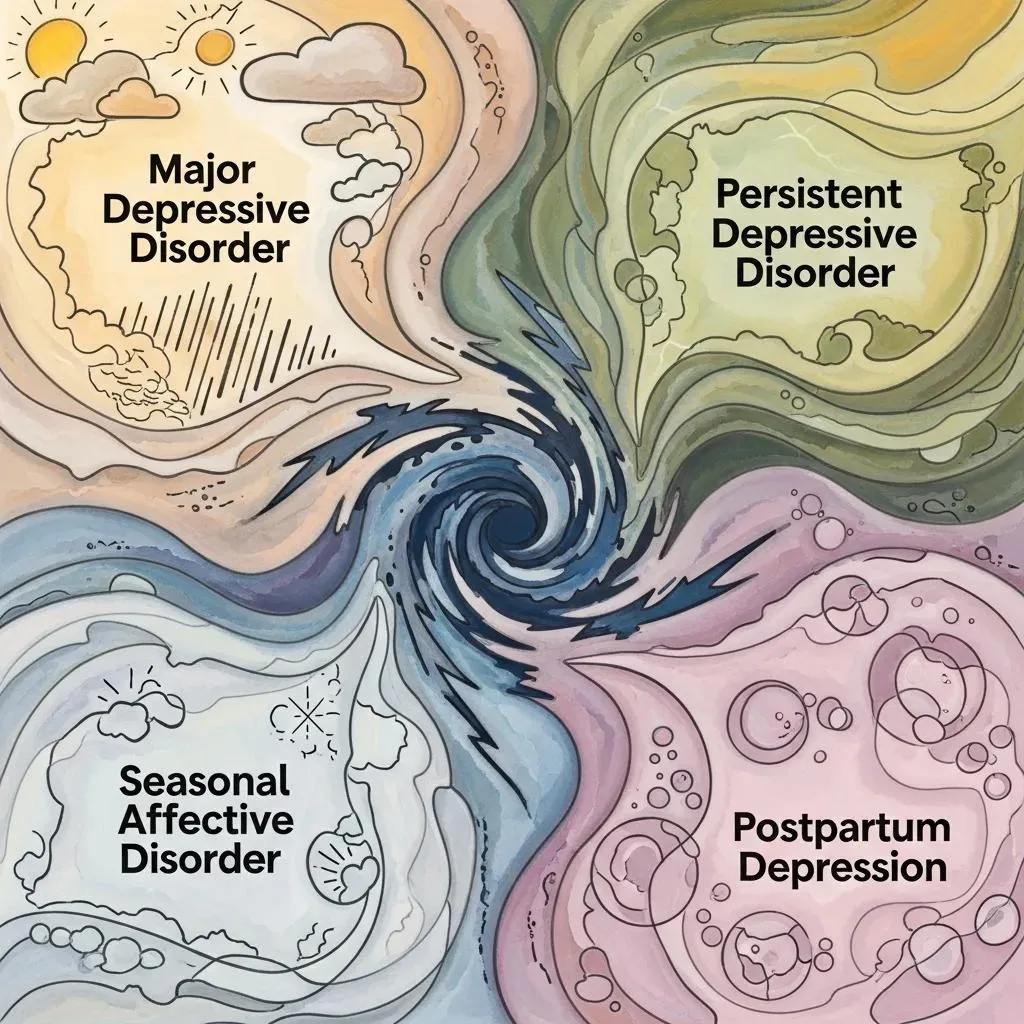
Depressive disorders include several hyponymic categories that differ by duration, severity, and specific features such as seasonal pattern or psychotic symptoms; distinguishing them guides prognosis and treatment choice. Commonly recognized types include Major Depressive Disorder, Persistent Depressive Disorder (dysthymia), Seasonal Pattern Specifier (Seasonal Affective Disorder), Peripartum Onset Specifier (Postpartum Depression), Atypical Features Specifier, and Psychotic Features Specifier, each of which maps to different clinical pathways. The table below compares key diagnostic features and typical onset or duration to help clinicians and patients differentiate presentations and select appropriate interventions.
Different depressive disorders have diagnostic features that inform clinical decision-making and expected course.
This comparison clarifies how clinical features guide screening and treatment selection and prepares readers for the more detailed subtype comparisons that follow.
How Do Major Depressive Disorder and Persistent Depressive Disorder Differ?
Major Depressive Disorder typically presents as episodic, often severe mood episodes that meet DSM-5 symptom-count and duration thresholds, while Persistent Depressive Disorder denotes chronic, lower-intensity symptoms that persist for years. MDD episodes commonly produce marked functional decline over discrete periods, whereas PDD creates enduring impairment that can erode quality of life over longer spans. Treatment for MDD often emphasizes acute-phase interventions (antidepressants, psychotherapy, and sometimes ECT for severe cases), while PDD benefits from long-term psychotherapy and maintenance pharmacotherapy to reduce chronic symptoms and prevent relapse. Understanding this contrast helps clinicians tailor treatment duration and relapse-prevention strategies.
What Are the Characteristics of Postpartum and Seasonal Affective Depression?
Postpartum depression usually emerges during pregnancy or within the first 4 weeks after childbirth and involves pervasive low mood, anxiety, and difficulty bonding, with potential effects on maternal caregiving and infant development. Screening protocols during prenatal and postnatal visits target early detection, and treatment emphasizes peripartum-safe pharmacologic choices plus psychotherapy; severe cases prompt rapid referral for specialized care. Seasonal Pattern Specifier follows a reproducible seasonal pattern—most often winter onset—with hypersomnia and carbohydrate craving; bright light therapy and behavioral activation are first-line, evidence-based interventions. Recognizing timing and triggers in these subtypes clarifies treatment selection and prevention planning.
What Are the Common Symptoms of Depression to Recognize?
Depression produces clusters of emotional, cognitive, and physical symptoms that together impair functioning; identifying these meronomic parts enables targeted screening and triage. Emotional symptoms include persistent sadness and anhedonia, cognitive symptoms cover concentration and decision-making deficits, and physical symptoms range from sleep and appetite disturbances to fatigue and psychomotor change. The table below organizes symptom categories, examples, and guidance on when to seek urgent care to help readers self-assess and prioritize care.
Common symptom categories help people and clinicians rapidly assess severity and safety.
This organization clarifies which symptoms indicate escalating concern and supports quick decisions about contacting a clinician or emergency services.
Before listing common symptom examples, it helps to outline the primary clusters so readers understand categories that clinicians use to evaluate depression. The next subsections provide more detail on emotional/cognitive signs and physical/behavioral changes so readers can self-identify and communicate symptoms clearly to clinicians.
Which Emotional and Cognitive Symptoms Indicate Depression?
Emotional symptoms center on persistent low mood and loss of pleasure (anhedonia), accompanied by feelings of worthlessness, excessive guilt, or pervasive hopelessness that affect motivation and social connection. Cognitive symptoms include slowed thinking, impaired concentration, indecisiveness, and recurrent negative rumination that reinforce depressive mood and impair work or school performance. These cognitive-emotional patterns often co-occur with anxiety, and their persistence for two weeks or more typically triggers clinical assessment using standardized tools such as the PHQ-9. When these symptoms include suicidal ideation or severe functional decline, immediate professional evaluation is required.
What Physical Signs and Behavioral Changes Are Associated with Depression?
Physical signs commonly include sleep disturbances (insomnia or hypersomnia), appetite or weight changes, fatigue, and psychomotor agitation or retardation that reflect somatic involvement in mood regulation. Behavioral changes often manifest as social withdrawal, decreased activity, and neglect of routine self-care, which in turn worsen mood and functioning. Because medical conditions (for example, thyroid disease) can mimic or worsen depressive symptoms, clinicians often recommend basic laboratory screening when symptoms are present. If physical symptoms are severe or suddenly worsen, prompt medical evaluation helps rule out organic causes and determine immediate treatment.
How Are Depressive Disorders Diagnosed by Professionals?
Diagnosis relies on a clinical interview applying DSM-5 criteria, supported by validated screening tools, medical evaluation to exclude mimics, and assessment of safety and comorbid conditions; this structured process ensures accurate case formulation. The diagnostic workflow balances symptom counts, duration, and functional impact with contextual factors such as recent stressors or substance use, guiding both initial treatment and referral decisions. The following subsections summarize the DSM-5 role and common medical and psychometric evaluations clinicians use to confirm diagnosis and plan care.
What Role Does the DSM-5 Play in Diagnosing Depression?
The DSM-5 provides standardized diagnostic criteria that describe required symptom counts, minimum duration (typically two weeks for MDD), and the mandate that symptoms cause clinically significant distress or impairment. Clinicians use DSM-5 as a framework while applying clinical judgment to account for differential diagnoses, cultural context, and the presence of comorbid psychiatric or medical conditions. The DSM-5 labels also allow clinicians to specify features such as severity, psychotic symptoms, or seasonal pattern, which influence treatment choice and prognosis. Limitations of the DSM-5 include its categorical thresholds; therefore, clinicians integrate structured interviews, symptom scales, and longitudinal observation.
Which Evaluations and Tests Are Used to Confirm Diagnosis?
Common clinical evaluations include standardized questionnaires (for example, PHQ-9) to quantify symptom severity and monitor treatment response, plus clinical interviews that explore suicidal risk, substance use, and functional impairment. Medical tests frequently recommended to rule out organic contributors include thyroid function tests, basic metabolic panels, and targeted assessments based on history; clinicians consider pregnancy testing and substance screens when indicated. When diagnosis is uncertain or symptoms are treatment-resistant, referral to psychiatry for structured diagnostic interviews or specialized assessment is appropriate. These evaluations together produce a working diagnosis and safety plan that guide therapy selection.
What Treatment Options Are Available for Different Types of Depression?

Effective treatments span psychotherapies, medication classes, brain stimulation techniques, and lifestyle approaches; matching treatment to severity, subtype, and patient preference optimizes outcomes. Psychotherapies such as Cognitive Behavioral Therapy (CBT) and Interpersonal Therapy (IPT) target maladaptive thoughts and interpersonal stressors, while pharmacologic classes (SSRIs, SNRIs, TCAs, MAOIs) alter neurotransmitter systems to relieve symptoms. For severe or treatment-resistant cases, brain stimulation modalities—Electroconvulsive Therapy (ECT), Transcranial Magnetic Stimulation (TMS), and Vagus Nerve Stimulation (VNS)—offer evidence-based alternatives. The table below compares major therapies, mechanisms, indications, and common side effects to support shared decision-making between patients and clinicians.
A concise comparison helps stakeholders weigh benefits, mechanisms, and risks when choosing therapies.
How Does Cognitive Behavioral Therapy and Other Psychotherapies Help?
Cognitive Behavioral Therapy reduces depressive symptoms by identifying and restructuring negative thinking patterns and increasing engagement in rewarding activities through behavioral activation, which restores function and mood. Interpersonal Therapy addresses relationship conflicts and role transitions that precipitate or maintain depression, whereas Dialectical Behavior Therapy emphasizes emotion regulation and distress tolerance useful in complex comorbid presentations. Typical courses involve weekly sessions over 8–20 weeks depending on severity, with measurable symptom reduction in controlled trials and durability when combined with relapse-prevention strategies. Understanding these mechanisms helps patients choose therapies aligned with their needs and life context.
What Medications and Brain Stimulation Therapies Are Effective?
Medication classes such as SSRIs and SNRIs are first-line for moderate to severe depression due to favorable safety and tolerability profiles, while older classes (TCAs, MAOIs) remain effective but require closer monitoring for side effects and interactions. Clinicians consider switching, dose adjustment, or augmentation when single agents provide partial response, balancing benefits against side effects. Brain stimulation therapies—ECT remains the most rapid and robust option for severe or psychotic depression, while TMS provides a noninvasive alternative for treatment-resistant cases; VNS is used in select refractory patients. The choice among these modalities depends on clinical severity, previous treatment response, comorbidity, and patient preference.
How Can Individuals Live Well and Find Support While Managing Depression?
Long-term recovery combines evidence-based clinical care with lifestyle changes, social supports, and relapse-prevention strategies that together strengthen resilience and functional recovery. Lifestyle interventions—regular exercise, sleep regulation, structured routines, and nutritional support—complement clinical treatments by improving neuroplasticity, mood regulation, and sleep architecture. Peer support groups, community resources, and crisis planning form a layered support system that helps people maintain progress and seek help promptly when symptoms intensify. The next subsections outline practical lifestyle strategies and how to access authoritative resources for ongoing support and crisis care.
What Lifestyle Changes and Coping Strategies Aid Recovery?
Specific evidence-informed lifestyle strategies include regular aerobic exercise (for example, 30 minutes most days), consistent sleep schedules that prioritize sleep hygiene, and behavioral activation that schedules pleasurable or mastery activities to counteract withdrawal. Mindfulness practices and structured problem-solving can reduce rumination and increase cognitive flexibility, while maintaining social connections provides emotional buffering and accountability. Small, realistic goals and gradual increases in activity promote adherence, and when lifestyle measures are insufficient, escalating to professional care is important. Integrating these habits with ongoing therapy or medication amplifies treatment effects and supports relapse prevention.
Practical lifestyle strategies that aid recovery:
- Exercise regularly: Engage in 30 minutes of moderate activity most days to boost mood and energy.
- Prioritize sleep hygiene: Maintain consistent bed and wake times and limit screens before bedtime.
- Use behavioral activation: Schedule daily activities that provide a sense of accomplishment or pleasure.
- Practice mindfulness or grounding: Short daily practices reduce rumination and anxiety.
These strategies enhance the effects of clinical treatment and provide patients with concrete skills to stabilize mood and functioning.
As an authoritative informational resource focused on depressive disorders, this guide’s primary service is providing comprehensive, evidence-based information and guidance on classifications, symptoms, and available treatments to help patients and caregivers make informed decisions. This resource emphasizes current research, practical implementation of therapies such as CBT and pharmacotherapy, and pathways to higher-intensity care (including brain stimulation) when indicated, while maintaining neutrality about specific providers. Readers are encouraged to use this guidance alongside professional clinical evaluation to develop individualized treatment plans that align with personal goals and safety needs.
Where Can Patients Access Support Groups and Crisis Resources?
Accessing reputable organizations and local peer supports helps people connect with peers, locate therapists, and find educational materials; national and international organizations provide resource directories and guidance on finding local services. In crisis situations—such as imminent suicidal ideation or severe functional decline—immediate contact with emergency services or crisis hotlines is essential, and clinicians should establish a safety plan that includes clear steps and trusted contacts. Caregivers should be informed about warning signs and how to facilitate urgent assessment. Combining community resources with professional treatment creates a safety net that supports recovery and reduces isolation.
Resources and steps for finding support:
- Contact national mental health organizations for resource listings and educational material.
- Seek local peer support groups to build community and shared coping strategies.
- Establish a crisis plan with a clinician that lists emergency contacts and immediate steps for safety.
These practical steps help individuals and caregivers connect to ongoing supports and act quickly when symptoms escalate.