


Comprehensive Depression Treatment & Therapy in Tarzana CA: Your Path to Mental Wellness
Depression is a medical condition that affects mood, cognition, energy, and daily functioning, and depression treatment Tarzana residents seek combines evidence-based care with compassionate support to restore quality of life. This article explains the most common depressive and mood disorders treated locally, outlines psychotherapy and medication strategies, and describes advanced options for people who have not responded to first-line care. Many readers will learn how cognitive behavioral therapy, dialectical behavior therapy, medication management, and neuromodulation work, why combined approaches often produce the best outcomes, and how to access local and telehealth resources in Tarzana. We will define diagnostic categories, summarize therapy modalities and medication classes, present comparative tables for quick decision-making, and provide clear steps for finding support and beginning treatment. Throughout, keywords like depression treatment Tarzana, therapy for depression Tarzana, and TMS for depression Tarzana are woven into actionable guidance so you can evaluate options and know what to expect at initial evaluations. Read on to understand common presentations, evidence-based care pathways, specialized programs for adolescents and dual-diagnosis cases, and practical ways to get started with evaluation and ongoing treatment.
What Are the Common Types of Depression Treated in Tarzana?
Depressive disorders treated in Tarzana include several categories of mood disturbances, each defined by symptom patterns, duration, and functional impact; understanding these distinctions guides treatment choice and urgency. Clinicians evaluate core symptoms such as persistent low mood, loss of interest, changes in sleep and appetite, cognitive slowing, and suicidal ideation, and they consider whether the pattern is episodic, chronic, seasonal, or part of a bipolar spectrum. Early identification improves outcomes because targeted interventions—psychotherapy, medication, or neuromodulation—address the underlying mechanisms that maintain symptoms. The next subsections contrast major depressive patterns and describe bipolar and seasonal features, clarifying when to seek psychiatric assessment and specialized care.
How Do Major Depressive Disorder and Persistent Depressive Disorder Differ?
Major Depressive Disorder (MDD) is characterized by discrete episodes of significant depressive symptoms that last at least two weeks and include measurable impairment in work, social, or self-care functioning. Persistent Depressive Disorder (dysthymia) presents as chronic low-level depressive symptoms lasting at least two years and often includes fewer severe but more enduring impairments, which may reduce motivation to seek care. The practical implication is that episodic MDD often benefits from time-limited, intensive interventions like structured CBT and medication, whereas persistent depressive disorder may require longer-term psychotherapy, ongoing measurement-based care, and strategies that emphasize behavioral activation and functional goals. Screening cues for either diagnosis include significant changes from baseline, recurrent episodes, or persistent low mood that interferes with relationships or daily tasks, and these signs should prompt a specialist evaluation.
What Are Symptoms of Bipolar and Seasonal Affective Disorders?
Bipolar disorder involves mood swings between depressive episodes and manic or hypomanic states; manic features include elevated or irritable mood, decreased need for sleep, pressured speech, and risk-taking behaviors, while hypomania is a milder, shorter form that still affects functioning. Seasonal Affective Disorder (SAD) follows a temporal pattern—most commonly depressive episodes emerging in fall and winter—linked to reduced daylight and circadian disruptions; symptoms often include increased sleep, carbohydrate craving, and social withdrawal during specific months. Recognizing these patterns matters because treatment differs: bipolar-spectrum illness typically requires mood stabilizers or atypical agents plus psychotherapy tailored to mood regulation, whereas SAD may respond to light therapy, circadian stabilization, and targeted antidepressant strategies. If mood elevation or seasonal patterns are suspected, a psychiatric assessment can clarify diagnosis and guide safe, effective treatment.
Which Evidence-Based Therapies Are Available for Depression in Tarzana?

Evidence-based therapies available for depression in Tarzana span structured, time-limited approaches and longer-term psychotherapeutic models that target thought patterns, behaviors, trauma, and interpersonal functioning. These therapies operate through psychological mechanisms—cognitive restructuring modifies automatic thoughts, behavioral activation restores reward-driven activities, EMDR processes trauma-linked memories, and DBT teaches emotion-regulation skills—each producing measurable symptom reduction in clinical trials. Selecting a therapy depends on diagnostic profile, symptom severity, patient preference, and practical considerations like session frequency and treatment length. The brief comparison table below highlights typical approaches, session frequency, target symptoms/populations, and evidence level to support informed decisions about therapy choice.
Different therapies are described here to help you compare approach, structure, and evidence.
This table clarifies how modality selection aligns with clinical need and evidence, and therapists typically match technique to symptom clusters and patient goals before beginning a treatment plan. The following H3s explain CBT mechanisms and the complementary roles of DBT and EMDR in greater detail.
How Does Cognitive Behavioral Therapy Help Treat Depression?
Cognitive Behavioral Therapy (CBT) reduces depressive symptoms by targeting the automatic negative thoughts and avoidance behaviors that maintain low mood; this mechanism disrupts the thought–feeling–behavior cycle and restores adaptive coping. Typical CBT techniques include behavioral activation to increase engagement in rewarding activities, cognitive restructuring to test and revise maladaptive beliefs, and skill-building for problem solving and relapse prevention. CBT is structured, time-limited, and measurement-focused, allowing therapists and patients to track symptom change using validated scales and modify treatment when progress stalls. Because CBT emphasizes skill acquisition, it often pairs well with medication when symptoms are moderate to severe, and its tools support long-term relapse prevention by strengthening cognitive flexibility and behavioral routines.
What Are the Benefits of Dialectical Behavior Therapy and EMDR?
Dialectical Behavior Therapy (DBT) combines skills training in distress tolerance, emotion regulation, interpersonal effectiveness, and mindfulness with individual therapy, producing strong outcomes for patients with severe emotion dysregulation and chronic suicidal behaviors. EMDR (Eye Movement Desensitization and Reprocessing) facilitates adaptive processing of traumatic memories by pairing guided memory activation with bilateral stimulation, often yielding rapid reductions in trauma-linked depressive symptoms. Clinicians choose DBT when emotion regulation and impulsivity drive depressive crises, and they select EMDR when unresolved trauma appears central to the depressive presentation. Both modalities complement CBT: DBT adds skills for high-risk patients, while EMDR addresses trauma-driven maintenance factors that keep depressive symptoms entrenched.
How Is Medication Management Integrated into Depression Treatment in Tarzana?
Medication management is integrated into depression care through psychiatric evaluation, careful selection of medication class, ongoing monitoring for response and side effects, and coordination with psychotherapy to create a unified treatment plan that targets biological and psychological factors. Psychiatrists and other prescribers assess symptom severity, medical history, and prior treatment response to select from medication classes such as SSRIs, SNRIs, atypical antidepressants, and mood stabilizers; they titrate doses and schedule follow-ups to measure improvement using standardized scales. Collaborative care models—where prescribers communicate regularly with therapists—ensure medication and therapy reinforce shared goals and expedite adjustments when progress is insufficient. The table below compares common medication classes by typical use, onset time, side effects, and monitoring needs to clarify options for patients considering pharmacotherapy.
Below is a comparative overview of medication classes commonly used in depression management.
This table helps patients and clinicians weigh trade-offs in medication selection, and it supports collaborative decision-making alongside psychotherapy planning. The following H3s describe psychiatrists’ roles and how medication and therapy are combined for optimal outcomes.
What Role Do Psychiatrists Play in Antidepressant Prescriptions?
Psychiatrists provide diagnostic clarification, medical assessment, and personalized medication selection based on evidence, comorbid conditions, and prior treatment history; they also educate patients about expected timelines and side-effect management. A typical initial psychiatric visit includes diagnostic interview, baseline symptom measurement, medical and medication history review, and a discussion of treatment goals, after which a medication plan or referral for psychotherapy is made if indicated. Psychiatrists monitor response through scheduled follow-ups, adjust dosing or switch agents when necessary, and coordinate with therapists and primary care clinicians to ensure integrated care and safety—particularly when polypharmacy or medical comorbidities exist. This collaborative oversight reduces risk, improves adherence, and increases the likelihood of sustained remission when combined with psychotherapy.
How Are Medication and Therapy Combined for Optimal Outcomes?
Combined treatment—concurrent medication and psychotherapy—is supported by evidence for moderate to severe depression because medications can reduce biological symptom burden while therapy builds coping skills and addresses psychosocial drivers of relapse. Typical sequencing involves initiating psychotherapy and medication together for higher-severity cases, or starting psychotherapy first for mild presentations and adding medication if improvement is incomplete after a trial period. Care teams employ measurement-based care, using symptom scales to track progress and inform changes such as dose adjustments or therapy modality shifts when necessary. Shared treatment goals, regular communication between prescribers and therapists, and patient education about expected timelines create a unified pathway that improves engagement and outcomes.
What Advanced Treatment Options Are Offered for Treatment-Resistant Depression?
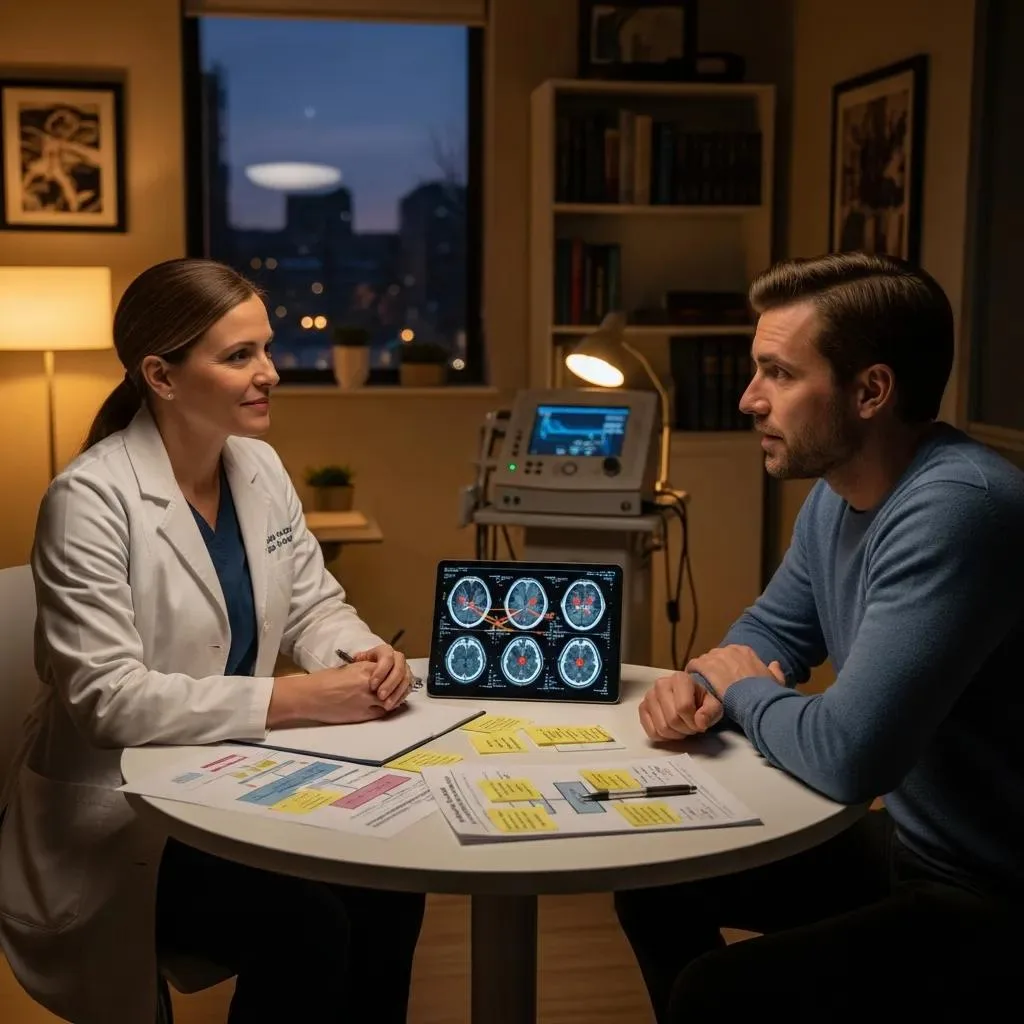
Advanced treatments for treatment-resistant depression (TRD) are indicated when patients fail to respond to adequate trials of first-line therapies and include rapid-acting pharmacologic options and neuromodulation techniques that target neural circuits implicated in mood regulation. These modalities operate through different mechanisms—glutamate modulation for ketamine and esketamine, and magnetic stimulation for TMS—each demonstrating clinical benefit in populations unresponsive to standard antidepressants. Eligibility typically requires documented treatment history, medical clearance, and an informed-consent process that explains potential benefits, risks, and monitoring procedures. The comparative table below summarizes mechanism, candidate criteria, typical course, response timeline, and common side effects to aid understanding of these advanced options.
This table highlights that advanced therapies can produce clinically meaningful improvement where traditional approaches have not, and they require structured protocols and safety monitoring. The H3 subsections that follow explain ketamine/Spravato specifics and TMS candidacy and logistics.
How Do Ketamine and Spravato Treatments Work?
Ketamine and Spravato (esketamine) act on glutamatergic neurotransmission—primarily through NMDA receptor antagonism—which leads to synaptic plasticity changes and rapid alleviation of depressive symptoms in many patients with treatment-resistant depression. Ketamine is commonly administered as supervised IV infusions in a clinic setting, while Spravato is delivered as an intranasal formulation under clinician observation; both require monitoring for transient dissociative effects and increases in blood pressure immediately after dosing. The rapid-onset advantage allows clinical teams to assess response within days, offering a potential bridge to longer-term strategies such as psychotherapy or medication adjustments. Candidate selection involves prior treatment history, medical screening for cardiovascular risk, and a clear plan for follow-up care to sustain gains.
What Is Transcranial Magnetic Stimulation and Who Is Eligible?
Transcranial Magnetic Stimulation (TMS) is a noninvasive neuromodulation technique that uses focal magnetic pulses to stimulate brain regions implicated in mood regulation—commonly the left dorsolateral prefrontal cortex—to improve depressive symptoms without systemic medication effects. Typical TMS courses involve daily outpatient sessions, five days per week for four to six weeks, with each session lasting about 20–40 minutes; candidacy generally requires inadequate response to antidepressant trials and no contraindicating implanted metallic devices. TMS is well-suited for patients seeking nonpharmacologic neuromodulation and has a favorable safety profile, with scalp discomfort and transient headache as common side effects. Eligibility assessment also considers previous treatment responses and patient preference, and successful courses often lead to meaningful symptom reduction over several weeks.
Which Specialized Programs Support Unique Patient Needs in Tarzana?
Specialized programs in Tarzana address populations with distinct needs—adolescents, people with co-occurring substance use disorders, and others requiring integrated or family-centered care—because tailoring interventions to developmental stage and comorbidity improves engagement and outcomes. Programs typically combine age-appropriate assessment, family or caregiver involvement, and coordination with schools or community services for youth, while dual-diagnosis tracks integrate behavioral therapies with medication-assisted strategies where indicated. These programs emphasize multidisciplinary teamwork, measurement-based progress tracking, and clear referral pathways to higher-intensity services when needed. The following H3s outline adolescent services and approaches to treating co-occurring conditions to help families and clinicians determine the best next steps.
What Services Are Available for Adolescent and Youth Depression?
Adolescent depression services prioritize thorough assessment, family-inclusive care, and coordination with schools and pediatric providers, using developmentally adapted therapies such as CBT for adolescents, family therapy, and brief interpersonal interventions. Assessment includes screening for safety, academic impact, and social functioning, and treatment plans often involve parents or guardians in psychoeducation and safety planning while respecting adolescent confidentiality within legal limits. Early intervention is critical because untreated youth depression increases risk for academic decline, substance use, and suicidal behavior; school liaison work and family support enhance adherence and recovery. Providers tailor interventions to age and developmental stage, and they monitor progress closely to adjust strategies when needed.
How Are Dual Diagnosis and Co-Occurring Disorders Treated?
Integrated dual-diagnosis treatment addresses substance use and depression simultaneously using coordinated care plans that blend motivational interviewing, CBT-based relapse prevention, and medication-assisted strategies when appropriate; treating both conditions concurrently reduces relapse risk and improves overall functioning. Assessment prioritizes identifying substance-related contributors to mood symptoms, evaluating medical risks, and setting collaborative goals that reflect patient readiness for change. Program features often include group therapy, integrated case management, and coordination with primary care for medical stabilization; continuity of care and harm-reduction approaches can improve engagement in patients reluctant to commit to abstinence. Addressing both disorders together prevents the common pitfall of sequential treatment and supports sustained recovery.
How Can Patients Access Depression Support and Resources in Tarzana?
Accessing depression support in Tarzana involves practical steps: identifying local clinicians and community resources, understanding telehealth options, preparing for initial evaluations, and using structured pathways to connect with appropriate levels of care. Many patients begin with screening by a primary care clinician or an initial intake with a mental health clinic or therapist, followed by psychiatric referral when medication evaluation or complex diagnostic clarification is needed. Community-based support groups, workshops, and teletherapy expand options for ongoing peer or clinician-led support, and clear preparation for first visits—bringing a symptom list, medication history, and recent stressors—streamlines evaluation and helps clinicians create an individualized plan. The lists below describe where to look for community resources and steps to schedule and prepare for care in Tarzana.
Local resources typically include community centers, clinics, and organized peer-support groups that hold meetings and workshops throughout the region.
- Community Centers and Clinics: These venues commonly host clinician-led workshops, support groups, and intake services for mood disorders.
- Clinician-Led Groups: Therapist-facilitated groups for depression provide structured skills practice and peer feedback.
- Peer Support and Educational Workshops: Peer-led meetings and psychoeducational events help with coping strategies and social support.
These resource types provide multiple pathways into care, and choosing between them depends on needs for clinical intensity, skill-building, or peer connection; the next subsection explains telehealth’s specific benefits.
Where Are Local Support Groups and Mental Health Workshops Held?
Local support groups and mental health workshops in the Tarzana area typically meet at community health centers, behavioral health clinics, faith-based organizations, and nonprofit facilities; event listings and community bulletin boards often post schedules and contact points for these offerings. When selecting a group, consider whether it is clinician-led or peer-led, the topic focus (e.g., mood management, grief, caregiver support), and safety practices such as confidentiality and clear facilitator roles. Practical tips for first-time attendees include arriving early to introduce yourself to organizers, asking about group norms, and setting a small participation goal like listening for the first meeting to assess fit. Verifying facilitator credentials and whether clinical support is available helps ensure the group aligns with personal needs and safety requirements.
What Are the Benefits of Online Therapy and Telehealth Services in California?
Online therapy and telehealth services expand access to depression treatment Tarzana residents can use by removing travel barriers, offering flexible scheduling, and enabling continuity of care when in-person visits are impractical; recent studies indicate teletherapy produces outcomes comparable to face-to-face sessions for many depressive disorders. Telehealth platforms support psychotherapy modalities such as CBT and DBT and facilitate psychiatric medication management via secure video visits, making integrated care more convenient for working adults, caregivers, and those with mobility constraints. Privacy considerations include using private spaces and understanding the platform’s security features, while licensing rules mean clinicians must be authorized to practice in the state where the patient is located. Telehealth often accelerates initial access and can be combined with periodic in-person visits when needed to deliver comprehensive, patient-centered care.
- Accessibility: Reduces travel time and increases availability of specialists.
- Convenience: Flexible scheduling supports adherence to frequent sessions.
- Effectiveness: Evidence shows comparable outcomes for many evidence-based therapies.
Choosing telehealth involves confirming clinician licensing in California and ensuring a private, stable internet connection for sessions; these steps help patients get started confidently with remote care and transition smoothly to blended models when appropriate.