


Cognitive Behavioral Therapy for Addiction: Techniques and Benefits for Effective Recovery
Cognitive Behavioral Therapy (CBT) for addiction is an evidence-based psychotherapy that links thoughts, feelings, and behaviors to reduce substance use and support recovery. This approach treats addiction by helping people identify and change maladaptive thoughts and learned behaviors that drive substance use, using structured skill-building exercises that improve coping and decision-making. Readers will learn what CBT is, how core techniques like cognitive restructuring and behavioral activation work, and how mindfulness and relapse-prevention skills reduce cravings and relapse risk. The article maps CBT’s application across detox, inpatient, and outpatient care, explains adaptations for co-occurring disorders such as anxiety, depression, and PTSD, and offers practical relapse-prevention steps and family-focused strategies. Throughout, the content integrates related concepts—relapse prevention, emotional regulation, and neuroplasticity—and shows how clinical programs can use CBT within a supportive continuum of care. By the end you’ll have actionable exercises, comparisons with other approaches, and clear expectations for therapy progress and next steps.
What is Cognitive Behavioral Therapy and How Does It Treat Addiction?
Cognitive Behavioral Therapy is a structured, time-limited psychotherapy that treats addiction by changing the thought-feeling-behavior cycle that maintains substance use. CBT targets the cognitive patterns—automatic thoughts and beliefs—that trigger cravings and the behavioral routines that reinforce use, teaching practical skills to alter those responses and build alternative, healthier behaviors. Clinical research and contemporary practice show CBT reduces substance use, improves coping, and supports long-term behavior change by promoting neuroplasticity through repeated practice of new cognitive and behavioral skills. Understanding CBT’s mechanism clarifies why therapists use specific techniques such as functional analysis, skills rehearsal, and relapse prevention when working with people who have substance use disorder.
CBT’s core clinical aim is to replace maladaptive patterns with concrete, testable skills that generalize beyond sessions into daily life. The approach emphasizes collaborative empiricism—therapist and patient jointly test beliefs and behaviors—so progress is measurable and practical. This active, skills-focused model complements medical and psychosocial elements of addiction care and lays the groundwork for technique-specific sections that follow.
Who Developed CBT and What Are Its Core Principles?
CBT originated with Aaron T. Beck in the 1960s as a structured psychotherapy linking cognition and mood, and it has since evolved into a suite of evidence-based techniques for multiple disorders, including addiction. Core principles include collaborative empiricism, skills training, time-limited and goal-oriented work, and a focus on present problems and measurable changes. These principles translate into practical addiction work: therapists and clients identify high-risk thoughts, conduct functional analyses of use episodes, and practice alternative coping strategies in session and in real life. The result is deliberate skill acquisition rather than passive insight, which helps clients rehearse new responses to triggers and build durable relapse-prevention plans.
These foundational ideas explain why CBT sessions often combine cognitive work with behavioral experiments and homework assignments, reinforcing new patterns until they become habitual. That focus on repetition and skill generalization connects directly to techniques like cognitive restructuring and behavioral activation discussed below.
How Does CBT Differ from Other Addiction Therapies?
CBT differs from other common addiction interventions mainly in its structured, skills-based emphasis and its focus on present cognition-behavior links rather than solely on motivation or peer support. For example, motivational interviewing prioritizes ambivalence resolution and engagement, 12-step approaches emphasize peer support and spiritual growth, and pharmacotherapy targets biological aspects of dependence. CBT complements these modalities by providing concrete tools to manage cravings, restructure distorted thinking, and rehearse coping strategies. In practice, many providers use CBT alongside medication-assisted treatment, motivational work, or peer-based programs to create a coordinated plan tailored to the individual’s needs.
A concise comparison clarifies typical roles: CBT builds coping skills and relapse-prevention plans; motivational approaches enhance readiness; medication stabilizes withdrawal and reduces physiological cravings. Understanding these differences helps patients and families choose integrated care pathways that leverage CBT’s strengths while addressing broader treatment goals.
Which Key CBT Techniques Are Used for Addiction Recovery?
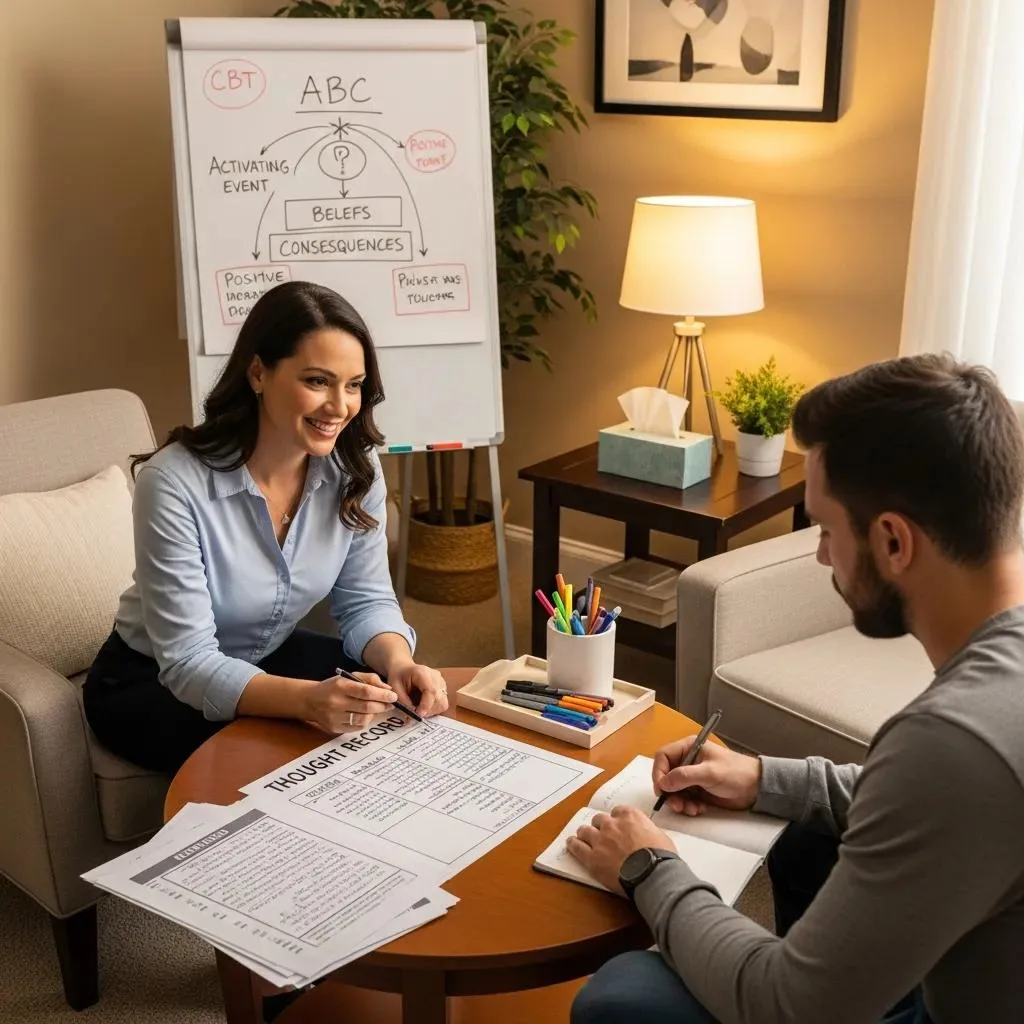
CBT uses a set of interrelated techniques that target thoughts, behaviors, and exposure to triggers to reduce substance use and strengthen recovery skills. Common techniques include cognitive restructuring to shift maladaptive beliefs, behavioral activation and activity scheduling to rebuild rewarding sober routines, mindfulness and urge-surfing to tolerate cravings, relapse prevention planning to anticipate and manage triggers, and problem-solving training to address setbacks. Each technique is taught with stepwise exercises, homework, and in-session role plays to encourage practice and neuroplastic change.
The enduring impact of relapse prevention and mindfulness in addiction treatment is well-documented.
Relapse Prevention & Mindfulness in CBT for Addiction
The Relapse Prevention (RP) model has been a mainstay of addictions theory and treatment since its introduction three decades ago. Notable advances in RP in the last decade include the introduction of a reformulated cognitive-behavioral model of relapse, the application of advanced statistical methods to model relapse in large randomized trials, and the development of mindfulness-based relapse prevention. The continued influence of RP is evidenced by its integration in most cognitive-behavioral substance use interventions.
Below is a short featured list of core techniques and their functions:
- Cognitive restructuring: Identifies and challenges distorted thoughts that lead to use.
- Behavioral activation: Replaces substance-related activities with rewarding, sober behaviors.
- Mindfulness / urge-surfing: Teaches non-reactive awareness of cravings to reduce impulsive use.
- Relapse prevention planning: Maps triggers and coping responses to prevent return to use.
- Problem-solving therapy: Builds systematic skills for addressing high-risk situations.
Specifically, urge surfing stands out as a powerful mindfulness-based technique for managing intense cravings.
Urge Surfing: Mindfulness for Cravings & Relapse Prevention
A common predictor of adolescent relapse is high-intensity urges to use alcohol. Therefore, it is important to identify effective coping skills that combat alcohol-related urges in order to improve the effectiveness of alcohol treatments. Urge surfing is a mindfulness skill that promotes attending to cravings and urges in high-risk situations rather than avoiding them. Urge surfing is supported as an effective coping skill for adult alcohol, tobacco, and other drug use.
This set of techniques forms a toolkit that clinicians adapt to individual patterns of use and comorbid problems, integrating behavioral experiments and thought records to track progress and refine interventions.
Intro to the techniques table: The table below maps primary CBT techniques used in addiction treatment to the problems they target and gives practical exercises readers can apply between sessions.
This practical mapping helps clinicians and clients choose exercises suited to specific triggers and treatment goals. The exercises promote rehearsal, which strengthens new neural pathways and supports sustained change.
What Are the Benefits of CBT in Addiction Treatment and Recovery?

CBT delivers measurable benefits across relapse rates, coping skills, and co-occurring symptoms by teaching skills that change behavior and improve emotional regulation. Recent research and clinical summaries indicate CBT reduces substance use frequency, decreases relapse risk when combined with other supports, and improves depression and anxiety symptoms that often accompany addiction. The mechanisms include cognitive restructuring that reduces high-risk thinking, behavioral activation that restores rewarding sober activities, and skills rehearsal that increases self-efficacy and adaptive responding under stress. Together these mechanisms produce outcomes that translate into improved daily functioning and reduced substance-related harm.
Recent studies further highlight CBT’s effectiveness in directly addressing core challenges of addiction.
CBT for Addiction: Reducing Relapse Risk & Cravings
Present study explored the effectiveness of Cognitive Behavioral Therapy with Relapse Prevention Techniques (CBT-BRPT) in reducing relapse risk and craving among individuals with substance use disorder (SUD). Drawing from a comprehensive literature review, the study addressed the pressing need for evidence-based interventions to combat SUD and its associated challenges. Results demonstrated significant reductions in both craving and relapse risk among participants who received CBT-BRPT intervention. These findings underscore the importance of CBT-BRPT as a viable treatment option for individuals with SUD, offering promising improvements in recovery outcomes.
To clarify how benefits link to mechanisms and expected outcomes, the table below summarizes key benefits, the CBT mechanism responsible, and typical evidence-based value or outcome.
These benefits often appear within weeks of consistent practice and strengthen over months as new behaviors consolidate. Clinicians typically monitor progress and adjust techniques to maximize functional improvements and long-term recovery outcomes.
How Does CBT Reduce Relapse Risk and Improve Mental Health?
CBT reduces relapse by replacing automatic, maladaptive responses with planned, practiced coping strategies and by making triggers understandable through functional analysis. Clients learn to anticipate situations where substance use has occurred, apply coping responses in increasingly challenging contexts, and evaluate outcomes empirically to refine strategies. This skills-focused learning reduces symptom-driven use of substances and improves comorbid conditions like anxiety and depression because the same cognitive and behavioral tools address mood regulation and avoidance patterns. Over time, repeated rehearsal of alternative responses strengthens adaptive neural circuits and reduces the automaticity of substance-seeking behaviors.
A brief clinical vignette illustrates this sequence: a client uses cognitive restructuring to reframe a “I can’t cope” thought, practices urge-surfing when cravings arise, and schedules rewarding activities to rebuild social support, producing measurable reductions in both cravings and depressive symptoms. That integration of cognitive and behavioral elements explains why CBT often yields durable improvements.
Which Coping Skills and Emotional Regulation Strategies Does CBT Enhance?
CBT enhances a practical toolkit of coping skills including distress tolerance, grounding techniques, cognitive reframing, problem-solving, and activity scheduling that clients can practice daily. Skills training emphasizes specific steps: identify trigger, use grounding or breathwork to reduce arousal, apply a reframing statement, and enact an alternative activity or contact a support person. Regular monitoring—through trigger logs and thought records—helps clients measure skill use and refine strategies that work best. Therapists typically recommend scheduled practice—daily mindfulness or weekly behavioral activation tasks—to consolidate skills and promote neuroplastic change.
Tracking usage of these skills and their impact on mood and cravings strengthens self-efficacy and provides objective feedback that supports ongoing recovery planning. When skills plateau or new stressors appear, therapists adapt strategies to maintain progress.
How Is CBT Applied to Co-Occurring Disorders in Addiction?
CBT is adapted for co-occurring disorders by targeting disorder-specific processes while preserving the addiction focus, enabling integrated treatment of both substance use and mental health symptoms. For anxiety, CBT emphasizes exposure and cognitive restructuring to reduce avoidance and catastrophic thinking that can drive substance use. For depression, behavioral activation counteracts anhedonia and inactivity that often precede relapse. For PTSD, trauma-informed CBT integrates safety, stabilization, and graded exposure while carefully monitoring for dissociation and distress. Integrated CBT reduces fragmentation of care by aligning therapeutic targets and reinforcing common coping skills across diagnoses.
Effective adaptation requires coordination with medical and psychiatric teams to align medication strategies and address safety concerns. The table below maps common co-occurring disorders to CBT focus areas and typical technique adaptations used in integrated care.
How Does CBT Address Anxiety, Depression, and PTSD Alongside Addiction?
When addressing anxiety, CBT prioritizes reducing avoidance via graded exposures and restructuring catastrophic predictions that fuel substance use as an escape. For depression, CBT focuses on behavioral activation to increase engagement with rewarding activities and cognitive techniques to challenge hopeless beliefs that maintain use. In PTSD, clinicians apply trauma-informed modifications—such as stabilization, psychoeducation, and gradual exposure—to process trauma memories safely while maintaining addiction-focused relapse prevention. Throughout, therapists emphasize monitoring, pacing, and coordination with psychiatric care for medications when clinically indicated.
Safety considerations—especially for PTSD—mean therapists often begin with stabilization and skills-building before trauma processing, ensuring clients have the coping repertoire needed to manage distress without relying on substances. This pragmatic sequencing improves tolerability and treatment adherence.
What Are the Advantages of Integrated CBT for Dual Diagnosis?
Integrated CBT for dual diagnosis reduces care fragmentation by addressing substance use and psychiatric symptoms within a unified framework, improving symptom management and functional outcomes. Patients receiving integrated care often experience fewer treatment gaps, clearer therapeutic goals, and more consistent skill generalization because techniques target overlapping mechanisms like avoidance, negative thinking, and behavioral inertia. Evidence suggests integrated approaches yield better retention and symptom reduction compared with separated care pathways. The integrated model also simplifies communication among providers and reduces the burden on patients navigating multiple systems.
These advantages support a patient-centered approach that sequences interventions for safety and efficacy, helping clients build durable recovery foundations while also managing comorbid mental health conditions.
What Does the Emulate Treatment Center Approach to CBT for Addiction Include?
Emulate Treatment Center uses CBT as one component of a comprehensive continuum of care designed to help people understand treatment options and connect with a safe, supportive recovery program. Within Emulate’s model, CBT-based interventions are incorporated across phases of treatment—paired with medical oversight during detox, offered in both individual and group formats during inpatient stays, and continued through outpatient and aftercare supports. The emphasis is on practical skills, privacy, and collaborative planning so that clients and families understand expectations and can participate in decisions about therapy intensity and format.
Emulate’s approach aligns with clinical best practices by coordinating CBT with detoxification, medical management, and supportive counseling, and by prioritizing patient education to build trust. This integration ensures that CBT skills taught in therapy are reinforced across settings, increasing the likelihood that learned coping strategies transfer to real-world situations. Readers seeking further assistance can consider programs that combine clinical care with clear communication about safety and privacy and offer structured transitions between levels of care.
How Is CBT Integrated into Detox, Inpatient, and Outpatient Care?
During detox, CBT focuses on stabilization and coping strategies for early cravings and distress, often delivered as brief skills sessions that support medical management. In inpatient care, CBT is commonly provided in both individual and group formats—groups allow skills rehearsal with peers while individual sessions target personalized cognitive patterns and relapse triggers. Outpatient care emphasizes maintenance: regular CBT sessions support ongoing relapse prevention, activity scheduling, and problem-solving as clients return to community settings. Telehealth options may extend access and allow continuity when in-person sessions are not feasible.
This staged integration clarifies expectations: early work centers on safety and stabilization, mid-phase on skills acquisition and practice, and later phases on generalization and relapse-prevention planning. Coordination with medical and family supports helps sustain gains across transitions.
What Can Patients Expect During the Intake Process and Treatment Journey?
Intake typically begins with a structured assessment that identifies substance use patterns, psychiatric history, medical needs, and treatment goals, forming the basis for a collaborative treatment plan. Patients can expect goal-setting conversations, explanation of privacy protections, and scheduling options that outline likely session frequency and levels of care. Below is a practical intake checklist to help prospective patients prepare.
- Complete a clinical assessment covering substance use, mental health, and medical history.
- Discuss individualized treatment goals and preferred levels of care (detox, inpatient, outpatient).
- Review scheduling options, session frequency, and privacy/safety expectations.
This checklist offers a realistic roadmap that reduces uncertainty and supports informed decision-making. Emphasizing transparent communication and supportive planning helps build trust and encourages engagement without pressure to commit before understanding options.
How Can CBT Skills Support Long-Term Sobriety and Relapse Prevention?
CBT supports long-term sobriety by operationalizing relapse prevention into identifiable steps: recognizing triggers, applying coping strategies, restructuring high-risk thoughts, and rehearsing alternative behaviors until they become habitual. A practical relapse-prevention plan uses stimulus control to modify the environment, urge-surfing to tolerate cravings, and scheduled activities to rebuild rewarding sober routines. Regular review and adjustment of the plan maintain relevance as life circumstances change, and family involvement or support networks provide additional accountability and reinforcement. When combined with medical care and community supports, CBT skills create a durable framework for sustained recovery.
Below are concrete, step-based strategies for managing triggers and cravings that readers can implement and refine.
- Identify and record high-risk situations and internal triggers using a trigger log.
- Use urge-surfing and grounding techniques to tolerate cravings without acting on them.
- Apply cognitive reframing to challenge “I need this to cope” thoughts and replace them with alternative coping steps.
- Activate stimulus control and schedule meaningful, rewarding activities to reduce exposure to cues.
These steps form a dynamic plan that clients update as they test what works, and therapists help translate into personalized routines that fit daily life. For people seeking a structured program that integrates these CBT elements within a supportive continuum, Emulate Treatment Center provides a pathway to explore detox, inpatient, outpatient, and counseling options while respecting privacy and encouraging informed next steps.
What Are Effective CBT Strategies for Managing Triggers and Cravings?
Effective strategies include urge-surfing to observe cravings without acting, stimulus control to remove or avoid cue-rich environments, cognitive reframing to alter high-risk thoughts, and behavioral replacement to occupy time with sober, rewarding activities. Each strategy follows explicit steps: for urge-surfing, note the craving, observe bodily sensations, and time the wave until it passes; for stimulus control, identify cues and create alternative routes or routines; for reframing, use evidence-based thought records to test catastrophic beliefs. Practicing these steps regularly—in session and between sessions—strengthens alternatives to substance use and reduces automatic responding.
Therapists often pair these techniques with monitoring tools like trigger logs and coping checklists to measure effectiveness and refine the repertoire. When cravings escalate or safety concerns arise, immediate contact with clinical supports is advised.
How Does Family-Focused CBT Enhance Addiction Recovery?
Family-focused CBT engages family members as active partners by teaching communication skills, boundary-setting, and problem-solving to support the client’s recovery while reducing enabling behaviors. Interventions teach families to respond to triggers constructively, reinforce adaptive behaviors, and participate in relapse-prevention planning without assuming responsibility for the client’s choices. Common skills include structured communication exercises, role-play of high-risk scenarios, and education about addiction as a behavioral health condition. These practices improve family functioning, reduce conflict-driven relapse risk, and enhance social support networks essential for maintenance of gains.
- Family education: Share basic CBT concepts and relapse-prevention strategies.
- Communication training: Teach non-confrontational listening and structured feedback.
- Boundary-setting: Define supportive actions that avoid enabling.
These family interventions complement individual CBT work by aligning home environments with therapeutic goals and helping all members practice skills that support recovery. For those ready to explore integrated programs that include family support and clear, respectful intake processes, Emulate Treatment Center offers resources to help people understand options and connect with appropriate levels of care.