



Choosing a Young Adult Program: A Complete Guide to Treatment and Care Options
Young adult programs are focused treatment tracks for people in late adolescence through their mid‑twenties who face substance use and often co‑occurring mental health concerns. This guide walks through how those programs work, the levels of clinical care available, and practical ways families can match severity and needs to safe, age‑appropriate services. When families and young people don’t know where to start, clear definitions, side‑by‑side comparisons, and stepwise intake timelines make decisions easier. You’ll get a straightforward explanation of what each level of care provides, how program models differ, what to check when choosing a program, and what to expect during intake and aftercare. We also describe how a coordinated provider links detox, residential, outpatient, and counseling so care feels continuous. Read on for checklists, comparison overviews, sample schedules, and gentle next steps to help you move toward the right level of support.
What Is a Young Adult Program and Who Is It For?
A young adult program is a tailored behavioral‑health and addiction pathway that meets the developmental, social, and clinical needs of people roughly in their late teens through mid‑twenties. These programs blend clinical treatment, practical skill building, and peer support to stabilize symptoms and teach recovery tools. They’re especially helpful when standard adult services don’t account for transitions like completing school, starting work, or gaining independence. Knowing a program’s age focus and common challenges helps families choose care that balances clinical intensity with developmental supports.
Many young people present with both substance use and mental health conditions or unstable social supports; integrated care and family partnership are often essential. Below are the common benefits these programs deliver and how they reduce risk during the transition to adulthood.
Typical young adult programs offer structured days, targeted therapy, and supports for returning to school, work, and community life. The next section clarifies the usual age ranges and the clinical issues these programs commonly address.
What Age Range and Challenges Do Young Adult Programs Address?
Most young adult programs serve people in late adolescence through the mid‑twenties — commonly 16–25 or 18–25 depending on a program’s policy. This period is formative for identity, education, and career development; substance use or mental health struggles can interrupt those milestones. Programs commonly treat substance misuse, mood and anxiety disorders, trauma histories, attention and impulse‑control difficulties, and relationship challenges that affect readiness for recovery. Effective programs combine psychotherapy and medical care with practical support for schooling, employment, and independent living.
Because development affects engagement, programs emphasize relapse prevention, peer support, and re‑entry planning for education or work. Addressing these areas early lowers long‑term functional impact and supports sustained recovery through skills‑focused interventions.
How Do Therapeutic Young Adult Programs Support Recovery?
Therapeutic young adult programs use evidence‑informed psychotherapies, medical oversight when needed, and targeted life‑skills training aligned with developmental priorities. Core treatments often include cognitive behavioral therapy (CBT), dialectical behavior therapy (DBT) skills, motivational interviewing (MI), and family therapy to repair relationships and strengthen support. Programming mixes individual counseling, group therapy, and practical workshops on planning, employment, and healthy routines to reinforce relapse prevention. Daily structure, measurable goals, and mentorship help young people turn therapeutic progress into everyday functioning.
Those clinical elements — skill building, symptom stabilization, and stronger social supports — reduce relapse risk and improve engagement with ongoing outpatient care. Next, we compare the levels of care that make up a full continuum for young adults.
What Are the Different Levels of Young Adult Care?
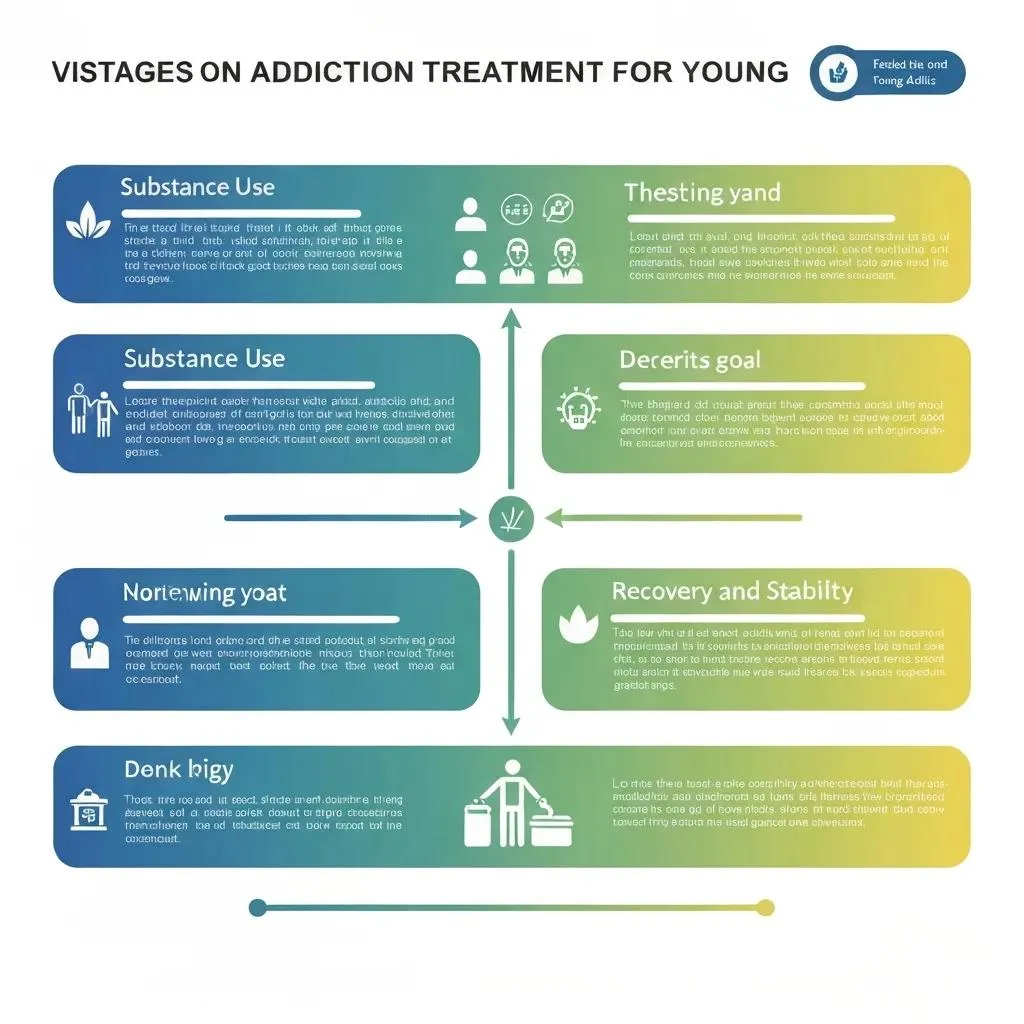
Levels of care form a stepped continuum that matches treatment intensity to clinical need — moving from high medical supervision to outpatient supports as a person stabilizes. Each level differs in daily time commitment, medical oversight, and frequency of therapeutic contact. Choosing the right level depends on severity, withdrawal risk, and supports available at home. The brief comparison below helps match common scenarios to an appropriate level of care.
The table below summarizes the primary levels of care, their intensity, and when each is typically appropriate.
This side‑by‑side view clarifies the trade‑offs between supervision and independence. The following sections describe detox and the practical differences among inpatient, PHP, IOP, and outpatient care.
What Is Detox and When Is It Needed?
Medical detox is the safety‑first process that manages withdrawal under clinical supervision. It’s required when substances create physiological dependence with medical or psychiatric risk. Detox stabilizes symptoms through monitoring and short‑term medical treatment so therapeutic work can begin safely. Detox alone doesn’t address the behavioral drivers of use; it’s the first step that should connect directly to ongoing therapy. Families should expect a medically supervised setting, evaluation for co‑occurring conditions, and clear transition planning into residential or outpatient care after stabilization.
When withdrawal risk exists, prompt medical assessment and stabilization prevent complications and enable engagement in the next phase of treatment. The next section outlines how inpatient, PHP, and outpatient programs differ in structure and responsibility.
How Do Inpatient, Partial Hospitalization, and Outpatient Programs Differ?
Inpatient (residential) programs provide continuous supervision, daily therapeutic schedules, and on‑site staff — appropriate when safety, medical needs, or intensive therapy are required. Partial hospitalization programs (PHP) deliver structured, full‑day clinical services while allowing overnight residence at home or transitional housing, which fits people who need high therapy doses but not 24/7 residence. Intensive outpatient programs (IOP) offer multiple weekly therapy blocks that balance flexibility and intensity and often act as a step‑down from higher levels. Outpatient care focuses on weekly therapy and community supports for long‑term recovery maintenance and integration.
Transitions between levels are designed to preserve progress while increasing independence through planned step‑downs. Understanding these differences helps families pick an entry point and outline a clear transition pathway.
What Types of Young Adult Programs Are Available?
Program models vary by setting and therapeutic focus — from clinical residential centers to experiential wilderness programs and transitional housing that supports re‑entry. Each model has distinct strengths and limitations: residential care provides focused clinical work; wilderness therapy emphasizes experiential growth and bonding; transitional living builds independent living skills; and sober living offers peer accountability. Matching personality, clinical severity, and life goals to the right model improves the chance of a good fit.
Below is a concise comparison of common program types and the outcomes they typically aim to produce.
This overview helps align personality, clinical need, and life goals with the right program choice. The next sections describe how residential and wilderness approaches operate and what transitional or sober living looks like in practice.
How Do Residential and Wilderness Therapy Programs Work?
Residential programs combine round‑the‑clock clinical supervision, scheduled therapies, medication management when needed, and daily life‑skills practice within a single facility. Typical programming balances individual therapy, group work, psychoeducation, and hands‑on skill workshops to rebuild routines and coping strategies. Wilderness therapy uses outdoor, experiential methods — team challenges, wilderness tasks, and guided reflection — to build resilience and social connection; it requires careful safety planning and medical oversight. Both approaches aim for measurable behavior change but differ in setting, pacing, and how therapeutic content is delivered.
Knowing the format and safety expectations helps families weigh clinical benefit against experiential fit and logistics. The following section explains transitional living and sober living roles in the continuum.
What Are Transitional Living and Sober Living Options?
Transitional living offers structured housing and coaching for people leaving higher levels of care who need hands‑on practice with routines, money management, and returning to work or school. Sober living focuses on accountability, peer support, and drug‑free residence rules to protect early recovery with less clinical intensity than residential care. Lengths of stay vary by goals and funding; rules around curfews, chores, and relapse protocols maintain safety. Both types of housing are effective bridge placements when tied to therapy and case management, reducing relapse risk by pairing real‑world practice with recovery supports.
These housing options work best when part of a written aftercare plan that includes therapy, case coordination, and vocational or educational supports.
What Key Factors Should You Consider When Choosing a Young Adult Program?
Choosing a program means verifying accreditation, staff credentials, individualized planning, evidence‑based therapies, family involvement, and practical items like cost and insurance. These elements affect safety, quality, and long‑term outcomes, so families should ask specific, verifiable questions before deciding. The checklist below is a practical guide for evaluation conversations with providers.
- Accreditation and licensing: Confirm external oversight and valid facility licenses.
- Staff credentials: Verify licensed clinicians, medical oversight, and staffing ratios.
- Treatment planning: Ensure assessment‑driven, individualized plans are standard practice.
- Therapy modalities: Ask whether CBT, DBT, MI, and integrated dual‑diagnosis care are offered.
- Family involvement: Confirm family therapy options and communication policies.
- Aftercare and housing: Check for transitional living, sober living coordination, and relapse prevention supports.
Using this checklist reduces guesswork and helps families compare how closely a program’s services match a young person’s clinical and developmental needs. The compact verification table below shows what to ask and why it matters.
Why Are Accreditation and Staff Credentials Important?
Accreditation and staff credentials show a program’s commitment to safety, clinical standards, and regulatory compliance. Accreditation means an external organization has reviewed the program’s policies and practices; licensed staff — medical directors, psychiatrists, nurses, and licensed therapists — bring the clinical expertise needed for good decision‑making. Families should ask whether medical oversight is available for detox and whether therapists have experience with young adult issues. Verifying credentials reduces the risk of inadequate care and helps ensure smoother transitions across levels of service.
Clear credentialing leads naturally to questions about treatment approach and how individualized planning drives outcomes.
How Do Individualized Treatment Plans and Evidence‑Based Therapies Impact Recovery?
Individualized treatment plans use assessment data — medical, psychiatric, social, and educational — to set measurable goals and match therapy intensity to need. That tailoring improves engagement and outcomes. Evidence‑based therapies like CBT, DBT, and MI target patterns that contribute to substance use and co‑occurring disorders; their structured methods produce measurable change. Addressing dual diagnosis and developmental priorities increases the chances of retention and functional recovery. Programs that combine individualized planning with measurable therapy techniques create a clear path from stabilization to community reintegration.
This focus on tailored, evidence‑based care informs intake steps and aftercare planning that follow.
How Does Emulate Treatment Center Approach Young Adult Recovery?
At Emulate Treatment Center we offer age‑appropriate, evidence‑informed services across the continuum — detox, residential care, outpatient support, and counseling — while emphasizing predictable structure and clear communication. Our approach is built to earn trust through consistent schedules, transparent expectations around safety and privacy, and collaborative planning with families. We link clinical stabilization to step‑down care so young adults can move from higher‑intensity services to outpatient supports with measurable aftercare goals. If you’d like to explore options, we provide low‑pressure ways to connect and talk through fit and next steps.
The sections below outline a typical program structure, daily scheduling, and the measures we use to protect safety, privacy, and continuity.
What Is the Structure of Emulate’s Young Adult Program?
Emulate’s young adult program begins with a clinical assessment and uses daily therapeutic blocks, individual and family counseling, and case management to coordinate transitions across levels of care. Participants usually follow a predictable weekly rhythm that balances group therapy, skills workshops, one‑to‑one sessions, and recreation to rebuild routine and coping skills. During higher‑intensity phases such as detox or residential stabilization, medical oversight is available; we then create step‑down plans to IOP or outpatient therapy with scheduled follow‑up and community supports. Case managers coordinate education or vocational planning to support return to school or work, and weekly team reviews adjust intensity based on measurable progress.
That predictable structure and regular review help young adults convert therapeutic work into real‑world gains and guide the timing of transitions.
How Does Emulate Ensure Safety, Privacy, and Support?
Our safety practices include medical supervision during detox and close clinical monitoring during higher‑intensity care so acute medical and psychiatric needs are identified and managed. We protect privacy through established confidentiality practices and clear family communication protocols that explain what information can be shared while respecting consent and legal limits. Non‑clinical supports — peer groups, case management, and family sessions — sustain engagement and strengthen social supports after discharge. Emulate sets transparent expectations about schedules, safety plans, and relapse protocols so families understand how we manage risk and support long‑term recovery.
These safety and privacy measures create a stable foundation for predictable care and smoother transitions into aftercare.
What Should You Expect During the Intake Process and Aftercare?
Intake and aftercare follow a stepwise timeline that begins with screening and ends with a written aftercare plan linking treatment to community supports. Knowing the common steps and timelines lowers anxiety and helps families arrive prepared with documentation and questions. The short sequence below shows typical intake steps and how aftercare is planned to support lasting recovery.
Placement decisions are assessment‑driven: medical, psychiatric, and social factors determine the most appropriate level and initial intensity of care.
- Initial inquiry and screening: A brief clinical screen identifies immediate risks and recommended next steps.
- Comprehensive assessment: Medical, psychiatric, and social evaluations form the basis for an individualized plan.
- Placement decision and logistics: Clinical placement (detox, residential, IOP) is decided and admission details are arranged.
- Admission and initial stabilization: The first days focus on safety, orientation, and beginning therapeutic work.
- Ongoing review and step‑down planning: Regular team reviews guide transitions to lower‑intensity care as progress is made.
This clear timeline sets expectations and helps families prepare for admission. Below we list typical documents requested and describe how aftercare is organized.
What Are the Steps in Emulate’s Intake and Assessment?
Our intake follows a standard clinical flow: an initial inquiry and brief screening to identify urgent needs, a medical and psychiatric evaluation to determine required oversight, and development of an individualized treatment plan that guides placement. The process includes admission logistics and orientation so the young person and family understand daily schedules, privacy policies, and participation expectations. Timelines vary by clinical need, but families can expect prompt screening followed by a thorough assessment that shapes the first week of care. Having basic documentation and a summary of medical and mental‑health history ready helps speed placement.
Clear communication during intake reduces uncertainty and establishes measurable goals for the first 30 days of care.
How Is Aftercare Planned to Support Long‑Term Recovery?

Aftercare planning starts at admission and results in a written plan that covers continued therapy, outpatient scheduling, relapse prevention strategies, and housing options such as transitional or sober living when appropriate. Effective aftercare pairs ongoing IOP or outpatient therapy, peer supports, vocational or educational reintegration, and case management to connect community resources. Measurable items — therapy frequency, housing arrangements, and confirmed support‑group participation — make progress easier to track after discharge. Families often support the plan through structured communication and participation in family therapy when appropriate.
A strong aftercare plan closes the continuity loop, linking stabilization to community supports and long‑term recovery goals.
- Prepare documentation: Gather medical and mental‑health records and medication lists.
- Set clear goals: Identify education, work, and housing priorities to guide aftercare planning.
- Confirm supports: Arrange outpatient therapy and peer or family supports before discharge.
Following these steps helps convert clinical gains into sustained community reintegration and reduces the risk of relapse.
Frequently Asked Questions
What should families look for in a young adult program?
Families should prioritize a few key items: accreditation and licensing to confirm safety standards, qualified staff with relevant licensure and medical oversight, individualized treatment planning, and evidence‑based therapies. Ask about family involvement, transitional housing or sober living options, and concrete aftercare supports — these elements strongly influence long‑term success.
How can families support their young adult during treatment?
Families help most by staying informed, keeping communication open, and taking part in family therapy when invited. Encourage program engagement, attend scheduled family meetings, and educate yourselves about addiction and recovery so you can provide steady emotional support. Being involved in aftercare planning also strengthens the chances of lasting recovery.
What role does peer support play in young adult recovery?
Peer support is a vital component for many young people. Connecting with others who share similar experiences reduces isolation, builds a sense of belonging, and provides mutual accountability. Programs typically include group therapy and peer‑led activities to foster these connections, which can boost motivation and support long‑term recovery.
How do young adult programs address co‑occurring disorders?
Effective young adult programs treat co‑occurring disorders by integrating mental‑health care with substance‑use treatment. This combined approach ensures both issues are addressed simultaneously, often using evidence‑based therapies like CBT and DBT tailored to the individual. Treating the whole person reduces relapse risk and improves overall outcomes.
What is the importance of aftercare in young adult addiction treatment?
Aftercare is essential because recovery continues after leaving a structured program. A strong aftercare plan includes continued therapy, support groups, and community resources that ease reintegration into daily life. It helps people develop coping strategies, rebuild social supports, and manage triggers — all of which significantly lower the chance of relapse.
What are the benefits of wilderness therapy for young adults?
Wilderness therapy combines outdoor challenges with therapeutic work to build resilience, teamwork, and self‑awareness. For some young people, the natural setting and experiential format are less intimidating than traditional therapy and can accelerate personal growth. It’s a good fit for motivated participants who benefit from hands‑on, group‑based learning and strong safety oversight.
Conclusion
Choosing the right young adult program can make a meaningful difference by offering support that matches both substance‑use needs and mental‑health challenges. Families feel more confident when they understand levels of care, program types, and the practical questions to ask. Taking the next step to explore options — thoughtfully and without pressure — helps create a safer, clearer path into recovery and long‑term success. Learn more about our young adult programs and how Emulate can help your family find the right next step.