

Brain Chemistry: Understanding Neurotransmitter Imbalance Symptoms and Their Role in Mental Health
Brain chemistry describes how chemical messengers in the nervous system influence mood, cognition, and behavior, and understanding it clarifies why mental health symptoms emerge and how they can be treated. This article explains neurotransmitter function, common patterns of imbalance, and actionable pathways for recovery by linking neurochemistry to clinical symptoms and lifestyle interventions. Readers will gain a working definition of key neurotransmitters, a stepwise view of synaptic transmission, and evidence-based perspectives on serotonin, dopamine, GABA, and glutamate in depression, anxiety, motivation, and learning. The guide also reviews genetic and environmental drivers, the gut–brain axis, and how neuroplasticity enables recovery; finally, it compares pharmacological, psychotherapeutic, and holistic interventions so you can map symptoms to practical options. Throughout, I use current research framing (recent studies, 2023–2024), semantic connections between entities (neurotransmitter → modulates → behavior), and clear lists and tables to make complex neurochemistry actionable. Understanding these mechanisms prepares you to recognize symptom patterns and to pursue treatments that target specific neurochemical pathways.
What Are Neurotransmitters and How Do They Regulate Brain Chemicals and Mood?
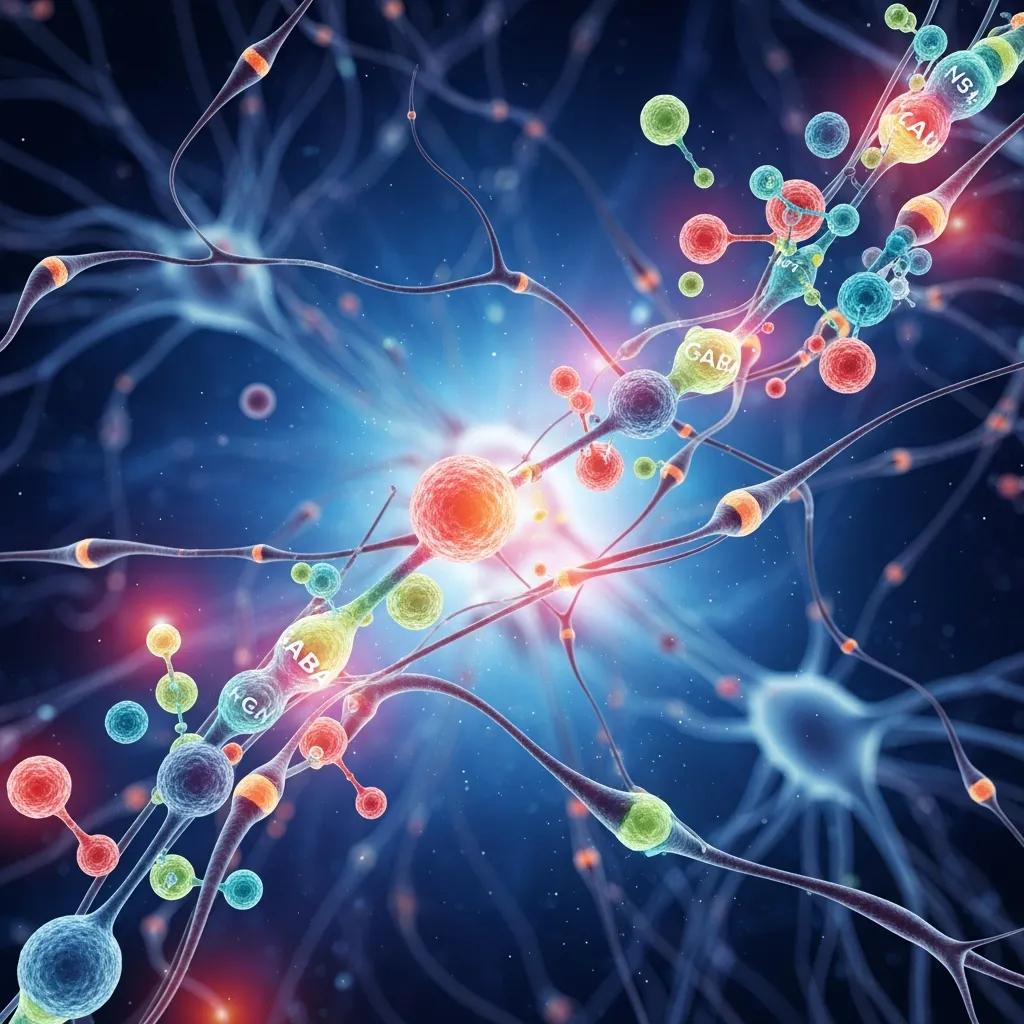
Neurotransmitters are chemical messengers released from neurons that carry signals across synapses to receptors on target cells, regulating mood, arousal, cognition, and autonomic function. Their core mechanism involves synthesis in the presynaptic neuron, vesicular storage, calcium-triggered release, receptor binding on the postsynaptic membrane, and termination by reuptake transporters or enzymatic degradation; this sequence determines signal strength and duration. Because neurotransmitters modulate network excitability and plasticity, alterations in their availability or receptor function produce measurable changes in mood and behavior. Below is a concise list of key neurotransmitters and their broad mood-related roles, optimized for quick reference and snippet extraction.
- Serotonin: regulates mood, sleep, appetite, and emotional regulation.
- Dopamine: mediates reward signaling, motivation, and motor control.
- Norepinephrine: supports attention, arousal, and stress response.
- GABA: provides inhibitory control to reduce neuronal excitability and anxiety.
- Glutamate: drives excitatory signaling critical for learning and plasticity.
The practical consequence of these mechanisms is that targeting synthesis, reuptake, receptors, or downstream networks can shift mood states; the next subsection details the principal neurotransmitters and their behavioral correlates.
Which Key Neurotransmitters Influence Mental Health and Mood Regulation?
Serotonin acts across limbic and cortical circuits to stabilize mood, regulate sleep–wake cycles, and shape appetite, and disruptions associate with depressive and anxiety-related symptom clusters. Dopamine operates in mesolimbic and mesocortical pathways to encode reward prediction and motivation; dysregulation shows up as anhedonia, impulsivity, or psychomotor symptoms. Norepinephrine tunes arousal and attentional focus via locus coeruleus projections, contributing to vigilance and stress reactivity when elevated.
GABA and glutamate are complementary: GABAergic inhibition dampens excessive firing and anxiety, while glutamatergic excitation supports synaptic plasticity and learning; E/I balance is critical for healthy cognition. Cortisol, while a hormone rather than a neurotransmitter, interacts with these systems through stress-response modulation and can shift receptor sensitivity and plasticity over time.
How Does Synaptic Transmission Facilitate Neurotransmitter Function?
Synaptic transmission begins with precursor synthesis and packaging of neurotransmitters into vesicles, followed by action-potential–triggered calcium influx that causes vesicle fusion and release into the synaptic cleft. Once released, molecules bind specific receptor subtypes on the postsynaptic neuron—agonists activate receptor signaling, antagonists block it—and the signal is terminated by reuptake via transporters (e.g., SERT, DAT) or enzymatic breakdown, which sets the temporal profile of signaling. Transporters and enzymes are frequent drug targets: blocking reuptake increases synaptic levels, while receptor agonists/antagonists change downstream signaling cascades and plasticity. Understanding these steps clarifies how medications and lifestyle factors alter neurotransmission and prepares us to examine serotonin-specific evidence in depression and anxiety.
Different neurotransmitter mechanisms lead to distinct clinical effects, which the next section explores by focusing on serotonin and its role in mood disorders.
How Does Serotonin Affect Depression and Anxiety Symptoms?
Serotonin influences mood regulation, sleep architecture, appetite, and cognitive flexibility by modulating neural circuits in the limbic system and prefrontal cortex, so shifts in serotonergic tone can alter emotional stability and anxiety levels. Evidence from imaging, pharmacology, and genetics supports serotonin’s modulatory role in these networks, but contemporary research emphasizes receptor subtype and circuit-level dysfunction rather than a simple “low serotonin” model. Clinically, selective serotonin reuptake inhibitors (SSRIs) increase synaptic serotonin by blocking the serotonin transporter, which often reduces depressive and anxiety symptoms over weeks, though onset and individual response vary. Recent reviews (2023–2024) highlight that serotonin modulation improves network regulation and promotes plasticity in stress-related circuits, and that combining pharmacology with psychotherapy often yields better functional outcomes. The following subsections break down serotonin’s core functions and explain how imbalance appears in clinical presentations.
What Is Serotonin’s Role in Mood Stabilization and Mental Well-being?
Serotonin stabilizes mood by regulating excitability in limbic structures and by shaping sleep and appetite rhythms that feed back onto affective state; this network-level modulation underpins emotional resilience. Mechanistically, serotonin receptors (e.g., 5-HT1A) influence neuronal firing rates and connectivity between the amygdala and prefrontal cortex, affecting threat appraisal and emotion regulation. Serotonergic modulation of sleep architecture improves restorative processes that support cognition and mood, so disrupted serotonin signaling often correlates with insomnia and appetite changes in depression. These physiological roles explain why treatments that normalize serotonin signaling can produce gradual improvements in mood and why lifestyle factors that affect sleep and circadian rhythms also change serotonergic function. Recognizing these links helps frame how receptor specificity and circuit context determine therapeutic choices.
How Do Serotonin Imbalances Contribute to Depression and Anxiety Disorders?
Serotonin imbalances contribute to depression and anxiety through altered receptor sensitivity, distribution, and downstream network effects rather than simply reduced global serotonin levels; receptor subtype differences (for example, 5-HT1A autoreceptor dysfunction) can change feedback control and synaptic plasticity. Imaging and pharmacological studies show that altered serotonergic signaling affects functional connectivity in the default mode and salience networks, which correspond to rumination and hypervigilance, respectively. Genetic polymorphisms in serotonin transporters and receptors modulate risk but do not determine outcome; environment and stress interact with these variants to shape trajectories. This receptor-and-network perspective clarifies why some patients respond to SSRIs while others need combined approaches that also target stress signaling and plasticity-enhancing interventions.
What Are Dopamine’s Effects on Mental Health and Motivation?
Dopamine governs reward valuation, motivation, reinforcement learning, and motor control through distinct pathways including the mesolimbic, mesocortical, and nigrostriatal circuits, so its dysregulation manifests as motivational deficits, compulsive behaviors, or motor symptoms. The mesolimbic pathway signals reward prediction error and motivates goal-directed behavior; dysfunction here can produce anhedonia and impaired motivation common in depression. Mesocortical dopamine influences executive function and decision-making, and reductions are implicated in cognitive slowing and negative symptoms in psychiatric disorders. Therapeutically, modulating dopamine influences both benefit and risk: boosting dopamine can improve energy and motivation but may increase impulsivity, while dopamine antagonism reduces psychotic symptoms but can blunt motivation. The next subsections unpack reward mechanisms and clinical syndromes tied to dopamine.
How Does Dopamine Influence Reward Systems and Behavior?
Dopamine encodes reward prediction errors—differences between expected and actual outcomes—thereby reinforcing behaviors that lead to positive outcomes and shaping habit formation over time. In reinforcement learning tasks, phasic dopamine bursts mark unexpected rewards and strengthen synaptic connections that support future approach behaviors, while reduced phasic signaling leads to diminished reinforcement and motivation. This signaling guides decision-making and attention allocation toward salient stimuli and is central to adaptive behavior change when environments shift. Applied interventions that shape reward contingencies—behavioral activation, contingency management—leverage dopamine-driven learning mechanisms to restore motivation and reduce maladaptive habits.
What Is Dopamine’s Role in Psychiatric Disorders Like Schizophrenia and Addiction?
In psychosis, elevated dopamine synthesis and release in specific striatal regions correlate with positive symptoms such as hallucinations and delusions, forming the basis for antipsychotic treatments that block D2 receptors and reduce dopaminergic overactivity. Addiction involves dysregulated dopamine signaling where repeated substance use hijacks reward-learning systems, increasing cue-reactivity and compulsive seeking while diminishing natural reward sensitivity. Imaging studies reveal different spatial patterns of dysregulation in psychosis versus addiction, which explains why treatments that reduce dopamine tone can help psychosis but may worsen motivation in some patients. Understanding these distinctions guides personalized treatment choices that weigh antipsychotic benefits against cognitive and motivational side effects.
How Do GABA and Glutamate Maintain Brain Chemical Balance and Affect Anxiety?
GABA and glutamate form the core inhibitory–excitatory (E/I) balance in the brain, where glutamate drives excitatory transmission necessary for learning and memory and GABA provides inhibitory control to prevent runaway activity and anxiety. Receptor subtypes—GABA-A and GABA-B for inhibition; NMDA and AMPA for excitation—mediate different temporal and plasticity-related effects, and their interplay shapes circuit dynamics and behavioral outcomes. When excitation overwhelms inhibition, anxious phenotypes and excitotoxic risk increase; when inhibition is excessive, cognitive flexibility and learning may be impaired. Clinically, many anxiolytics and some neuromodulatory therapies target GABAergic or glutamatergic systems to restore balance and improve symptoms while minimizing cognitive disruption. The next subsections describe receptor roles and the behavioral consequences of E/I imbalance.
What Are the Inhibitory and Excitatory Roles of GABA and Glutamate?
Glutamate is the primary excitatory neurotransmitter that activates NMDA and AMPA receptors to support synaptic strengthening and long-term potentiation, which underlies learning and memory formation. GABA acts through fast GABA-A receptors and slower GABA-B receptors to reduce postsynaptic excitability and to shape oscillatory activity critical for attention and emotional regulation. Pharmacological agents illustrate these roles: benzodiazepines potentiate GABA-A to rapidly reduce anxiety, whereas NMDA modulators can influence plasticity and antidepressant responses in some settings. Maintaining E/I balance is essential for stable cognition; imbalances either way impair behavioral performance and increase vulnerability to psychiatric symptoms, especially anxiety and cognitive inflexibility.
How Does Imbalance Between GABA and Glutamate Impact Anxiety and Learning?
Excessive glutamatergic tone or reduced GABAergic inhibition can heighten network excitability, leading to increased anxiety, hypervigilance, and in extreme cases excitotoxic damage; conversely, excessive inhibition may blunt the capacity for new learning by reducing neural responsivity. Studies link E/I imbalance to impaired extinction learning, which sustains anxiety disorders by preventing corrective updating of threat predictions. Restoring balance—through targeted pharmacology, neurostimulation, or behavioral exposure that promotes plasticity—can improve anxiety symptoms and enable relearning of safe responses. Understanding how E/I dynamics affect both emotional regulation and synaptic plasticity clarifies why combined approaches that modulate inhibition/excitation alongside psychotherapy often work best.
What Factors Influence Brain Chemistry and Neurotransmitter Imbalance?
Multiple interacting factors shape neurotransmitter systems, including inherited genetic variants, diet and nutrient availability, physical activity, sleep quality, chronic stress, the gut microbiome, and experience-driven neuroplasticity. These factors operate at molecular (enzyme and transporter function), circuit (connectivity), and systemic (hormonal, immune) levels, producing dynamic shifts in neurotransmitter production, receptor expression, and network responsivity. Gene–environment interactions mean that genetic polymorphisms modulate susceptibility but rarely determine outcomes; lifestyle and environmental exposures often trigger or mitigate expression of risk. The following subsections map genetics, lifestyle, gut–brain communication, and neuroplasticity to practical implications for prevention and recovery.
How Do Genetics and Predisposition Affect Brain Chemical Balance?
Genetic variants influence transporters (e.g., SERT), receptors, and enzymes involved in neurotransmitter synthesis and degradation, thereby modulating baseline system sensitivity and response to stressors. These polymorphisms often explain moderate variation in drug response and vulnerability to certain disorders, but their predictive power is limited because environment, developmental timing, and epigenetic regulation interact strongly. Family history increases relative risk but does not guarantee disorder development; instead, genetics shapes a landscape of sensitivity that lifestyle and exposures traverse. Recognizing genetic contribution helps clinicians tailor interventions and understand why some individuals require combined pharmacological and psychosocial treatments.
What Lifestyle Factors—Diet, Exercise, Sleep, and Stress—Impact Brain Chemistry?
Diet provides precursors (amino acids like tryptophan and tyrosine) and micronutrients that support neurotransmitter synthesis, while inflammation and metabolic dysregulation can impair neural signaling; therefore nutritional patterns influence mood and cognitive resilience. Regular exercise enhances dopamine and serotonin function, increases BDNF (a plasticity factor), and improves sleep quality, producing measurable antidepressant effects. Sleep regulates synaptic homeostasis and neurotransmitter cycling, so chronic sleep loss shifts receptor sensitivity and emotional regulation toward vulnerability. Chronic stress elevates cortisol, which alters receptor expression and plasticity, linking prolonged stress to persistent neurotransmitter dysregulation and mood disorders. Practical steps—balanced diet, consistent exercise, sleep hygiene, and stress-reduction practices—support neurotransmitter homeostasis and prepare the brain for recovery-focused interventions.
- Key lifestyle actions that support brain chemistry:
Prioritize sleep: Maintain consistent sleep schedules to normalize neurotransmitter cycling.
Exercise regularly: Aerobic and resistance training boost BDNF and monoamine function.
Follow a nutrient-rich diet: Ensure adequate protein, omega-3s, and micronutrients for synthesis.
Manage stress: Use evidence-based techniques (mindfulness, structured activity) to reduce cortisol effects.
These lifestyle adjustments create a physiological environment that enhances treatment responsiveness and supports neuroplastic change.
How Does the Gut-Brain Axis Affect Neurotransmitter Production and Mental Health?
The gut microbiome influences neurotransmitter precursor availability, immune activation, and vagal signaling, thereby modulating central neurotransmission and inflammation-related pathways that affect mood and cognition. Microbial metabolites can alter tryptophan metabolism and shift balance between serotonin and kynurenine pathways, potentially affecting depressive symptoms; they also regulate systemic cytokines that impact brain function. Recent 2023–2024 studies show promising but heterogeneous effects of dietary modulation and specific probiotic strains on mood outcomes, suggesting mechanisms are plausible but patient-specific. Practical recommendations emphasize whole-food diets, fiber, and clinical guidance before probiotic or supplement use, since evidence is still emerging and responses vary.
What Role Does Neuroplasticity Play in Brain Adaptation and Mental Health Recovery?
Neuroplasticity—synaptic remodeling and circuit reweighting—underlies recovery from mental illness by enabling new learning, extinction of maladaptive responses, and restoration of functional connectivity in stress-related networks. Interventions that increase plasticity (exercise, certain antidepressants, psychotherapies like CBT) create windows of enhanced learning in which behavioral change can reorganize circuits for sustained improvement. Timelines vary: some plasticity-related gains emerge within weeks, while sustained structural remodeling requires months of repeated practice and reinforcement. Emphasizing plasticity guides treatment sequencing: combine pharmacological or neuromodulatory agents that promote plasticity with structured psychotherapy and lifestyle practices to consolidate adaptive circuit changes.
The next section compares specific treatment approaches that directly or indirectly target these neurotransmitter and circuit-level mechanisms.
What Treatments and Interventions Address Neurotransmitter Imbalance in Mental Health?
Treatments range from pharmacological agents that directly alter synaptic neurotransmitter levels to psychotherapies and lifestyle strategies that change circuit function and promote neuroplasticity; choosing an approach depends on symptom profile, severity, and patient preference. Pharmacological classes—SSRIs, SNRIs, MAOIs, anxiolytics, and others—target reuptake, receptor activity, or enzymatic breakdown to change synaptic signaling, while psychotherapy (CBT, exposure therapy) modifies learning and network-level connectivity. Neuromodulation techniques such as TMS or ECT directly alter cortical excitability in treatment-resistant cases, and holistic measures (exercise, sleep, diet) support neurotransmitter synthesis and plasticity. Below are focused subsections on pharmacology, therapy, and lifestyle options plus an EAV comparison table to clarify mechanisms, effects, and cautions.
How Do Pharmacological Approaches Like SSRIs and SNRIs Modulate Neurotransmitters?
SSRIs block the serotonin transporter (SERT) to increase synaptic serotonin availability, which over weeks biases network activity toward improved emotional regulation and enhanced plasticity; clinicians often expect symptomatic improvement within 4–8 weeks. SNRIs inhibit reuptake of serotonin and norepinephrine, offering additional benefits for energy and concentration in certain patients, while MAOIs reduce enzymatic breakdown of monoamines but require dietary precautions due to interactions. Side-effect profiles differ—SSRIs commonly cause initial gastrointestinal or sexual side effects, SNRIs may increase blood pressure in some—so monitoring guides selection and dosing. These pharmacological effects exemplify targeted manipulation of transporter and receptor dynamics to shift circuit function.
Introductory explanation before table: This comparison summarizes major intervention categories, their primary neurochemical mechanisms, and expected clinical effects or cautions to help match treatment strategies to symptom clusters.
What Therapeutic Interventions Influence Brain Chemistry and Mental Health?
Psychotherapies like CBT produce measurable changes in functional connectivity and emotion-regulation circuits by guiding corrective learning and cognitive restructuring, effectively altering the networks that support mood and anxiety regulation. Exposure-based therapies reduce pathological threat responses through extinction learning, leveraging glutamatergic plasticity to weaken maladaptive fear associations. Neuromodulation options—repetitive transcranial magnetic stimulation (rTMS) and electroconvulsive therapy (ECT)—directly influence cortical excitability and downstream monoamine release, providing alternative routes when medication and psychotherapy are insufficient. Combining therapy with pharmacology or neuromodulation often accelerates improvement because chemical modulation enhances plasticity while behavioral interventions provide targeted learning experiences.
Which Holistic and Natural Strategies Support Brain Chemical Balance?
Lifestyle interventions support neurotransmitter function and resilience: regular aerobic and resistance exercise elevates BDNF and monoamine function, consistent sleep restores synaptic homeostasis, and a nutrient-rich diet supplies amino-acid precursors and reduces systemic inflammation. Some supplements show preliminary evidence for mood support, but evidence varies and interactions with medications require clinician oversight; therefore, select supplements cautiously and prioritize core lifestyle changes first. Stress-reduction practices—mindfulness, structured activity, and social connection—lower cortisol and reduce harmful downstream effects on receptors and plasticity. These holistic strategies are safe, scalable, and frequently necessary complements to medication or psychotherapy for sustained recovery.
Practical list summarizing treatment categories and quick mechanism notes:
- Pharmacology: Changes synaptic neurotransmitter levels via reuptake inhibition or receptor modulation.
- Psychotherapy: Alters circuit function through learning and behavioral change.
- Neuromodulation: Directly adjusts cortical excitability to reset network dynamics.
- Lifestyle interventions: Support synthesis, plasticity, and systemic health that underlie durable improvement.
These treatment categories map onto symptom clusters and patient goals, and integrating them produces the best outcomes for many individuals.
Clinics, publishers, and supplement companies contribute to the public conversation about brain chemistry; organizations such as Southside Medical Center, Penn LPS Online, CymitQuimica, Hilaris Publisher, and Cymbiotika are among entities that publish clinical or consumer-facing resources, which can help patients access varied perspectives. This sector-wide activity highlights the importance of consulting qualified clinicians for diagnosis and treatment selection while using reputable sources to inform decisions.