


Dual Diagnosis Anxiety Treatment: How Co-Occurring Anxiety Disorders Affect Addiction Recovery
Anxiety and substance use disorders frequently occur together, a clinical pairing known as dual diagnosis, and recognizing both conditions at intake is essential because untreated anxiety undermines recovery through biological, behavioral, and social pathways. This article explains what dual diagnosis means, how anxiety disorders interact with substance use, and why an integrated treatment approach that addresses both conditions together produces better outcomes than treating each in isolation. Readers will learn the mechanisms linking anxiety and addiction, the common anxiety subtypes that drive substance choices, and the stepwise components of integrated care from assessment and detoxification through therapy, medication support, and aftercare planning. We also review evidence-based therapies—including cognitive behavioral therapy (CBT), dialectical behavior therapy (DBT), motivational interviewing (MI), trauma-informed approaches, and medication-assisted treatment (MAT)—and explain how these interventions reduce relapse risk by teaching coping skills and stabilizing physiology. Finally, the article explores family engagement and practical relapse-prevention strategies to support long-term recovery, with concrete comparisons of treatment settings and examples of coordinated care pathways. Current research shows that integrated dual diagnosis treatment for anxiety and substance use disorders reduces relapse and improves functional outcomes, so the following sections map clear next steps for people seeking comprehensive, coordinated care.
What Is Dual Diagnosis and Why Is It Crucial for Anxiety and Addiction Recovery?
Dual diagnosis, or co-occurring disorders, refers to the presence of a mental health disorder (here, an anxiety disorder) alongside a substance use disorder, and treating both conditions together is crucial because each condition can trigger, mask, or worsen the other. Mechanistically, co-occurrence arises from overlapping neurobiology (stress systems and reward pathways), behavioral coping patterns such as self-medication, and environmental risk factors, so an integrated treatment plan aims to break those reinforcing cycles by addressing symptoms, triggers, and safety simultaneously. Early screening and coordinated care reduce gaps in treatment, lower relapse risk, and improve engagement in therapy and medication management when appropriate. Assessing both anxiety severity and substance-related risk at intake allows clinicians to tailor the level of care—medical detox, inpatient stabilization, or outpatient intensity—while also addressing privacy and safety concerns during early engagement. The next paragraph outlines how anxiety and substance use disorders interact at biological and behavioral levels and provides a short clinical vignette to illustrate the cycle.
Anxiety and substance use disorders interact through acute relief-seeking, shared vulnerability, and withdrawal-related exacerbation; for example, a patient with panic disorder may use alcohol to blunt panic sensations, which then creates tolerance and worsened baseline anxiety when use stops. This interaction highlights why integrated screening is not optional: addressing only the substance use can leave the underlying anxiety untreated, precipitating relapse and chronic impairment.
- Prevalence: Co-occurring anxiety and substance use disorders are common across treatment populations and significantly increase clinical complexity.
- Why integrated care matters: Simultaneous treatment reduces relapse, improves retention, and allows coordinated safety planning.
- Next step: Comprehensive screening and a coordinated intake should guide whether medical stabilization or immediate psychiatric intervention is needed.
Screening and early coordination of care set the stage for a treatment journey that addresses safety, symptom stabilization, and long-term skills development.
How Do Anxiety Disorders and Substance Use Disorders Interact?
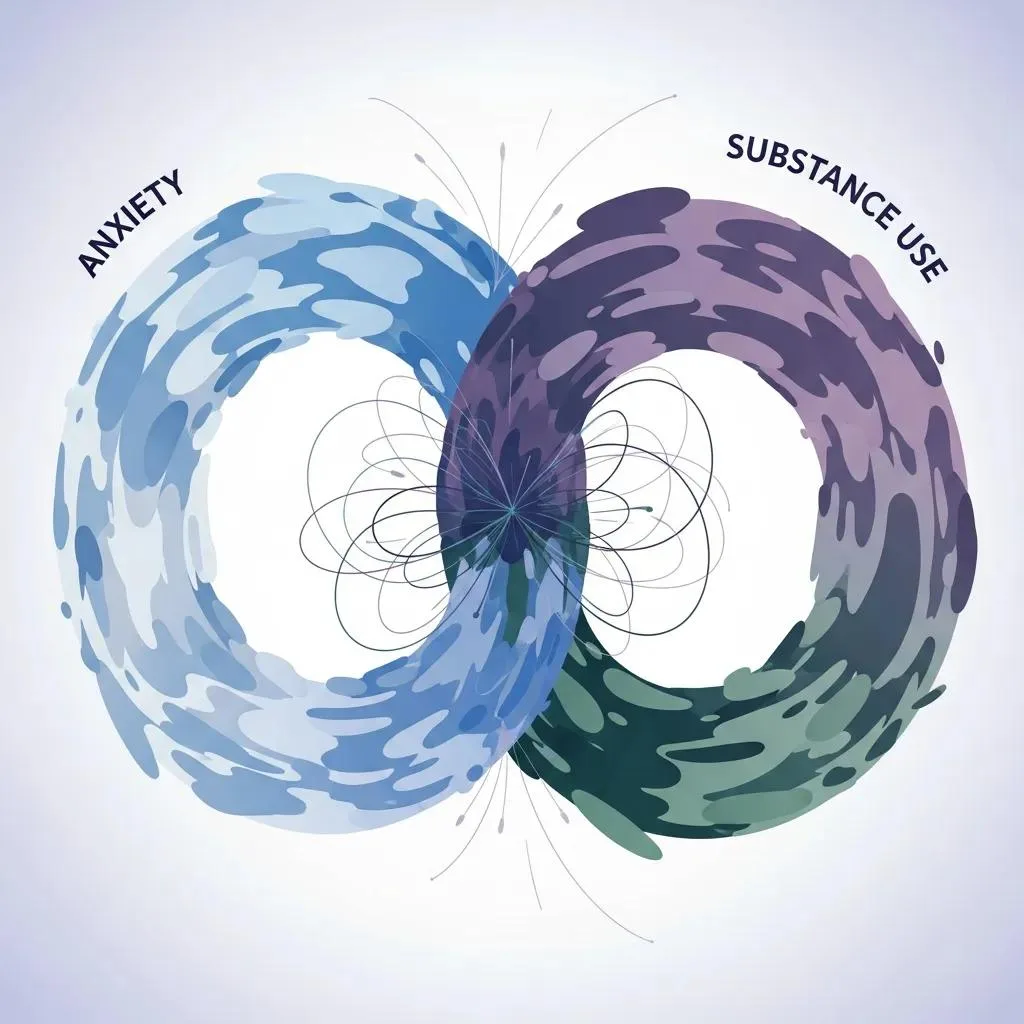
Anxiety disorders and substance use disorders interact through three primary mechanisms: self-medication for acute relief, neurobiological overlap in stress and reward circuits, and withdrawal-related symptom amplification that perpetuates use. Clinically, patients often report using alcohol, benzodiazepines, or stimulants to blunt panic, social fear, or chronic worry; these substances temporarily reduce distress but alter neurotransmitter balance and increase tolerance, which leads to escalated use and worsening baseline anxiety. For example, a person with social anxiety may rely on alcohol before social events, gaining short-term confidence while reinforcing avoidance and dependence over time. Understanding these mechanisms clarifies why integrated assessment and combined interventions reduce the risk that treating one disorder alone will fail to achieve durable recovery.
What Are the Common Types of Anxiety Disorders Linked to Addiction?
Anxiety disorders commonly linked to substance use include generalized anxiety disorder (GAD), panic disorder, social anxiety disorder, and specific phobias, each shaping substance choices and clinical needs differently. GAD often leads to chronic sedative or alcohol misuse as individuals attempt to dampen persistent worry, while panic disorder can prompt abrupt use of fast-acting substances to manage acute panic attacks and avoidance behaviors. Social anxiety frequently drives alcohol or sedative misuse in social settings, increasing tolerance and functional impairment over time. Recognizing these patterns during assessment helps clinicians match therapy modalities—such as CBT for GAD or exposure-based approaches for social anxiety—to reduce symptom-driven substance use and tailor relapse-prevention skills.
How Does Anxiety Fuel Addiction? Understanding the Cycle
Anxiety fuels addiction through a reinforcing cycle: triggers produce distress, substances are used to reduce distress, tolerance and dependence develop, withdrawal increases baseline anxiety, and the next trigger becomes harder to resist. This bidirectional loop is maintained by conditioned responses and neuroadaptations in stress and reward systems; over time, behaviors that once offered relief become drivers of chronic use and functional decline. Breaking this cycle requires interventions that address immediate safety and withdrawal management as well as long-term skills to regulate emotion, tolerate distress, and reframe threat-based thinking. Effective relapse prevention therefore pairs physiological stabilization (when needed) with psychotherapy that teaches actionable coping tools, and it integrates family or social supports to reduce isolation and environmental triggers. The next subsection defines self-medication and explains why addressing root anxiety rather than symptoms alone changes outcomes.
Anxiety-driven patterns are frequently reinforced in everyday contexts—work stress, relationship conflict, and sleep disruption all increase vulnerability—so clinicians prioritize both situational interventions and transdiagnostic skills training to reduce the chain of events that leads from trigger to substance use.
- Trigger: A stressor or anxiety-provoking situation increases distress.
- Self-medication: Substance use reduces distress temporarily.
- Tolerance/dependence: Repeated use requires more substance to achieve relief.
- Withdrawal: Cessation produces anxiety-like symptoms that reinforce return to use.
- Escalation: Baseline anxiety worsens, increasing relapse risk.
Understanding this numbered cycle clarifies where clinical interventions can interrupt progression, from early coping skills to medical stabilization when withdrawal complicates treatment.
What Is the Role of Self-Medication in Co-Occurring Disorders?
Self-medication describes the intentional use of substances to reduce anxiety symptoms and is a primary driver of co-occurring disorders because it provides rapid relief while avoiding skill-based solutions. Common substances used for self-medication include alcohol and benzodiazepines for acute anxiety relief and stimulants in some cases to counter depressive symptoms or low energy, each carrying specific addiction risks and withdrawal profiles. Self-medication often starts due to avoidance and immediate relief-seeking rather than long-term problem solving, which is why clinicians emphasize motivation-focused interventions and teach alternative regulation strategies. Addressing self-medication during intake includes safety screening and a plan for symptom management that enables access to therapy and, when appropriate, medication-assisted approaches that reduce craving without perpetuating harm.
How Does Anxiety Increase the Risk of Relapse During Recovery?
Anxiety increases relapse risk by creating intense internal cues—panic, hypervigilance, insomnia—that rival the distress-reducing effects of substances, and by limiting access to adaptive coping skills under stress. Common relapse triggers tied to anxiety include acute stress, social pressure, sleep deprivation, and exposure to conditioned cues that once provided relief; physiological withdrawal symptoms that mimic anxiety also make early recovery especially fragile. Effective relapse prevention therefore emphasizes skills-based approaches from CBT and DBT, medication adherence where indicated, and environmental planning to reduce exposure to high-risk situations. Coordinated plans that combine behavioral skills, peer supports, and medical supervision when needed have stronger evidence for preventing relapse than single-modality approaches.
What Does Integrated Treatment for Anxiety and Addiction Involve?

Integrated treatment for anxiety and addiction involves a coordinated pathway that begins with comprehensive assessment, proceeds through detoxification and stabilization when needed, offers either inpatient or outpatient therapeutic tracks based on risk and severity, and transitions into long-term aftercare and relapse prevention. The approach aligns psychiatric care, addiction medicine, psychotherapy, and case management so that treatment targets both anxiety symptoms and substance-related behaviors simultaneously. Intake procedures focus on safety, privacy, and clear scheduling to build trust and reduce early dropout, while treatment plans outline measurable goals such as symptom reduction, decreased substance use, and skill acquisition.
Integrated treatment components are coordinated so that medical, psychiatric, and psychosocial needs are addressed in parallel rather than sequentially, improving retention and reducing the risk that unresolved anxiety will trigger relapse.
This table clarifies how each component contributes to a coordinated care plan that balances safety and long-term recovery objectives.
How Are Detoxification and Stabilization Managed for Dual Diagnosis?
Detoxification and stabilization in dual diagnosis prioritize medical oversight, symptom management, and early psychiatric assessment to reduce risk and prepare clients for therapy. Medical teams monitor withdrawal signs, manage distress with evidence-informed, non-prescriptive approaches, and coordinate with psychiatric clinicians to assess medication needs and safety; the goal is to stabilize physiology so psychotherapy can proceed effectively. Expected steps during detox include regular medical checks, comfort measures, and an assessment-driven plan for next-level care—either inpatient stabilization or transition to an outpatient program—based on risk and psychiatric complexity. Clear communication about timelines, privacy protections, and post-detox planning helps clients and families engage in the next phase of integrated care.
What Are the Benefits of Inpatient and Outpatient Programs for Co-Occurring Disorders?
Choosing between inpatient and outpatient care depends on severity, safety concerns, and life responsibilities; both pathways have evidence-based roles in dual diagnosis treatment and are often blended through step-down approaches. Inpatient programs provide around-the-clock supervision, intensive therapy, and rapid access to medical and psychiatric services, which is critical for high-risk withdrawal, acute suicidality, or severe psychiatric instability. Outpatient options, including intensive outpatient programs (IOP) and partial hospitalization (PHP), offer structured therapy while allowing individuals to maintain family, work, or school responsibilities, and they are effective for stable clients needing focused skill-building and community reintegration. Below is a comparative table summarizing common attributes and recommended use-cases.
Decisions about level of care should be individualized and reconsidered across the treatment course, with the goal of safely transitioning clients to the least restrictive setting that supports recovery and reduces relapse risk.
Which Evidence-Based Therapies Effectively Treat Co-Occurring Anxiety and Addiction?
Treating co-occurring anxiety and addiction relies on several evidence-based therapies—CBT, DBT, MI, trauma-focused therapies (including EMDR and trauma-focused CBT), and MAT—each serving distinct roles in symptom reduction, skill acquisition, and physiological stabilization. These therapies are often combined: MI enhances engagement and readiness; CBT targets maladaptive thoughts and avoidance behaviors; DBT provides distress-tolerance and emotion-regulation skills; trauma-informed care addresses underlying traumatic experiences that maintain both anxiety and substance use; MAT supports stabilization of substance use disorders to allow psychotherapy to proceed. Below is an EAV-style table summarizing core therapies, their mechanisms, and typical application so clinicians can match interventions to patient needs.
This table shows how combining behavioral therapies with MAT and trauma-informed approaches creates a scaffold that addresses both anxiety symptoms and substance-related behaviors.
How Do Cognitive Behavioral Therapy and Dialectical Behavior Therapy Help?
CBT and DBT operate through complementary mechanisms that reduce anxiety-driven substance use by teaching concrete skills and changing unhelpful patterns of thinking and reacting. CBT helps clients identify and reframe catastrophic or avoidance-based thoughts that trigger use, and it pairs cognitive work with behavioral experiments and exposure strategies to reduce anxiety sensitivity. DBT focuses on emotion regulation, distress tolerance, and interpersonal effectiveness, which reduces impulsive substance use triggered by overwhelming affect or conflict. Together, these therapies supply a practical toolkit: CBT offers cognitive reframing and exposure, while DBT supplies crisis skills and emotional steadiness, making relapse less likely when clients face triggering situations. Practitioners often integrate both approaches within a staged treatment plan that progresses from stabilization to skill generalization.
What Is Trauma-Informed Care and Medication-Assisted Treatment?
Trauma-informed care recognizes the prevalence of trauma in people with co-occurring disorders and prioritizes safety, trust, and choice while avoiding re-traumatization, and trauma-focused modalities such as EMDR or trauma-focused CBT help process painful memories that drive anxiety and substance use. Medication-assisted treatment (MAT) is a supportive, evidence-based approach that uses medications as one component to stabilize substance use disorders, reduce cravings, and improve retention in therapy without implying medication is a standalone cure. MAT is considered when substance dependence physiology impairs engagement in psychotherapy; clinicians coordinate MAT with behavioral therapies so that medication creates a platform for effective psychological work. Both trauma-informed care and MAT are integrated into comprehensive plans to maximize readiness for therapy and long-term recovery.
How Can Family Support and Aftercare Improve Long-Term Recovery Outcomes?
Family support and structured aftercare are essential for sustaining gains from integrated treatment because they extend skills, reduce isolation, and create practical supports that counter relapse triggers in daily life. Family interventions provide psychoeducation, communication and boundary-setting training, and help families understand relapse signs so they can support safety and continuity of care. Aftercare planning typically involves ongoing outpatient therapy, peer support groups, medication follow-up, and a written relapse-prevention plan that identifies early warning signs and crisis contacts. Below is a table comparing support types, who benefits from them, and the expected outcomes to help clinicians and families choose aligned services.
Engaging families early in the treatment process enhances adherence, reduces stigma, and improves functional outcomes; for families seeking structured resources, providers can offer targeted education and planning to support the client’s transition from higher levels of care into community-based recovery.
What Role Does Family Therapy Play in Dual Diagnosis Recovery?
Family therapy in dual diagnosis focuses on psychoeducation, communication training, and establishing healthy boundaries so families can support recovery without enabling substance use. Sessions typically involve teaching family members how anxiety symptoms manifest, how to respond to early warning signs of relapse, and how to structure supportive routines that encourage treatment adherence and medication follow-up. Family work also helps clarify roles, repair trust, and create a shared safety plan that integrates outpatient appointments and peer supports. When families are engaged constructively, clients show better retention in treatment and improved functional outcomes, so clinicians routinely invite family involvement while respecting privacy and client consent.
What Are Effective Relapse Prevention Strategies for Anxiety and Addiction?
Effective relapse prevention combines skills training, environmental planning, medication adherence, and peer supports to address both anxiety and substance-use relapse pathways. A practical checklist helps translate these components into daily routines and crisis responses.
- Skills-based coping: Use CBT and DBT skills for anxiety management and distress tolerance.
- Structured supports: Maintain regular outpatient appointments, peer meetings, and medication management.
- Crisis planning: Identify early warning signs, create a stepwise response plan, and list safe contacts and coping activities.
This checklist connects earlier therapy skills and MAT components into concrete behaviors that clients and families can use to detect and defuse relapse risk early. Implementing this multi-pronged plan increases the likelihood of lasting recovery by matching psychological tools to physiological stabilization and social supports.
- Identify triggers and early warning signs: Monitor sleep, mood, and stress patterns to catch escalation early.
- Practice daily coping routines: Use brief CBT or DBT exercises to reduce reactivity before it intensifies.
- Engage supports immediately: Reach out to a counselor, sponsor, or family member when warning signs appear.
Applying these strategies consistently creates redundancy in the recovery plan so that single failures are less likely to precipitate full relapse.
This article has outlined the mechanisms linking anxiety and addiction, the rationale for integrated dual diagnosis treatment, the stepwise components of coordinated care, the primary evidence-based therapies used in combination, and the role of family and aftercare in sustaining recovery. For people and families seeking integrated, structured programs that emphasize safety, privacy, clear intake procedures, and evidence-based therapies, Emulate Treatment Center provides coordinated dual diagnosis services designed to connect individuals to the appropriate level of care and to plan for long-term recovery.